
Carpenter Bees
Carpenter Bee Control: Stop the Tunnels in Fascia, Decks and Trim
C.R. Davis III & Sons Pest Control treats carpenter bees drilling into homes across Chester County, Montgomery County and Delaware County. The eastern carpenter bee, Xylocopa virginica, bores round holes in bare or weathered wood each April and May and reuses the tunnels year after year. We treat active galleries per the label and show you how to plug and paint so the wood stops attracting them.
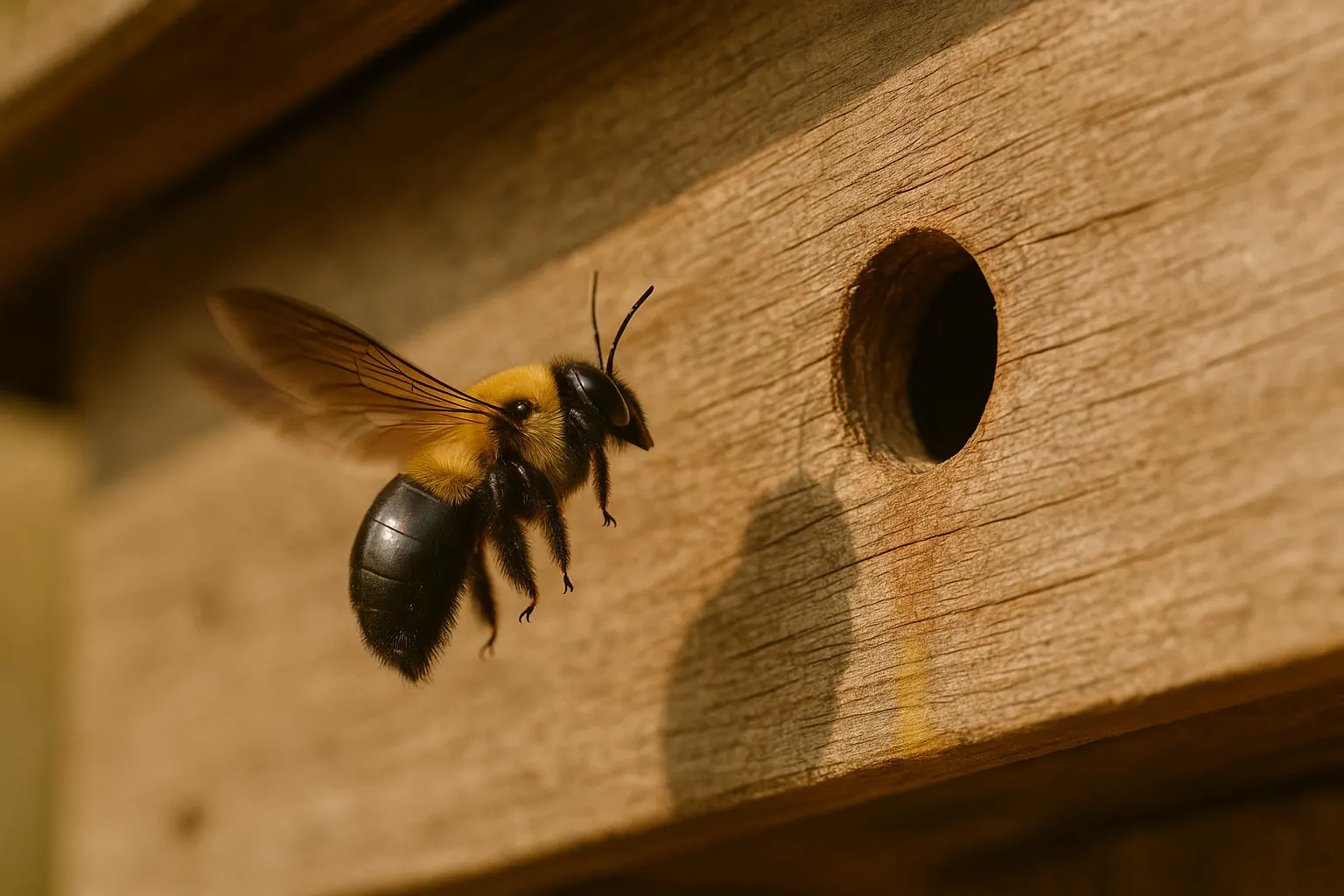
The carpenter bee in Pennsylvania
If a big bee is hovering under your eaves or at the end of a deck rail in spring, it is almost certainly a carpenter bee. Penn State Extension says there is only one species of large carpenter bee in Pennsylvania, Xylocopa virginica. It looks like a bumble bee, but the top of the abdomen is mostly bare and shiny black, while a bumble bee's abdomen is covered in hair, much of it yellow.
Carpenter bees are not social. Each female builds her own nest by tunneling into wood, though several may nest in the same board. They do not eat wood. The tunnels are shelter and nursery space, and the bees feed on nectar and pollen. University of Maryland Extension points out that they are native pollinators and that control is only needed when they are damaging wooden structures. So our work is treating galleries in your house, deck or outbuildings, not bees on the flower beds.
What they do through the year
The yearly cycle explains why timing matters so much for treatment and repair.
| Time of year | What carpenter bees are doing | What it means for your house |
|---|---|---|
| Winter | Young adults overwinter inside existing tunnels | Last year's galleries already hold next spring's bees |
| April to May | Bees emerge and mate; females clean out old tunnels or bore new ones | Peak drilling and hovering; best time to treat active holes |
| Late spring to summer | Females stock 6 to 8 chambers with pollen and nectar and lay one egg in each; larvae develop | Holes look quiet but the tunnels are occupied |
| August | New adults chew out, feed on flowers | A second window for treating and repairing |
| Fall | Adults return to the tunnels to overwinter | Plug and paint after treatment so the tunnels cannot be reused |
Gallery damage to fascia, decks and siding
A female starts with a nearly perfect round hole about half an inch across, usually bored against the grain. About an inch in, she turns at a right angle and tunnels along the grain. University of Maryland Extension puts a typical gallery at 6 to 12 inches, and because tunnels are cleaned out and lengthened by bee after bee each year, old nests can run much longer.
One bee's hole does little harm. The damage comes from years of reuse and many bees working the same boards. Penn State notes bees prefer wood more than two inches thick, and a University of Kentucky entomology fact sheet lists softer woods such as cedar, cypress, redwood and pine as favorites. On houses around here that points to:
- Fascia boards, rafter tails and the underside of eaves and soffits.
- Deck joist ends, rim boards, railings and stair stringers.
- Wood siding, cedar shakes and exterior trim.
- Porch ceilings, doors, windowsills and pergolas.
- Barns, sheds, fence posts and wooden outdoor furniture.
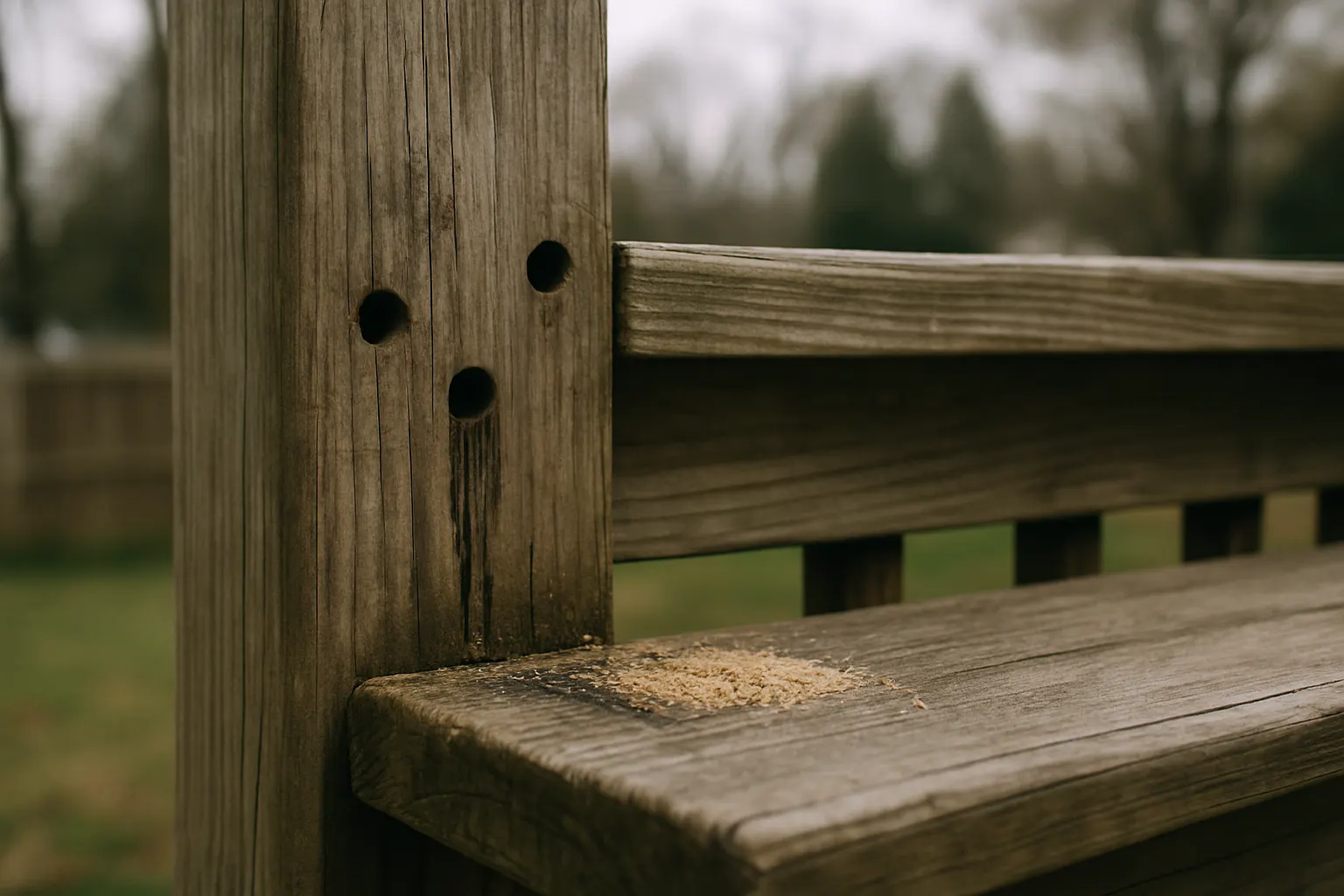
Stains, sawdust and woodpeckers
Look below the holes. As she digs, the female pushes coarse, sawdust-like material out of the tunnel, and she leaves sticky yellow waste that spreads in a fan shape on the siding or trim. University of Maryland Extension notes those stains turn black with mold as they age, which is often what homeowners notice first.
The holes also let water into the wood, and that speeds up rot in fascia and deck framing. Woodpeckers add to the damage when they tear into tunneled boards to feed on the developing bees, turning a neat half-inch hole into a ragged gouge along the gallery. If woodpeckers are hammering at your fascia in summer, check for carpenter bee holes nearby.
Stinging: males cannot, females rarely do
The bee most people notice is the male, and male carpenter bees cannot sting. Penn State describes males hovering near the nest, darting at other insects, and flying up to people who move quickly or wave a hand. It looks aggressive but it is territorial display.
Females can sting but seldom do. Penn State says a female has to be seriously provoked, such as being handled, before she will. For most families the real issues are the noise, the stained trim and the wood damage, not stings. Wasps and yellow jackets do sting, and they are covered on our page for wasp and hornet nest removal.
What treatment looks like
We follow The Davis Inspection Standard, explained on our four-step process page. First we confirm they are carpenter bees and not another bee or wasp. Then we map the active holes and name the conditions: bare wood, old stain that has worn off, nail holes and cracks that give a bee a head start.
Treatment goes directly into the active gallery openings with a product labeled for carpenter bees, applied per the label. The holes are then left open for a few days, because Penn State and the University of Kentucky both explain that bees need to pass through the entrance to contact the material and carry it through the tunnel. Plug a hole too early and the bees chew a new exit or start again next to it.
Once the gallery is inactive, holes get plugged with a wooden dowel, wood putty or a suitable sealant, and the wood is painted or finished. Spring, when bees are first drilling, and late summer are the usual treatment windows. Many galleries are overhead on fascia and eaves, which is why Penn State notes many homeowners hire a licensed company for this work. We tell you before we start how long to keep people and pets away from treated areas, per the label.
Prevention: paint, seal and replace
Carpenter bees go after raw, unfinished or weathered wood. Well-maintained painted wood is rarely attacked, according to University of Maryland Extension, and Penn State notes that stained wood is not usually protected. The University of Kentucky fact sheet calls paint the more lasting solution, with stains and preservatives less reliable.
- Fill nail holes, splits and cracks with caulk or putty, then paint bare wood, especially boards with a history of holes.
- Keep up with repainting fascia, trim and deck rails as the finish wears.
- Consider vinyl, aluminum or other non-wood coverings for fascia and soffits that get hit every year. They exclude carpenter bees.
- Replace boards that are heavily tunneled or rotted rather than patching them.
- Keep garage and shed doors closed in April and May while females are searching for nest sites.
Where we provide carpenter bees service
We work from our family business in Phoenixville and serve homes and businesses across Chester County, Montgomery County and Delaware County. See our Phoenixville pest control page or pest control in West Chester for the towns each area covers.
Carpenter Bees: common questions
How quickly do carpenter bees cause damage?
Slowly at first. A single bee's tunnel does little harm, but galleries are reused and lengthened every year, and several bees often work the same board. Over a few seasons that can weaken fascia, rails and trim, and the holes let water in, which speeds up rot. Treating and sealing early keeps the damage small.
Is it bad to have carpenter bees in your yard?
Not by itself. Carpenter bees are native pollinators, and University of Maryland Extension says control is only needed when they are damaging wooden structures. Bees visiting flowers are not a problem. Bees drilling into your fascia, deck or siding are, because those tunnels get reused and expanded every spring.
What month do carpenter bees go away?
The drilling and hovering usually die down by late spring, after females finish building nests in April and May. The bees do not really leave, though. Larvae develop inside the tunnels over summer, new adults emerge in August to feed, and then they return to the same tunnels to spend the winter.
How many carpenter bees live in one hole?
Each female builds a line of brood chambers in her tunnel, typically 6 to 8 according to Penn State Extension, with one egg in each. So a single hole can produce several new bees by August. In fall, adults overwinter together in existing tunnels, and a board with a few holes can hold a good number of bees.
Do carpenter bees sting?
Male carpenter bees cannot sting, even though they hover near people and dart at movement. Females can sting but seldom do. Penn State Extension says a female must be seriously provoked, such as being handled, before she will sting. The main problem with carpenter bees is wood damage and staining, not stings.
Should I plug carpenter bee holes right away?
No. If the hole is active, treat it first and leave it open for a few days so returning or emerging bees contact the treatment inside. Plugging too early can send bees chewing out through a new hole. Once the gallery is inactive, plug it with a dowel or putty and paint the wood.
What do carpenter bees hate the most?
Painted wood. Carpenter bees look for bare, weathered or thinly stained wood and rarely drill into well-maintained paint. Non-wood coverings like vinyl or aluminum keep them out entirely. Sprays and home remedies are short-lived by comparison. For boards that get hit every year, painting or covering them is the most lasting fix.
Does homeowners insurance cover carpenter bee damage?
That depends on your policy wording, so the answer has to come from your agent or insurer. Many policies treat insect damage differently from sudden events, so ask before assuming. What we can do is identify the insect, show you where the active galleries and related water damage are, and treat the bees.
Is it a carpenter bee or a bumble bee?
Look at the abdomen. A carpenter bee's abdomen is mostly bare and shiny black, while a bumble bee's is fuzzy, often with yellow bands. Behavior helps too: carpenter bees hover around eaves, rails and decks and drill into wood, while bumble bees nest in cavities, often underground, and spend their time moving between flowers.
Family owned. Licensed and insured in Pennsylvania.
Schedule an inspection for carpenter bees
Tell us what you are seeing and where. We will call you back to set up a visit, identify the pest and walk you through the plan before any treatment.
- The species identified before anything is applied
- Entry points and moisture problems pointed out on your property
- Prep and re-entry instructions explained up front
Prefer to talk now? Call (610) 935-9130