
Norristown, PA
Pest Control in Norristown: Rowhouses, Twins and Shared-Wall Pests
C.R. Davis III & Sons Pest Control serves Norristown borough, West Norriton and East Norriton from our Phoenixville headquarters. In Norristown borough almost half of homes are attached rowhouses and twins, and more than half were built before 1960. That housing shapes how mice, German cockroaches and bed bugs move from home to home.
Who serves Norristown and the Norritons
Norristown is served from our Phoenixville pest control headquarters at 153 Silver Springs Rd, about 14 road miles up the Schuylkill, and it belongs to our Montgomery County service area. There is no Norristown storefront, so every visit happens at your home or building.
The borough is one of the largest towns we serve, with 35,748 residents in the 2020 Census and the 19401 ZIP code. West Norriton Township (16,201 people) and East Norriton Township (14,021) wrap around it and mostly mail as Norristown, ZIP 19403. The three share a name and a mailing address but not a housing profile, which is why this page treats them separately.
Two historic districts, thousands of attached homes
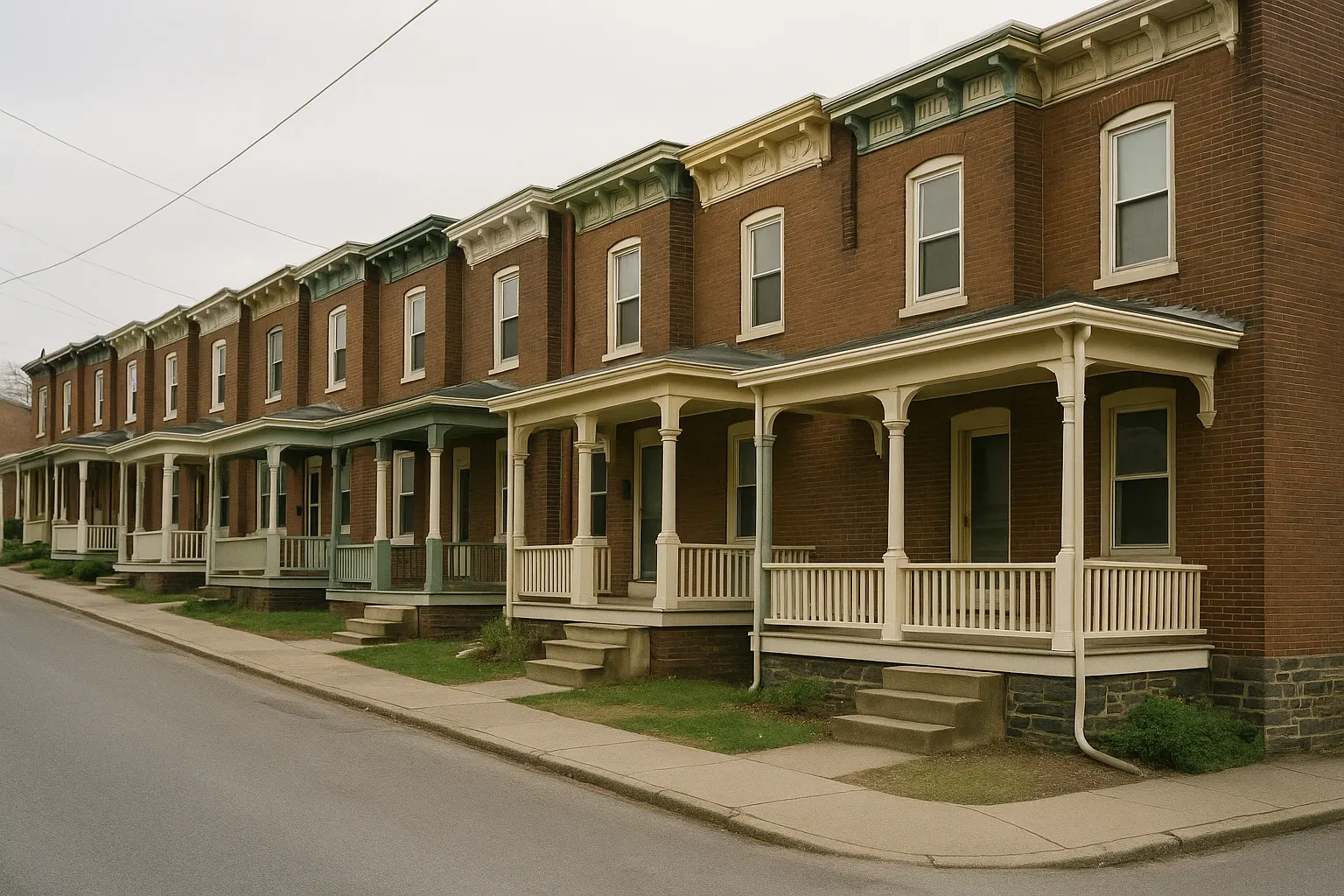
Much of the borough is on the National Register of Historic Places. The West Norristown Historic District, listed in 1984, takes in about 1,700 buildings across roughly 220 acres of the West End. Most are rowhouses, with a large number of semi-detached twins, built between 1885 and 1925.
The Central Norristown Historic District, listed the same year, covers about 1,900 buildings over 245 acres, including the downtown business blocks, workers' housing and the residential streets around them, in Greek Revival, Italianate and Victorian styles.
What affects pest work here is the age of the construction, not the historic listing. Houses a century or more old have had generations of plumbing, gas, electric and cable lines run through foundations and party walls, and each run leaves a gap unless someone sealed it.
Norristown's housing in numbers
Census figures (ACS 2020-2024) show how different the borough is from the townships around it.
- Norristown borough: only 13.4% detached houses, and most homes are renter-occupied. Pest work here often means coordinating with a landlord or neighbor.
- West Norriton: a middle case, with nearly a third of homes attached and a median build year of 1979.
- East Norriton: mostly detached 1960s and 1970s houses on their own lots, where pest problems start at that house rather than next door.
| Measure | Norristown borough | West Norriton Twp | East Norriton Twp |
|---|---|---|---|
| Median year built | 1957 | 1979 | 1974 |
| Built before 1940 | 32.9% | 6.8% | 4.9% |
| Built before 1960 | 55.4% | 25.9% | 27.2% |
| Attached twins, rows, townhomes | 47.1% | 30.6% | 13.1% |
| Single-family detached | 13.4% | 34.7% | 57.5% |
| Owner-occupied | 42.7% | 67.7% | 69.5% |
How pests move through shared walls
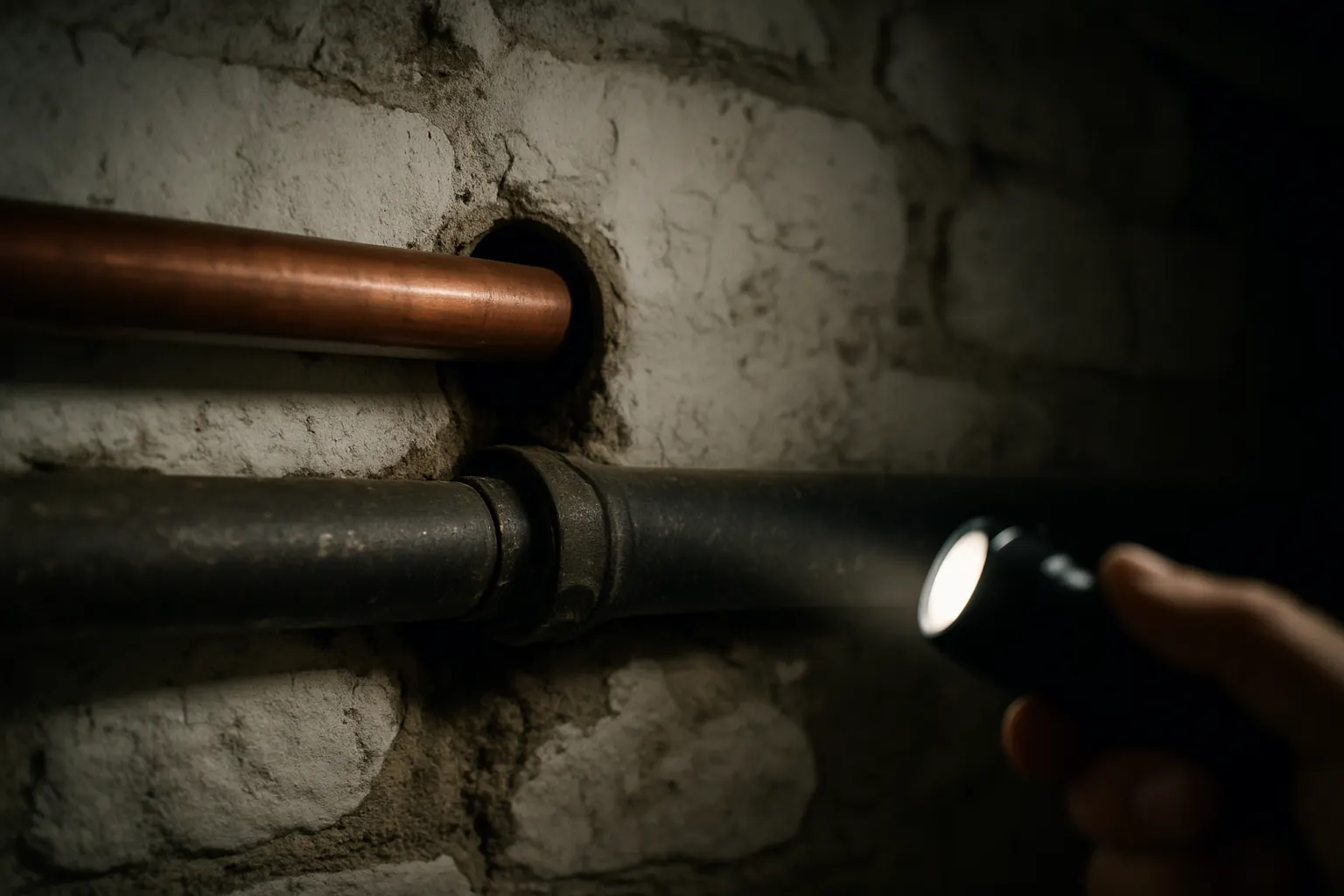
In a row of attached houses, the walls between homes are shared, and basements often have pipe and wire runs that pass through or along them. That creates paths between homes that a detached house doesn't have. This describes how attached buildings are put together. It is not a count of Norristown infestations, but it is why mice, German cockroaches and bed bugs get extra attention in attached homes.
House mice. Penn State Extension notes a mouse can fit through a hole about the size of a dime, and that openings mice use often show a dirty, oily mark. In a rowhouse, those openings can lead to the neighbor's basement as easily as to the outside. Sealing with rodent-proof materials such as copper mesh, hardware cloth and silicone sealant closes both routes. See mouse and rat control for the full approach.
German cockroaches. Penn State says they live near kitchens and bathrooms, arrive in boxes, grocery bags and suitcases, and recommends caulking holes where pipes pass through walls. In attached homes, those pipe holes can connect kitchens on either side of a wall. Our cockroach control work treats the unit and seals the runs.
Bed bugs. Penn State notes that in multi-unit buildings, bed bugs can move from one unit to another vertically and horizontally. Apartment buildings and houses divided into units fit that pattern. Details on inspection and prep are on our bed bug treatment page.
Why treating one side of a twin sometimes isn't enough
If mice, roaches or bed bugs are living in the attached home next door, treating only your side can knock numbers down without ending the problem. We'll tell you when the evidence points through the wall: droppings concentrated at a party wall, activity around a shared pipe chase, or bed bugs in a room that backs onto the neighbor's bedroom. When that happens, sealing the shared openings and, where possible, working with the neighbor or landlord at the same time gives the work a much better chance of holding.
The seasonal pattern in attached homes
House mice are the fall pest here. Penn State notes mice come indoors looking for shelter as the weather turns cold, and in a row of attached houses they settle into basements, wall voids and the spaces under kitchen cabinets on either side of a wall. September through November is when sealing does the most good.
German cockroaches and bed bugs are not seasonal in the same way. Both live indoors year-round, so they can turn up in January as easily as July. Summer travel is the exception for bed bugs: they move in luggage and clothing, which is why a trip is often the first thing we ask about.
All of Montgomery County has been inside the Pennsylvania Department of Agriculture spotted lanternfly quarantine since November 2017. Egg masses show up on trees, fences and cars from September, and our spotted lanternfly guidance covers scraping them.
Termites and old sill plates in Norristown
Penn State Extension notes that eastern subterranean termite infestations usually start at basement mudsills and joists, and that damage typically shows 10 or more years after a house is built. With 55.4% of borough homes built before 1960, the sill plate on an old stone or brick foundation is where we start, checking for mud tubes and for carpenter ants in damp framing. See termite inspection and treatment.
Mosquitoes and West Nile virus in Montgomery County
The PA Department of Environmental Protection runs the state's mosquito-borne disease program with county partners. Its 2025 seasonal summary recorded 133 West Nile virus-positive mosquito samples and 4 human cases in Montgomery County.
We are not offering mosquito yard treatment at this time. DEP's own advice for residents is about standing water: get rid of cans, plastic containers and pots that collect water, turn over wading pools, keep birdbaths and wheelbarrows from holding water, clean rain gutters and corrugated downspouts, and pay attention to old tires. On a row of attached houses, one clogged gutter or downspout can hold water for the whole block.
The river and the trail
Norristown sits on the Schuylkill River, and the Schuylkill River Trail runs beside the SEPTA station in town on its way between Philadelphia and Phoenixville. Stoney Creek forms part of the West Norristown district boundary. Streamside and riverside lots stay damp, and damp basements pull in camel crickets, centipedes and silverfish in older houses. Those are covered on our camel cricket, centipede and silverfish page.
How a visit runs in Norristown
Every job follows The Davis Inspection Standard. In attached housing, that means we identify the species first, look for the conducive conditions on both sides of any shared wall we can reach, place treatment where the pest lives according to the label, and set a follow-up before we leave. Re-entry and prep instructions come before we start. Call (610) 935-9130 or use our contact page to book.
Communities covered
This page covers Norristown borough (ZIP 19401), West Norriton Township (ZIP 19403) and East Norriton Township (ZIPs 19403 and 19401), including the West Norristown and Central Norristown historic districts. Service is run from our Phoenixville headquarters at 153 Silver Springs Rd. King of Prussia (Upper Merion Township) and Bridgeport across the river have their own page, and the rest of Montgomery County is covered through our Montgomery County page.
Sources
- Wikipedia: West Norristown Historic District (NRHP)
- Wikipedia: Central Norristown Historic District (NRHP)
- PA DEP: 2025 Arboviral Seasonal Summary for Pennsylvania
- PA DEP: Mosquito-borne Disease Control
- Penn State Extension: Is There a Mouse in the House?
- Penn State Extension: German Cockroaches
- Penn State Extension: Biology, Habitat, and Management of Bed Bugs
- Schuylkill River Greenways: Philadelphia to Phoenixville on the SRT
- U.S. Census Bureau: 2020 Census Redistricting Data, Pennsylvania
- U.S. Census Bureau, ACS 2020-2024 5-year, via Census Reporter
- Penn State Extension: Eastern Subterranean Termites
- Pennsylvania Department of Agriculture: Spotted Lanternfly Quarantine and Permitting
- LancasterOnline: Spotted lanternfly quarantine expands to Lancaster and other counties (November 2017)
Pest control in Norristown: common questions
Can mice get into my Norristown rowhouse from the house next door?
They can. Attached houses share walls, and basements often have pipe and wire runs along or through them. Penn State notes a mouse can fit through a hole about the size of a dime. If droppings cluster along a party wall or at a shared pipe chase, the route may be through the neighbor's side, and sealing those openings matters as much as trapping.
Why do German cockroaches keep coming back in my twin?
Often because the source is next door or the pipe openings between units are still open. Penn State notes German cockroaches arrive in boxes, grocery bags and suitcases and recommends caulking holes where pipes pass through walls. If only one side of a twin is treated and the other has an active population, roaches can return through those gaps.
I rent in Norristown. Can I still book pest control?
Yes. Tenants and landlords both call us. Most Norristown borough homes are renter-occupied, so both may need to be involved. If the problem looks like it crosses into another unit, we'll say so and explain what the owner would need to allow for the work to cover the whole building. Call (610) 935-9130.
Do you serve West Norriton and East Norriton?
Yes. Both townships are covered along with Norristown borough, including homes that mail as Norristown with ZIP 19403 or 19401. East Norriton is mostly detached houses, so pest problems there usually start at the house itself. West Norriton has a mix, with about 30% attached homes.
Are older Norristown homes more likely to have mice?
Age alone does not bring mice, but it adds openings. More than half of Norristown borough homes were built before 1960, and a century of plumbing, gas and wiring work leaves gaps in foundations and party walls. Penn State notes a mouse can fit through a hole about the size of a dime, so those small, forgotten openings are where our inspection starts.
Is West Nile virus a problem in Montgomery County?
The PA DEP 2025 seasonal summary recorded 133 West Nile virus-positive mosquito samples and 4 human cases in Montgomery County. DEP runs surveillance with the county. Its advice for residents is to remove standing water: containers, wading pools, birdbaths, wheelbarrows, clogged gutters and old tires. We are not offering mosquito yard treatment at this time.
Can bed bugs spread between apartments in a converted Norristown house?
Yes. Penn State Extension notes that in apartment buildings bed bugs can move between units both vertically and horizontally, and they also travel in luggage, furniture and bedding. In a house split into apartments, that means the units above, below and beside yours are worth checking when bed bugs turn up.
Family owned. Licensed and insured in Pennsylvania.
Schedule a pest inspection in Norristown
Tell us what you are seeing and where. We will call you back to set up a visit, identify the pest and walk you through the plan before any treatment.
- The species identified before anything is applied
- Entry points and moisture problems pointed out on your property
- Prep and re-entry instructions explained up front
Prefer to talk now? Call (610) 935-9130