
Downingtown, PA
Pest Control in Downingtown: An Old Borough Core Inside a Ring of New Subdivisions
C.R. Davis III & Sons Pest Control serves Downingtown borough, East Caln, Caln and East Brandywine as part of our West Chester service area, with visits dispatched from our Phoenixville headquarters. Downingtown pairs older twins and rowhouses along the East Branch Brandywine Creek with subdivisions built after 2000, and each needs a different inspection.
Who serves Downingtown
Downingtown falls inside our West Chester service area, one of the two territories we use to organize pest control across Chester County. Our West Chester location is coming soon. Until it opens, every Downingtown visit is scheduled and dispatched from our headquarters at 153 Silver Springs Rd in Phoenixville, which is about 12.5 miles from the borough by road.
This page covers four municipalities that share the Downingtown 19335 mailing name: Downingtown borough, East Caln Township, Caln Township (including Thorndale, which also uses 19372) and East Brandywine Township. Parts of Caln mail as Coatesville 19320. Towns to the west, such as Coatesville and Valley Township, have their own page.
Two housing patterns side by side
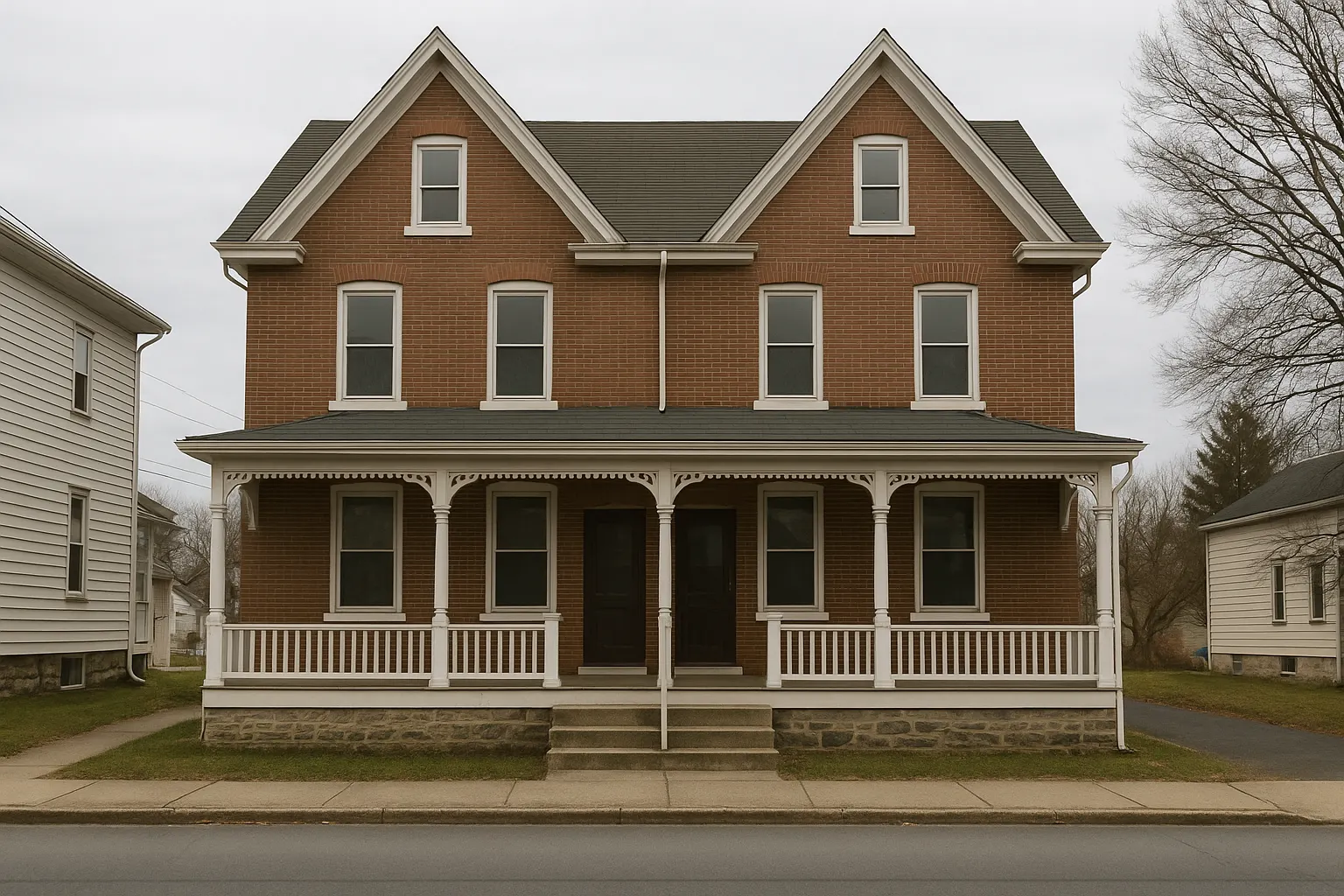
Downingtown borough grew up along the creek, and a large share of its homes are twins, rowhouses and older singles. The townships around it filled in much later. Nearly half the homes in East Caln and East Brandywine were built in 2000 or later. The census figures below compare the borough with its neighbors.
| Municipality | Median year built | Built before 1940 | Built 2000 or later | Attached homes | Owner occupied |
|---|---|---|---|---|---|
| Downingtown borough | 1968 | 21.3% | 22.4% | 35.1% | 48.0% |
| East Caln Twp | 1995 | 1.4% | 45.3% | 15.3% | 50.6% |
| Caln Twp | 1981 | 9.4% | 19.1% | 24.5% | 69.9% |
| East Brandywine Twp | 1996 | 7.4% | 46.3% | 17.7% | 96.8% |
The borough core: shared walls and stone foundations
In Downingtown borough, 38.1% of homes were built before 1960 and 35.1% are single-family attached, meaning twins, rows and townhomes. Only 48% are owner occupied, so many calls come from renters or landlords. In attached houses, mice travel along the party wall, through the shared basement line and across attic spaces, which is why sealing one side of a twin rarely settles the problem if the neighbor's side stays open.
Older foundations add their own entry points. Fieldstone and block walls develop gaps where mortar has washed out, and basement windows in older homes often sit loose in their frames. Mice need an opening only about the width of a pencil. On a borough inspection we check the sill line, where utilities enter, the bulkhead or cellar door, and the gap under exterior doors. Our mouse and rat control page explains how we set traps and bait stations along the runways we find.
If you rent, tell your landlord what you are seeing and when. Some leases make pest control the owner's responsibility, and a short written note with dates helps the owner decide whether one unit or the whole building needs an inspection.
Living along the East Branch Brandywine Creek
The East Branch Brandywine Creek runs through the middle of the borough, and Chester County's Brandywine watershed planning covers the land around it. Low ground near the creek holds moisture, and carpenter ants look for damp wood.
Carpenter ants do not eat wood, but they excavate galleries in wood that is damp or already softened. Penn State Extension notes that the best time to look for them is May through July, late at night, when workers leave the nest to forage. Around creek-side homes we look at porch framing, window sills, rotted fascia and any wood touching wet soil. Big black ants inside the house in spring are worth a look even if you never see sawdust. Our carpenter ant control page covers how to tell carpenter ant damage from termite damage.
The newer ring: East Caln, East Brandywine and Caln
East Caln and East Brandywine grew mostly after 1990, and East Brandywine homes are almost all owner occupied at 96.8%. People who buy there often assume a newer house means no termites. Penn State Extension says eastern subterranean termites live throughout Pennsylvania, that infestations usually start at the basement mudsill and joists, and that damage often shows ten or more years after construction. A house built in 2003 has passed that point.
New subdivisions also leave the kind of conditions termites use: mulch piled against poured foundations, wood form boards buried in backfill, decks built on posts set in soil, and finished basements that hide the sill plate behind drywall. Our termite inspection and treatment page explains how we check those spots and where treatment goes when activity is confirmed.
Buying or selling a home in 19335
Homes for sale around Downingtown range from pre-1940 borough twins to subdivision houses finished in the last decade. We write wood-destroying insect (WDI) reports for buyers, sellers and agents. The inspection covers visible, accessible areas such as the basement, crawl space, garage and exterior foundation, and the report states what was found on that day. Finished basements and stored boxes limit what anyone can see, so clear the sill line where you can before the appointment.
A year of pests around Downingtown
Timing follows Penn State Extension for southeastern Pennsylvania. A warm March or a late frost moves it by a few weeks.
| Season | What is typically active |
|---|---|
| February to June | Termite swarmers indoors on warm days, often near a basement window or sliding door |
| May to July | Carpenter ant workers foraging at night, especially near damp porch and sill wood |
| Summer | Paper wasp nests under eaves; yellow jacket colonies in lawns and wall voids |
| September and October | Stink bugs on south and west walls; mice testing gaps in older twins |
| November to February | Mice in walls, attics and shared basements |
How we handle a Downingtown visit
Every job follows The Davis Inspection Standard. We identify the species before applying anything. We name the conducive conditions, such as a mortar gap in a borough foundation or mulch against a new-build wall. We place treatment where the pest lives, following the product label. Then we set a follow-up and give you re-entry and prep instructions before the work starts. Call (610) 935-9130 and tell us your street and township so we can plan the route.
Communities covered
As part of our West Chester service area, with visits dispatched from Phoenixville, we cover Downingtown borough, East Caln Township, East Brandywine Township and Caln Township, including Thorndale. Mailing names in this area include Downingtown 19335, Thorndale 19372 and, for part of Caln, Coatesville 19320.
Sources
- Penn State Extension: Eastern Subterranean Termites
- Penn State Extension: Carpenter Ants
- Penn State Extension: Is There a Mouse in the House?
- East Branch Brandywine Creek (Wikipedia)
- Chester County Planning: Brandywine watershed
- U.S. Census Bureau ACS 2020-2024 housing tables via Census Reporter
- OSRM road routing from Census internal points
Pest control in Downingtown: common questions
Is there a C.R. Davis office in Downingtown?
No. Downingtown is part of the area we serve around West Chester, and our West Chester location is coming soon. For now every Downingtown appointment is scheduled and dispatched from our headquarters at 153 Silver Springs Rd in Phoenixville, about 12.5 miles from the borough by road. The phone number for every town we serve is (610) 935-9130.
Do you cover Thorndale and the Coatesville-addressed part of Caln Township?
Yes. Thorndale is part of Caln Township, and we cover all of Caln whether the mailing address says Downingtown 19335, Thorndale 19372 or Coatesville 19320. When you call, give us the street name and township rather than only the mailing town, since the post office names here do not follow municipal lines.
Why do mice keep coming back in my Downingtown twin?
In a twin or rowhouse, the two halves share a wall, often a basement line and sometimes an attic space. Mice move between units through those shared spaces. If only one side seals its gaps, mice can keep entering from the other side. We look for runways and entry points on your side and write them down so you can share them with the neighbor or landlord.
My East Brandywine house was built in 2002. Can it have termites?
Yes. Penn State Extension reports that eastern subterranean termites live throughout Pennsylvania and that damage often shows up ten or more years after a house is built. Newer homes are not exempt. Mulch against the foundation, buried form boards and wood decks on soil all give termites a path. An inspection checks the sill plate, foundation walls and those contact points.
Are carpenter ants more common near the Brandywine Creek?
Carpenter ants nest in wood that is damp or already softened, so homes near wet ground, with leaky gutters or rotted porch framing, give them more places to settle. We have no town-level count to share, but moisture is the condition we check first. Penn State Extension suggests looking for foraging workers late at night between May and July.
Can you do a WDI report for a Downingtown home sale?
Yes. We write wood-destroying insect reports for real estate across Downingtown, East Caln, Caln and East Brandywine. The report covers visible, accessible areas on the day of the inspection. Stored belongings and finished walls limit what can be seen, so clearing space along the basement walls before the visit helps. Call with the address and closing date to schedule.
I rent in Downingtown borough. Who should call the pest company?
Check your lease first. Some leases make pest control the owner's responsibility, especially for problems that start in shared walls or basements. Tell your landlord in writing what you have seen, where and when. We can inspect for either a tenant or an owner, but in attached buildings the owner can often approve work on more than one unit.
Related services and nearby areas
Family owned. Licensed and insured in Pennsylvania.
Schedule a pest inspection in Downingtown
Tell us what you are seeing and where. We will call you back to set up a visit, identify the pest and walk you through the plan before any treatment.
- The species identified before anything is applied
- Entry points and moisture problems pointed out on your property
- Prep and re-entry instructions explained up front
Prefer to talk now? Call (610) 935-9130