
Pottstown, PA
Pest Control in Pottstown: Old Stone Basements, Mice and Camel Crickets
C.R. Davis III & Sons Pest Control serves Pottstown borough, the Lower, Upper and West Pottsgrove Townships, North Coventry Township and East Coventry Township from our Phoenixville headquarters, about 11 road miles away. Pottstown borough has the oldest median housing age of any town with its own page on this site. Old stone and brick foundations, damp basements and a wooded state park edge make mice and camel crickets the pests to plan for.
Who serves Pottstown, and which towns that includes
Pottstown is served from our Phoenixville pest control headquarters at 153 Silver Springs Rd, about 10.6 road miles from the borough. The borough and the Pottsgroves are part of our Montgomery County service area, and North Coventry Township and East Coventry Township, across the river, are part of our Chester County service area. There is no Pottstown storefront, so every visit happens at your house.
This page covers six municipalities in two counties. On the Montgomery side: Pottstown borough (23,433 people in 2020), Lower Pottsgrove (including Sanatoga and Pottsgrove), Upper Pottsgrove (including Halfway House) and West Pottsgrove (including Stowe), all in ZIP 19464. On the Chester County side: North Coventry Township (including Kenilworth and South Pottstown, ZIP 19465) and East Coventry Township, which mails as Pottstown, Spring City or Parker Ford.
The oldest housing on our map
Pottstown borough's median build year of 1951 is the oldest of any town with its own page on this site. Census figures (ACS 2020-2024) put 69.2% of its housing before 1960 and 38.9% before 1940. Only 5.8% was built in 2000 or later. The townships around it are younger, but not uniformly.
- Borough and West Pottsgrove (Stowe): mostly pre-1960 houses, and 32.3% of borough homes are twins or rows that share walls.
- Upper Pottsgrove and East Coventry Township: close to half the homes date from 2000 or later, so the pest questions there are about new construction and wooded lots, not old masonry.
| Town | Median year built | Built before 1940 | Built before 1960 | Built 2000 or later |
|---|---|---|---|---|
| Pottstown borough | 1951 | 38.9% | 69.2% | 5.8% |
| West Pottsgrove Twp | 1956 | 24.8% | 57.0% | 2.7% |
| North Coventry Township | 1970 | 24.0% | 37.9% | 13.3% |
| Lower Pottsgrove Twp | 1983 | 7.0% | 19.6% | 18.2% |
| East Coventry Township | 1988 | 8.0% | 21.6% | 42.8% |
| Upper Pottsgrove Twp | 1995 | 7.3% | 18.9% | 45.1% |
Old Pottstown Historic District
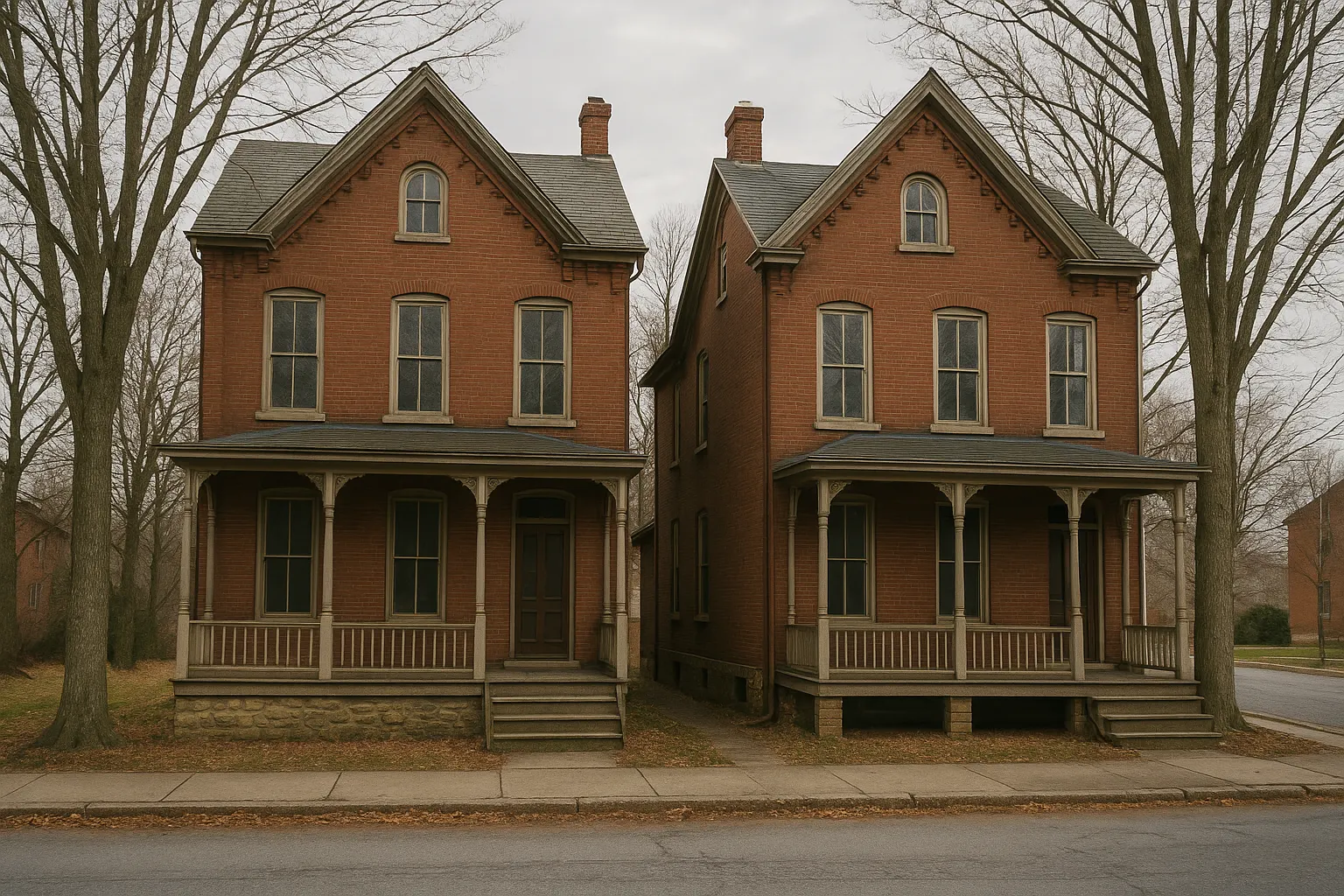
The Old Pottstown Historic District was listed on the National Register of Historic Places in 1985 and expanded in 1991. It has 956 contributing buildings across the downtown and the residential blocks around it: workers' homes, larger houses, churches, mills and foundry buildings, in Federal, Gothic Revival and Late Victorian styles, with Italianate commercial buildings along High Street. Across the river, North Coventry Township has its own listed district, the Pottstown Landing Historic District.
Nineteenth and early twentieth century houses like these were built on foundations of fieldstone or brick laid in soft mortar, often with wood sills resting directly on the masonry. That construction is the starting point for most of the pest work described below.
Stone foundations, older mortar and mice
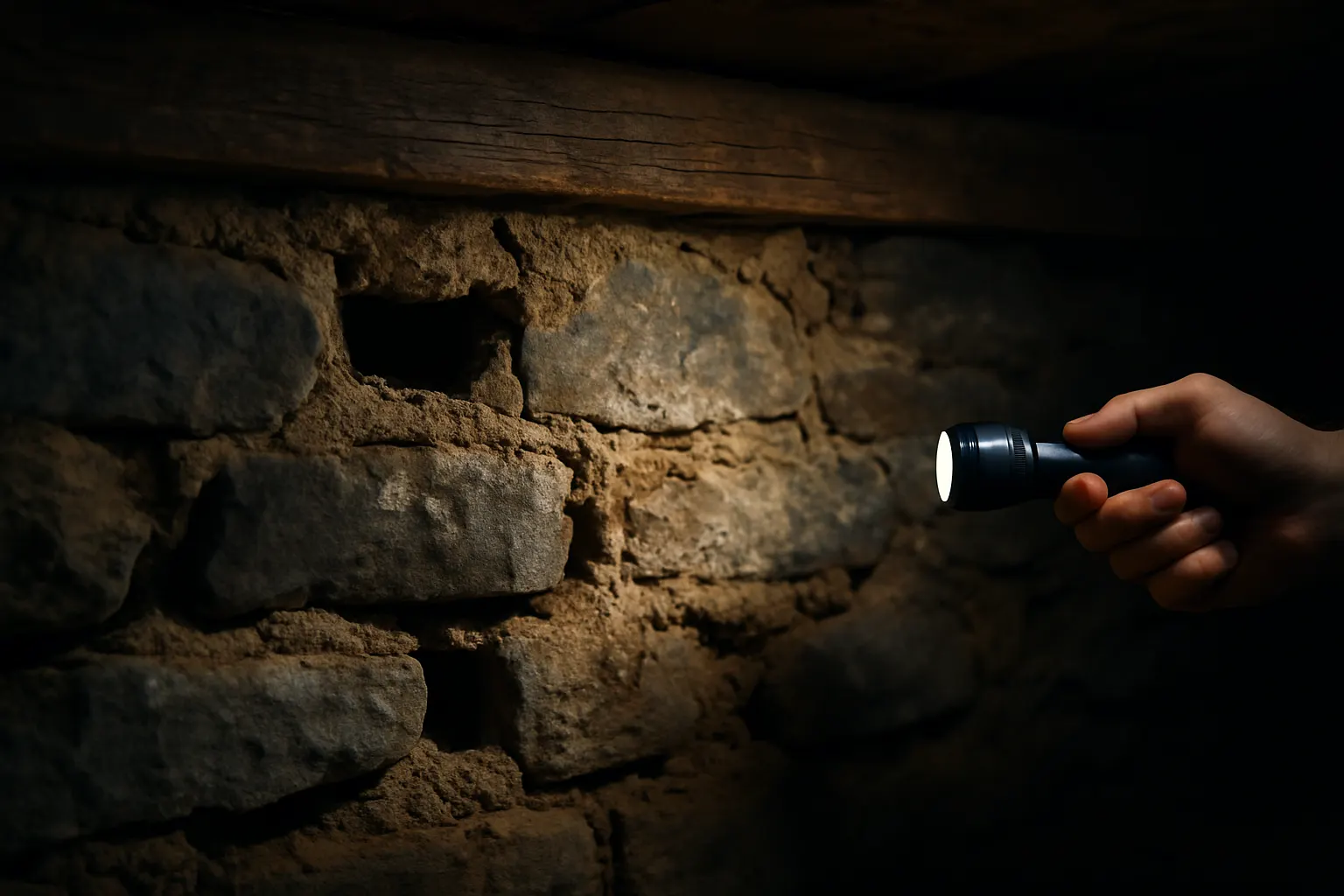
An old stone foundation is not a solid wall. It is hundreds of irregular stones with mortar joints between them, and over a century of freeze, thaw and ground moisture, mortar softens and washes out of those joints. Add the holes left from coal chutes, abandoned pipes and old wiring, and the basement of a prewar Pottstown house can have dozens of small openings.
Penn State Extension notes a mouse can fit through a hole about the size of a dime, and that openings mice use often have a dirty, oily mark around them. In rough stone walls, those marks are how we find the active routes. Penn State recommends sealing with rodent-proof materials such as copper mesh, hardware cloth and silicone sealant, and adding door sweeps. On a stone foundation that means packing and sealing the voids, not just caulking a line. See mouse and rat control for how we set traps and follow up.
Mice move indoors for shelter as it turns cold, so September through November is when sealing an old basement pays off most.
Camel crickets in damp basements
Camel crickets are the other pest we find most in old Pottstown basements. They are wingless, humpbacked and long-legged, which makes them look almost like spiders when they jump. North Carolina State Extension notes they move into basements, crawlspaces, garages, laundry rooms and other damp spaces, and that extremes of weather, heavy rain or long hot, dry spells, push them indoors.
They don't bite and they don't damage the house, but a damp stone basement suits them well. What works, per NC State: reduce moisture in the basement with a dehumidifier and by fixing gutter and grading problems; seal gaps around basement windows, doors and the foundation; keep mulch and ground cover at least 12 inches back from the foundation; move firewood and lumber piles away from the house; and put sticky boards in corners and behind appliances. Our camel cricket, centipede and silverfish page covers the rest.
Wood sills and termites in prewar houses
Penn State Extension notes that eastern subterranean termites are present throughout Pennsylvania, that infestations usually start at the basement mudsills and joists, and that swarms appear in spring. In an old Pottstown house, the sill is often original wood sitting on a damp stone wall, sometimes with soil or debris piled against it inside or out. An inspection looks at sills, joist ends and any wood touching soil. If you're buying one of these houses, a real estate termite (WDI) inspection before closing is worth scheduling, and our termite inspection and treatment page covers what happens if activity turns up.
French Creek State Park and the wooded edge
French Creek State Park covers 7,730 acres in North Coventry and Warwick Townships in Chester County and Robeson and Union Townships in Berks County. Its forests are second-growth hardwoods, mostly oak and maple, around Hopewell Lake and Scotts Run Lake. Homes in North Coventry Township near the park and on wooded lots in East Coventry Township live next to a lot of forest.
Penn State notes brown marmorated stink bugs begin entering houses in September and October and that homes next to woods are at higher risk. Firewood stacked against the house for winter also gives camel crickets and other occasional invaders a place to shelter right at the foundation. Downriver, the Schuylkill River Trail links Pottstown to Phoenixville along the river.
How a visit runs in Pottstown
We follow The Davis Inspection Standard on every job. In an old Pottstown basement that means: identify the species first, whether it's a house mouse, a camel cricket or a termite swarmer; find the conducive conditions, usually moisture, open mortar joints and wood touching soil; place treatment where the pest lives, per the label; and set a follow-up so we can check that sealed routes stayed sealed. Re-entry and prep instructions come before we start. Call (610) 935-9130 or use our contact page.
Communities covered
This page covers Pottstown borough and Lower Pottsgrove (Sanatoga, Pottsgrove), Upper Pottsgrove (Halfway House) and West Pottsgrove (Stowe) Townships in Montgomery County, ZIP 19464, plus North Coventry (Kenilworth, South Pottstown) and East Coventry Townships in Chester County, ZIPs 19465, 19475 and 19457. Service is run from our Phoenixville headquarters at 153 Silver Springs Rd. Nearby towns without their own page are covered through our Montgomery County and Chester County pages.
Sources
- Wikipedia: Old Pottstown Historic District (NRHP)
- Wikipedia: Pottstown Landing Historic District
- Wikipedia: French Creek State Park
- Penn State Extension: Is There a Mouse in the House?
- NC State Extension: Camel Crickets
- Penn State Extension: Eastern Subterranean Termites
- Penn State Extension: Brown Marmorated Stink Bug
- Schuylkill River Greenways: Phoenixville to Pottstown on the SRT
- U.S. Census Bureau: 2020 Census Redistricting Data, Pennsylvania
- U.S. Census Bureau, ACS 2020-2024 5-year, via Census Reporter
Pest control in Pottstown: common questions
Why do old Pottstown houses get so many mice?
Mostly because of the foundations. Most borough homes were built before 1960, many on fieldstone or brick with mortar that has worn out of the joints, plus holes from old pipes and coal chutes. Penn State notes a mouse can fit through a hole about the size of a dime. We seal those voids with rodent-proof materials, then trap.
How do I get rid of camel crickets in my basement?
Start with moisture. North Carolina State Extension recommends running a dehumidifier, sealing gaps around basement windows, doors and the foundation, keeping mulch at least 12 inches from the foundation, moving firewood and lumber away from the house, and using sticky boards in corners. Camel crickets don't bite or damage the house, but a damp stone basement will keep attracting them until it dries out.
Are camel crickets dangerous?
No. Camel crickets do not bite people and are not a structural pest. They are a nuisance, mainly because they jump when disturbed and can show up in large numbers in damp basements, laundry rooms and crawlspaces. Their presence is a good sign the space is too damp, which can matter for other pests too.
Do you serve Sanatoga, Stowe and South Pottstown?
Yes. Sanatoga and Pottsgrove are in Lower Pottsgrove Township, Stowe is in West Pottsgrove Township, Halfway House is in Upper Pottsgrove Township, and Kenilworth and South Pottstown are in North Coventry Township. All are covered on this page, along with Pottstown borough and East Coventry Township. Call (610) 935-9130 if you're unsure about your address.
Should I get a termite inspection before buying an old house in Pottstown?
It is worth doing. Penn State notes eastern subterranean termites are present across Pennsylvania and that infestations usually start at basement mudsills and joists. Older Pottstown houses often have original wood sills on damp stone walls. A wood-destroying insect inspection looks for visible evidence at those points before you close.
Do homes near French Creek State Park have more stink bugs?
Penn State Extension notes that homes next to woods are at higher risk from brown marmorated stink bugs, which look for overwintering sites in September and October. Homes in North Coventry Township and East Coventry Township near the park's 7,730 acres of forest fit that description, so sealing gaps around windows, siding and vents before late September matters most there.
Can you seal a stone foundation without damaging it?
Our sealing work targets the openings mice and insects use: voids between stones, gaps around pipes and wiring, and old chute or vent holes. Those are packed with rodent-proof material and sealed. Repointing a stone foundation with new mortar is masonry work, and for that, especially on a house in the Old Pottstown Historic District, a mason who works with historic mortar is the right call.
Family owned. Licensed and insured in Pennsylvania.
Schedule a pest inspection in Pottstown
Tell us what you are seeing and where. We will call you back to set up a visit, identify the pest and walk you through the plan before any treatment.
- The species identified before anything is applied
- Entry points and moisture problems pointed out on your property
- Prep and re-entry instructions explained up front
Prefer to talk now? Call (610) 935-9130