
Cockroach Control
Cockroach Control in Phoenixville: Name the Species Before You Treat
C.R. Davis III & Sons Pest Control treats German, American and wood cockroaches in homes and businesses around Phoenixville and across Chester County, Montgomery County and Delaware County. The species decides the plan. German cockroaches breed in kitchens and need bait placed in cracks and crevices with follow-up visits, while wood cockroaches wander in from outdoors and mostly need the gaps closed.
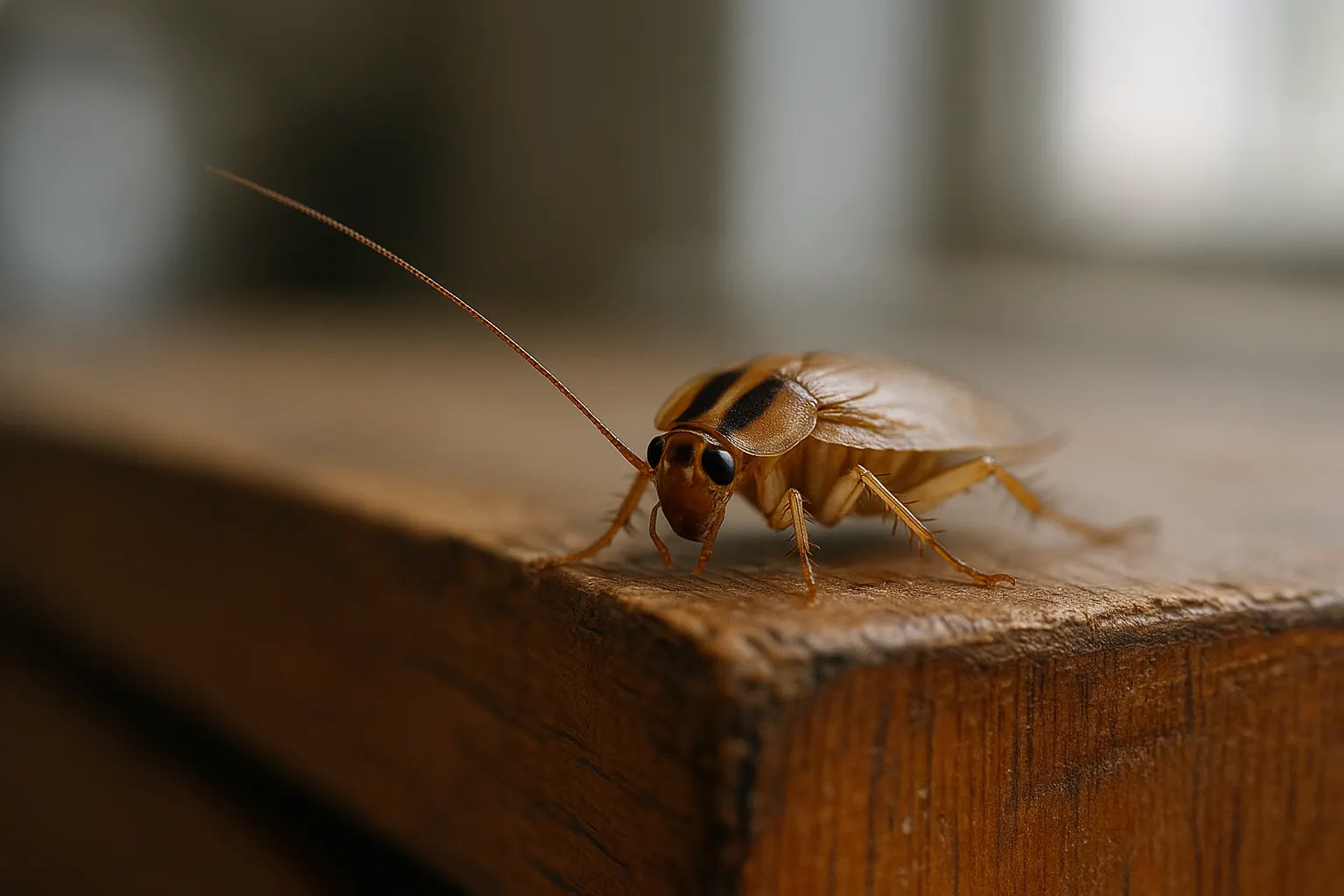
Three cockroaches show up in southeastern Pennsylvania buildings
When someone calls about roaches, the first question is which roach. Three kinds account for nearly everything we see in Chester County and Montgomery County homes and businesses, and they need three different responses. A wood cockroach does not need the bait program a German cockroach infestation does, and German cockroaches handled with exclusion alone keep breeding.
If you can catch one, put it in a sealed bag or take a clear photo next to a coin. The size, color and markings tell us most of what we need, and our inspection confirms the rest.
| Species | Size and look | Where you find it | Breeds indoors? |
|---|---|---|---|
| German cockroach | 1/2 to 5/8 inch, tan, two dark stripes behind the head | Kitchens, bathrooms, near appliances and plumbing | Yes, rapidly |
| American cockroach | About 1 1/2 inches, reddish brown, full wings | Basements, floor drains, pipe chases, sewers | Yes, in warm damp areas |
| Wood cockroach | Males up to 1 inch, females up to 3/4 inch | Wooded lots, woodpiles, leaf litter, porch lights | No |
German cockroaches live in kitchens and multiply fast
The German cockroach is the one that causes real infestations. Adults are 1/2 to 5/8 inch long and tan, with two dark parallel stripes running from the head back toward the wings. They hide in warm, damp cracks during the day: behind the refrigerator and stove, inside the dishwasher door, under the sink, in cabinet hinges, inside microwaves and coffee makers, and behind loose baseboards.
A female carries a purse-shaped egg capsule holding usually 30 to 48 eggs until they are nearly ready to hatch, which takes about 28 days, and she produces four to eight capsules in her life, according to Penn State Extension. Carrying the eggs protects them from sprays. German cockroaches come into a home in grocery bags, cardboard boxes, used appliances and suitcases, not from outdoors.
If you see German cockroaches in daylight, the population is usually large enough that the hiding places are full.
Shared walls let German cockroaches move between units
German cockroaches travel between rooms and adjoining apartments through walls, ceilings, pipes and wiring, according to University of Kentucky entomologists. That matters in older boroughs with a lot of attached housing. In Norristown, 47.1% of homes are single-family attached units, and Coatesville is at about 45%, based on American Community Survey data reported by Census Reporter. Apartments, twins and rowhouses share plumbing walls, and kitchens often back up to each other.
In a building with shared walls, treating one unit often works for a while and then roaches come back from next door. The best results come when the building owner treats neighboring units at the same time. If you manage rental property, our commercial pest control for property managers covers building-wide programs. Homeowners in attached housing can read our Norristown service area notes.
American cockroaches come up from basements and drains
The American cockroach is the big one, about 1 1/2 inches long and reddish brown. Indoors it sticks to warm, damp places: basements, crawl spaces, floor drains, sump pits, pipe chases and around bathtubs. It can travel through sewer lines and come up through drains. Penn State Extension notes it is common in restaurants, bakeries and food processing buildings with steam and moisture.
In a house, American cockroaches usually point to a moisture or drain issue. We look at floor drains without water in the trap, gaps around sewer pipes, damp crawl spaces and leaking pipes. Fixing those conditions and placing bait in the damp areas where they hide is more effective than spraying the open floor.
Wood cockroaches wander in from the woods and don't breed inside
Much of Chester County is wooded, and that brings in the wood cockroach. Pennsylvania has seven species in the genus Parcoblatta. They live outdoors under loose bark, in woodpiles and in leaf litter. Males can fly and are drawn to porch and window lights at night, so they turn up inside on warm evenings from spring through fall, often after firewood is brought in.
Wood cockroaches cannot make it indoors. Penn State Extension says they die within a few days from dehydration and do not feed or reproduce inside. Penn State also says pesticides are unnecessary for them. The answer is exclusion: tighter door sweeps, screen repairs, caulked gaps, firewood kept outside until you burn it, and yellow bug lights or motion lights near doors. We will tell you when a roach is a wood cockroach so you don't pay for an indoor treatment you don't need.
How gel bait and crack-and-crevice placement work
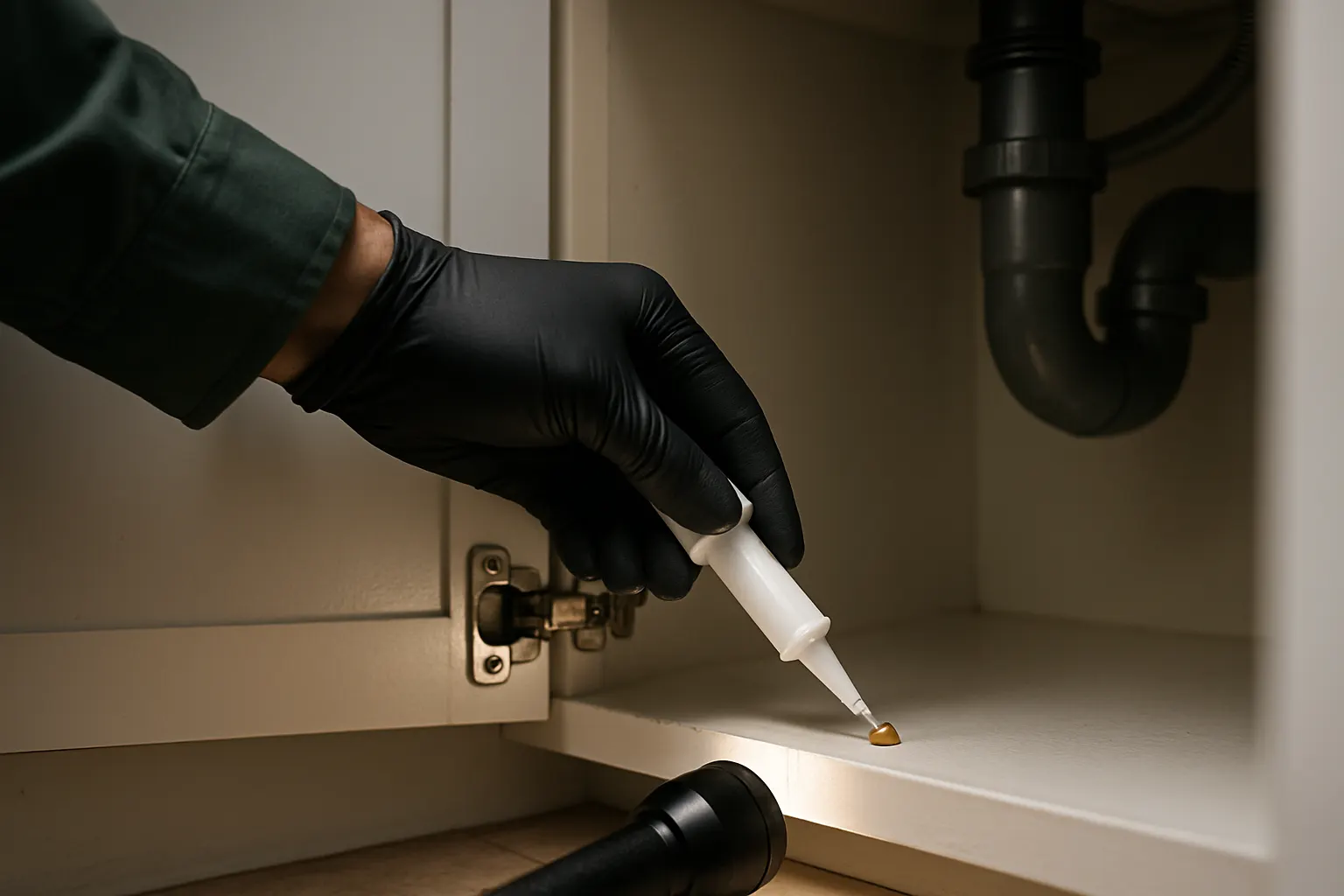
For German and American cockroaches, bait is the main tool. Cockroach gel bait is a food-based material with an insecticide, applied in small dabs right where roaches hide and travel. Roaches eat it, go back to harborage and die there, and other roaches in the group feed on what they leave behind.
Placement is what makes bait work. University of Kentucky guidance says many small placements work better than a few large ones, set flush against the corners and edges of cabinets where roaches walk. We place bait into cracks and crevices, door hinges, the gaps behind appliances, under sink openings and inside cabinet corners, following the product label. Bait placed in cracks stays out of open areas where people and pets touch.
Foggers and broadcast sprays are the wrong tool for kitchen roaches. Kentucky entomologists found that foggers put very little insecticide into cracks and voids, and many products repel roaches, which scatters them deeper into the walls. Penn State Extension gives the same warning about residual sprays for American cockroaches.
We also set sticky monitors under sinks and behind appliances. The count on each monitor tells us where the population is heaviest and whether the numbers are dropping between visits.
Sanitation and prep make the bait work
Bait competes with every other food source in the kitchen. Crumbs under the toaster, grease behind the stove and pet food left out overnight all give roaches something to eat besides the bait. Kentucky's guidance says housekeeping helps, but an established German cockroach infestation usually needs insecticide as well.
- Clean behind and under the stove, refrigerator and dishwasher, then keep crumbs from building up again.
- Store food, including pet food, in sealed containers, and don't leave dirty dishes overnight.
- Fix dripping faucets and leaks under sinks. Roaches need water more than food.
- Break down cardboard boxes and take paper bags out of the house. Roaches hide and lay eggs in corrugated cardboard.
- Don't spray store-bought roach spray or wipe cleaning products over bait placements. Kentucky entomologists note this can keep roaches from taking the bait.
Follow-up visits and what to expect
German cockroach work takes more than one visit because egg capsules hatch after the first treatment, and new nymphs need to find fresh bait. Following The Davis Inspection Standard, we set the follow-up schedule at the first visit and tell you up front how to prep and when you can use the treated areas.
You should see fewer roaches over the first few weeks. Kentucky's guidance says a substantial drop should be apparent within a few weeks when bait is placed well. At each follow-up we read the monitors, add bait where it has been eaten, and look for new hiding spots. A heavy infestation in an apartment with active neighbors takes longer than a light one in a single-family home, and we tell you which situation you are in.
Roaches and mice often share the same kitchen gaps and food sources. See mouse and rat control if you are finding droppings too, or the pantry pest page if the bugs are in your flour and cereal instead. To schedule a cockroach inspection in Phoenixville or anywhere in our area, contact us or call (610) 935-9130.
Where we provide cockroaches service
We work from our family business in Phoenixville and serve homes and businesses across Chester County, Montgomery County and Delaware County. See our Phoenixville pest control page or pest control in West Chester for the towns each area covers.
Sources
- Penn State Extension: German Cockroaches
- Penn State Extension: American Cockroaches
- Penn State Extension: Wood Cockroaches
- University of Kentucky Entomology: Cockroach Elimination in Homes and Apartments (EF614)
- Census Reporter: Norristown, PA (ACS housing data)
- Census Reporter: American Community Survey 2020-2024 housing tables (Coatesville figures)
- 7 Pa. Code § 128.42: Categories of commercial applicators
Cockroaches: common questions
Is it worth getting an exterminator for roaches?
It is worth calling a professional for German cockroaches, because they breed quickly and store-bought sprays and foggers tend to scatter them into walls. For wood cockroaches, it usually is not, since they die indoors within a few days. A quick identification tells you which one you have, and we will tell you if exclusion alone will handle it.
Can an exterminator completely get rid of roaches?
A professional program can bring a German cockroach infestation down to where you no longer see activity, but no one can promise a result before seeing the building. Success depends on bait placement, follow-up visits, sanitation and whether neighboring units are treated. In a single-family home with good prep, results are usually faster than in an apartment with infested units next door.
How do you get rid of a heavy cockroach infestation?
A heavy German cockroach infestation needs a thorough cleaning, many small bait placements in cracks and crevices, sticky monitors, and repeated follow-up visits. Clean behind appliances first so the bait is the easiest food available. Skip foggers, which push roaches deeper into walls. In attached housing, treating the neighboring units at the same time makes a big difference.
What time of year are roaches most active?
German cockroaches are active all year because they live indoors near heat and water, though warm, humid summer weather speeds up breeding. In the Philadelphia area, searches for German cockroaches peak in August. Wood cockroaches show up indoors from spring through fall, when males fly toward lights at night. American cockroaches are most noticeable in warm, damp months.
Why do I see big roaches in my house near the woods?
Large roaches in a house near the woods are usually wood cockroaches, a native Pennsylvania species that lives under bark and in woodpiles. Males fly to lights at night and slip in under doors. They cannot survive indoors for more than a few days and do not breed inside, so the fix is door sweeps, screens, sealed gaps and keeping firewood outside.
Do cockroaches mean my house is dirty?
No. German cockroaches usually arrive in grocery bags, cardboard boxes, used appliances or from a neighboring unit, and wood cockroaches wander in from outdoors. Clutter, crumbs and leaks help a population grow and make treatment harder, but a clean home can still get roaches. Sanitation is part of the fix either way.
Why do roaches keep coming back after I spray?
Roaches come back after spraying because sprays hit open surfaces while roaches hide in cracks, and the egg capsules a German cockroach carries are protected. Many sprays also repel roaches, driving them into wall voids where they keep breeding. Spraying over bait can stop roaches from eating it. Bait placed in cracks with follow-up visits works better.
How long does cockroach treatment take to work?
Cockroach bait starts working within days, and a well-placed bait program should show a clear drop in activity within a few weeks. Full control of a German cockroach infestation takes follow-up visits because new nymphs hatch from egg capsules after the first treatment. Heavier infestations and buildings with shared walls take longer than light problems in a single home.
Do you treat cockroaches in restaurants and apartment buildings?
Yes. We work with restaurants, food service businesses, apartment buildings and property managers on scheduled cockroach programs with monitoring and service documentation. Pennsylvania's Household and Health Related licensing category covers pesticide use in food handling establishments. See our commercial pest control page for how scheduled service and pest logs work.
Related pest control services
Family owned. Licensed and insured in Pennsylvania.
Schedule an inspection for cockroaches
Tell us what you are seeing and where. We will call you back to set up a visit, identify the pest and walk you through the plan before any treatment.
- The species identified before anything is applied
- Entry points and moisture problems pointed out on your property
- Prep and re-entry instructions explained up front
Prefer to talk now? Call (610) 935-9130