
Pantry Pests and Clothes Moths
Pantry Pests in Chester County: Find the Source Package First
C.R. Davis III & Sons Pest Control helps Chester County, Montgomery County and Delaware County homeowners with Indian meal moths, cigarette and drugstore beetles, flour beetles and clothes moths. Most pantry problems start in a single infested package. We identify the insect, help you find where it is breeding, tell you what needs to go in the trash, and treat only when cleanup alone will not finish the job.
Which pantry pest you have changes where to look
Small moths flying around the kitchen at night and tiny brown beetles on the counter are the two things people usually notice. They come from different insects that prefer different foods, so identifying the insect tells you which containers to check first.
Drop a few specimens into a zip bag or take a close photo. We identify them at the start of every job, following The Davis Inspection Standard, because a moth in the pantry and a moth in the bedroom closet are rarely the same insect.
| Insect | What it looks like | What it infests |
|---|---|---|
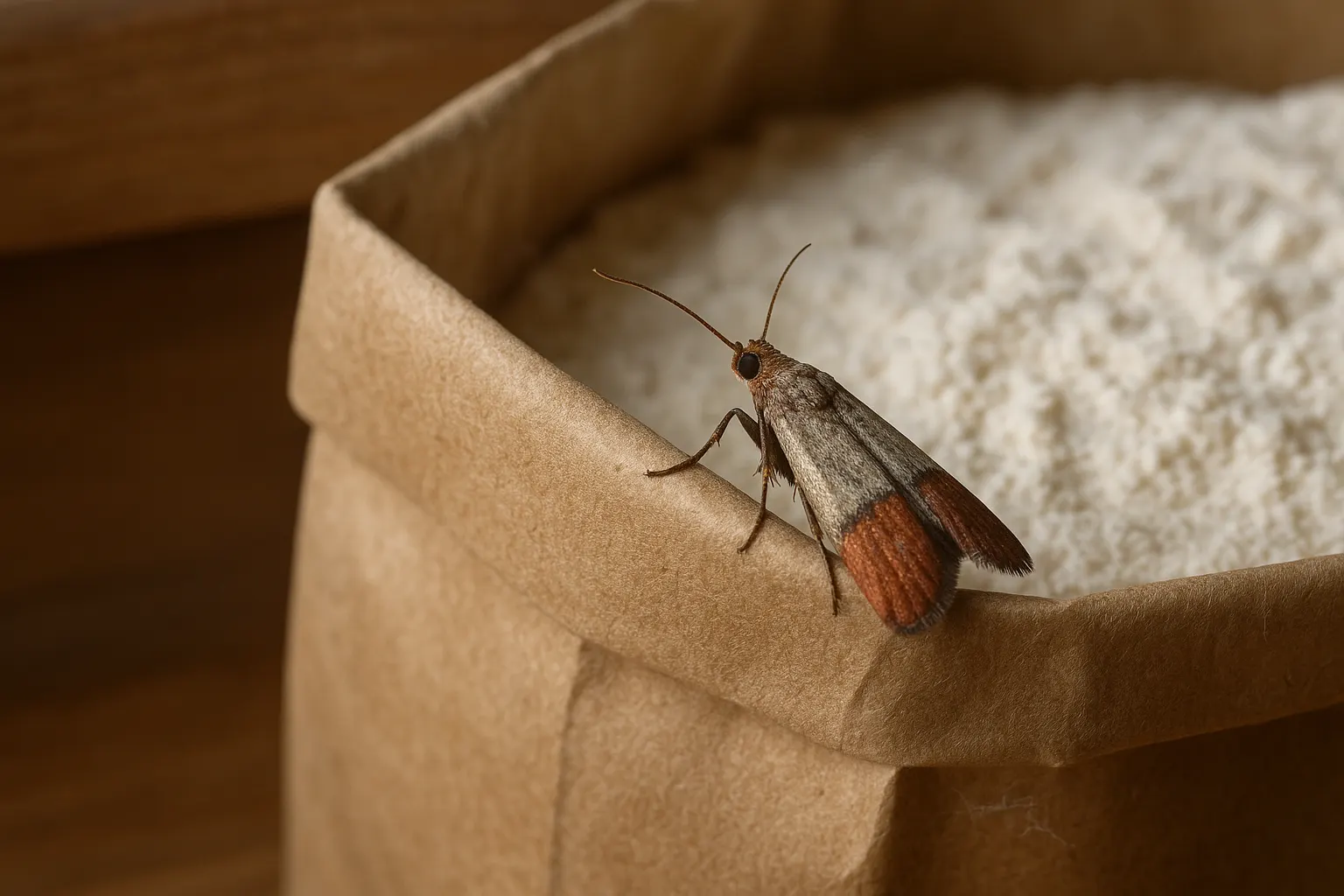
| Indian meal moth | Moth about 1/2 inch, wing tips reddish brown with a copper sheen | Cereal, flour, rice, dried fruit, nuts, birdseed, pet food, chocolate |
| Cigarette beetle | About 1/8 inch, light brown, humped, smooth wing covers | Spices, chili powder, paprika, dried herbs, pet food, dried flowers |
| Drugstore beetle | About 1/10 inch, humped, grooved wing covers | Almost any dry plant or animal product, including dry goods and medicines |
| Red and confused flour beetles | About 1/7 inch, flat, reddish brown | Flour, cake mixes, cereal, damaged grain, dried fruit, nuts |
| Webbing clothes moth | Small golden buff moth with a reddish tuft on the head | Wool, fur, felt, feathers, stained natural fabrics |
| Casemaking clothes moth | Similar moth; larva carries a silk case | Wool, fur and other animal fibers |
Indian meal moths: webbing, larvae on the ceiling and moths at night
The Indian meal moth is the moth most people find in a Pennsylvania kitchen. Adults are about 1/2 inch long, and the outer part of each forewing is reddish brown with a coppery shine. They fly in a zigzag at night and rest on walls and ceilings during the day.
The moths do not eat anything. The damage comes from the larvae, which are cream-colored caterpillars with brown heads. They feed inside food packages and leave silk webbing behind as they crawl, so clumped cereal, webbed rice or silk threads in the corner of a bag are the giveaway. When fully grown, the larvae leave the food and wander to spin cocoons, which is why people find small caterpillars on the ceiling or in cabinet hinges far from the pantry.
In warm weather, the cycle from egg to adult takes about six to eight weeks, according to UC IPM. A single forgotten bag of birdseed in the garage or a box of dried fruit at the back of a shelf can produce several generations before anyone notices.
Cigarette, drugstore and flour beetles live in spices and dry goods
The cigarette beetle (Lasioderma serricorne) is a small, humped, reddish brown beetle about 1/10 to 1/8 inch long. Penn State Extension lists spices, rice, ginger, pepper, dried flowers, seeds and pet foods among the things it attacks, and in kitchens it is especially fond of chili powder and paprika. Females lay up to 100 eggs directly on the food.
The drugstore beetle (Stegobium paniceum) looks almost the same but has grooved lines on its wing covers. Penn State describes it as feeding on practically all dry plant and animal products, including medicines. Both beetles leave tiny round holes in packaging and a fine powder in the food.
Red and confused flour beetles (Tribolium species) are flat, reddish brown and about 1/7 inch long. They feed on flour, mixes, cereal and cracked grain, and UC IPM puts the summer life cycle at about six weeks. Flour beetles cannot chew into sealed packages the way the others can, so they usually point to an opened bag or a spill in a cabinet crack.
Beetles in the house that are not in food may be carpet beetles or something that came in from outside. That is worth an identification before you empty the pantry.
How to find the source
Pantry pests nearly always trace back to one or two packages. UC IPM points to packages damaged at the store and opened packages that sit forgotten. Take everything out of the cabinet or pantry and check each item under good light. Pay close attention to:
- Opened bags of flour, cornmeal, rice, pasta, oatmeal and cereal
- Spices and seasoning blends that have been in the cabinet for years
- Dried fruit, nuts, trail mix, chocolate and baking chips
- Pet food, birdseed, grass seed and dried pet treats, including bags in the garage or basement
- Decorative items: dried flower arrangements, potpourri, Indian corn and gourds
- Crumbs and spilled flour in shelf cracks, drawer corners and under the pantry shelf liner
What gets thrown out and what you can keep
Throw out any food with live insects, webbing, larvae, holes in the packaging or powdery residue. Seal it in a plastic bag and take it straight to the outdoor trash. Open packages of the same type of food that sat next to it deserve a hard look too, since larvae move between containers.
Unopened cans, glass jars with tight lids and items that were already in sealed plastic or glass containers can usually stay after you wipe them off. When in doubt about an inexpensive item, throw it out. Keeping a half bag of flour is not worth another two months of moths.
After the pantry is empty, vacuum the shelves, cracks, corners and shelf supports, then wash with soap and water. UC IPM does not recommend insecticides on pantry shelves for most household pantry pests. Store susceptible food in airtight containers or in the refrigerator or freezer going forward.
Clothes moths: webbing moths versus casemaking moths
Clothes moths are a separate problem from pantry moths. Penn State Extension says both the webbing clothes moth (Tineola bisselliella) and the casemaking clothes moth (Tinea pellionella) occur in Pennsylvania, with the webbing clothes moth more common. They feed on wool, fur, felt, feathers and other animal fibers, and UC IPM notes that fabrics with food, sweat or urine stains are more likely to be damaged.
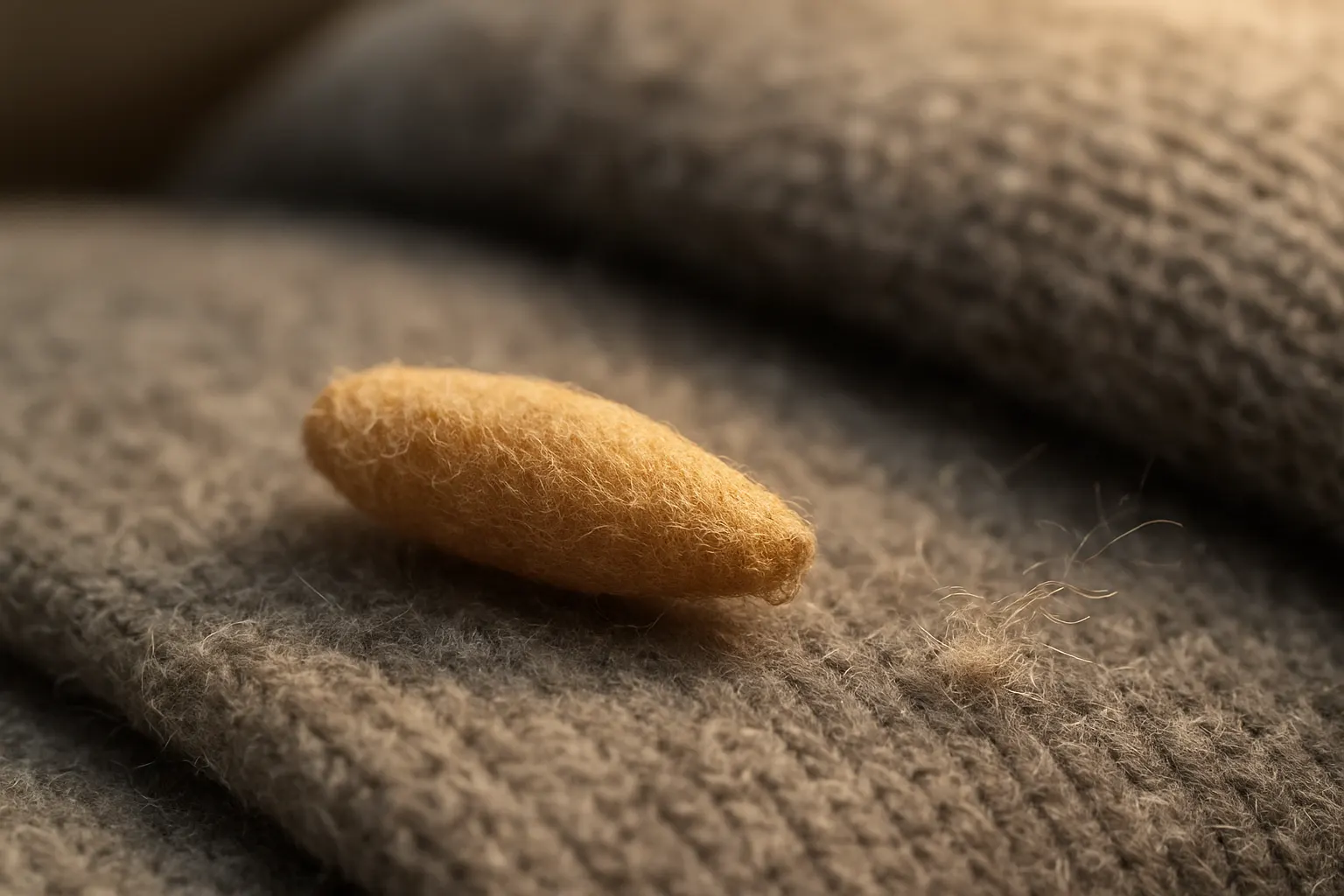
The larvae tell them apart. Webbing clothes moth larvae feed under a mat of silk, droppings and fabric bits, often under collars and cuffs. Casemaking larvae carry a small silk tube, about 3/8 inch long, made with fibers from whatever they are eating, so the case often matches the color of the sweater. Adults of both avoid light and tend to run and hide rather than fly, so the moth flying around the living room lamp is more likely a pantry moth.
Check wool rugs under furniture, the back of closets, stored sweaters, felt piano hammers and wool blankets in cedar chests. Launder or dry-clean infested items, vacuum closets and carpet edges thoroughly, and store clean woolens in sealed containers. UC IPM says bagged items can be frozen for several days below 18 degrees F. Penn State warns never to apply pesticides directly to clothing or bedding.
When to call a professional
In many homes, a thorough cleanout solves a pantry pest problem, and we will tell you if that is all you need. Call us when:
- You cleaned out the pantry and the moths or beetles are back within a few weeks
- You can't find the source, or insects are coming from a wall, ceiling or built-in cabinet
- Beetles are spread across several rooms, or you are not sure what the insect is
- Clothes moths have damaged wool carpets, rugs or several closets
- You run a restaurant, bakery or food storage business and need pest records
What a professional visit includes
We identify the insect, go through the kitchen, pantry, garage and basement storage with you, and look for hidden sources such as a bag of dog food behind the freezer or seed stored in a wall cabinet. We point out the cracks and shelf gaps where larvae are hiding and explain how to clean them. Pheromone traps for Indian meal moths and webbing clothes moths help show whether activity is dropping, and UC IPM notes they help detect and reduce webbing clothes moth populations.
When beetles have worked into cracks and crevices beyond the food, Penn State Extension notes a registered insecticide can be applied to cracks and crevices after the area is cleaned. If that fits your situation, we place it according to the label, only in empty, cleaned cabinets, and tell you when you can restock and what to keep off treated surfaces until dry.
Pantry pests often show up alongside cockroaches in the kitchen or mice that have gotten into stored food, covered on our rodent control page. Food businesses can read about commercial pest management and service logs. We serve homes throughout Chester County from Phoenixville. Get in touch or call (610) 935-9130.
Where we provide pantry pests service
We work from our family business in Phoenixville and serve homes and businesses across Chester County, Montgomery County and Delaware County. See our Phoenixville pest control page or pest control in West Chester for the towns each area covers.
Pantry Pests: common questions
Why do I have little moths in my kitchen?
Small moths in a kitchen are almost always Indian meal moths breeding in a dry food package. Check opened flour, cereal, rice, dried fruit, nuts, birdseed and pet food for webbing or larvae. Throw out anything infested, vacuum and wash the shelves, and store food in airtight containers. The moths will fade over a few weeks once the source is gone.
Why are there small worms on my kitchen ceiling?
Small caterpillars on a kitchen ceiling are usually Indian meal moth larvae that have finished feeding and are looking for a place to spin a cocoon. They crawl away from the infested food, sometimes a long way. Remove the ones you see, then find the source package in the pantry, which is still producing more.
What should I throw away if I have pantry moths?
Throw away any food with webbing, larvae, moths, holes in the package or clumping, and seal it in a bag before taking it outside. Look closely at opened grain products, spices, dried fruit, nuts, chocolate, pet food and birdseed stored nearby. Unopened cans and food in sealed glass or hard plastic containers can usually stay once wiped off.
What are the tiny brown beetles in my spices?
Tiny brown beetles in spices are usually cigarette beetles or drugstore beetles, both about 1/8 inch long with a humped shape. Cigarette beetles are especially drawn to chili powder, paprika and other spices. Throw out the infested jars, check the rest of the spice rack and dry goods, and vacuum the cabinet cracks.
Do pantry pests come back?
Pantry pests come back when the original source was missed, when a second infested package was left in the garage or basement, or when new infested food comes home from the store. Store susceptible food in airtight containers, use older packages first and check birdseed and pet food. If moths return within a few weeks of a cleanout, the source is still in the house.
Should I spray my pantry for moths?
Spraying a pantry is not recommended for most household pantry pests. UC IPM advises cleaning out infested food and storing food in airtight containers instead. Sprays do not reach larvae inside packages. In a stubborn beetle problem, a licensed applicator may treat cracks in emptied, cleaned cabinets according to the label.
How do I know if I have clothes moths or pantry moths?
Where you find the moth tells you most of it. Pantry moths fly around the kitchen, often toward lights, and have coppery wing tips. Clothes moths are small, golden buff, avoid light and are found in closets, on wool rugs and in stored clothing. Clothes moth damage looks like holes or grazed fibers on wool or fur.
How do you get rid of clothes moths?
Getting rid of clothes moths starts with finding every infested item. Launder or dry-clean wool and fur items, vacuum closets, carpet edges and under furniture thoroughly, and store clean woolens in sealed containers. Items that cannot be washed can be bagged and frozen for several days below 18 degrees F. Pheromone traps help monitor webbing clothes moths.
Can pantry pests get into sealed packages?
Some can. Cigarette beetles, drugstore beetles and Indian meal moth larvae can chew through paper, cardboard and thin plastic packaging. Flour beetles generally need an opening or damaged package. Glass jars and hard plastic containers with tight lids keep them out and also keep an infestation from spreading if one package arrives already infested.
Related pest control services
Family owned. Licensed and insured in Pennsylvania.
Schedule an inspection for pantry pests
Tell us what you are seeing and where. We will call you back to set up a visit, identify the pest and walk you through the plan before any treatment.
- The species identified before anything is applied
- Entry points and moisture problems pointed out on your property
- Prep and re-entry instructions explained up front
Prefer to talk now? Call (610) 935-9130