
Coatesville, PA
Pest Control in Coatesville: Rowhouses, Twins and Older Homes Along the Brandywine
C.R. Davis III & Sons Pest Control serves Coatesville, South Coatesville, Valley Township and East Fallowfield as part of our West Chester service area, dispatched from our Phoenixville headquarters. Coatesville's housing is among the oldest and most attached in our service area, so inspections focus on shared walls, old sill wood and pests that move between units.
Who serves Coatesville
Coatesville is covered by our West Chester service area, the southern and western half of our Chester County pest control coverage. The West Chester location is coming soon. Until then, Coatesville appointments are scheduled and dispatched from our headquarters at 153 Silver Springs Rd in Phoenixville, about 20.6 miles from the city by road.
This page covers the City of Coatesville, South Coatesville borough, Valley Township (including Hayti and Westwood) and East Fallowfield Township. All four share the Coatesville 19320 mailing name. Caln Township, which also has some 19320 addresses, is covered on our Downingtown page.
Steel-town housing by the numbers
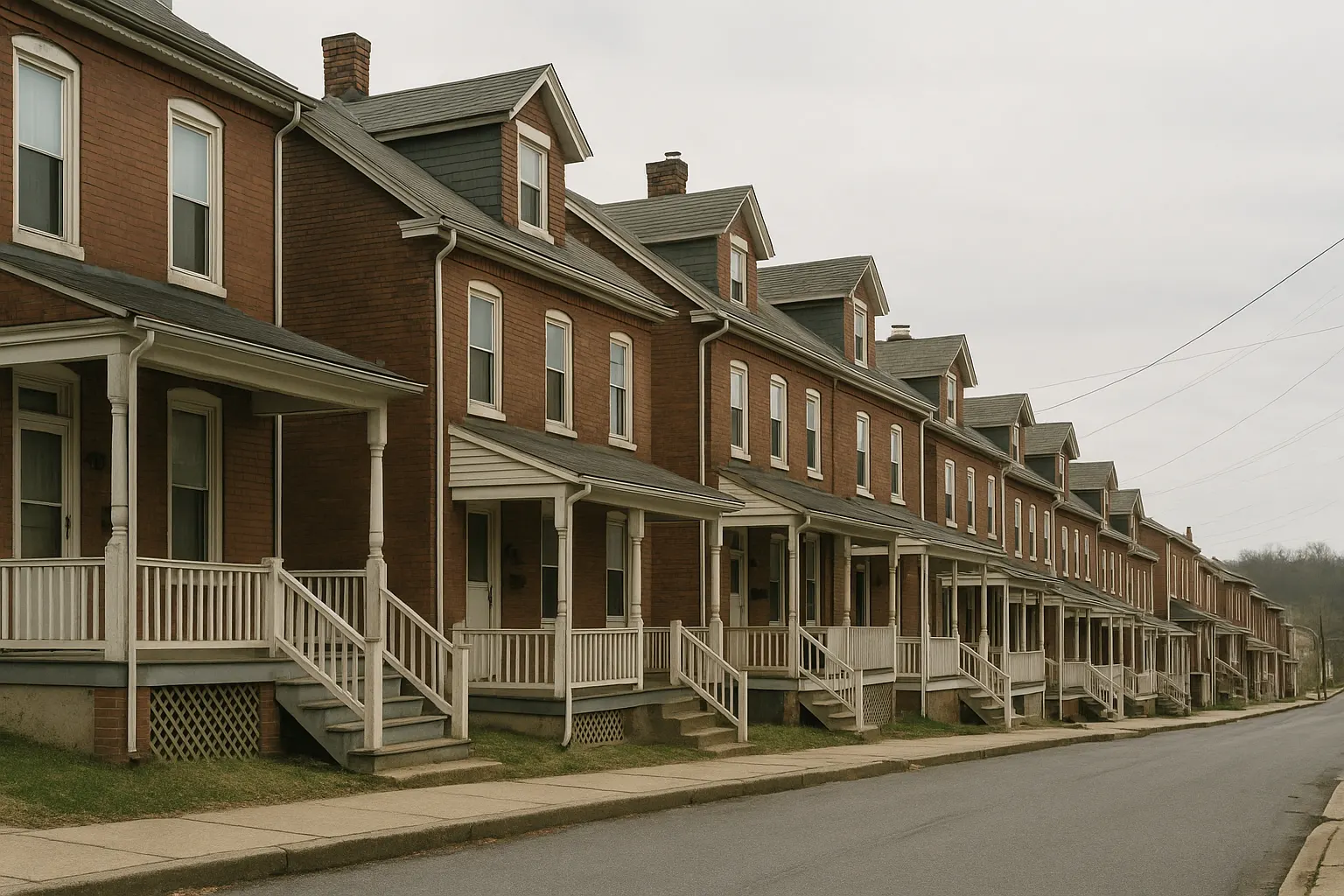
Coatesville grew as a steel town along the West Branch Brandywine Creek. The Lukens Historic District, named a National Historic Landmark in 1994, marks the old mill core. Carver Court, built in 1944 to house steelworkers and listed on the National Register in 2016, is one example of the worker housing that went up around the mills. The result today is a city where nearly half the homes share a wall with a neighbor.
The census numbers show how different the city is from the townships around it. In the City of Coatesville, 45.4% of homes are single-family attached and only 20.5% are detached singles. East Fallowfield, a few miles south, is the reverse: 85.1% detached, and half its homes were built in 2000 or later.
| Municipality | Median year built | Built before 1940 | Built 2000 or later | Attached homes | Owner occupied |
|---|---|---|---|---|---|
| Coatesville city | 1952 | 37.4% | 23.3% | 45.4% | 40.0% |
| South Coatesville borough | 1970 | 25.7% | 35.5% | 44.9% | 60.3% |
| Valley Twp | 1990 | 15.4% | 33.7% | 38.0% | 83.8% |
| East Fallowfield Twp | 1999 | 8.9% | 49.5% | 9.2% | 90.2% |
Rowhouses and twins: mice move along the block
In a row of attached houses, one basement often connects to the next through gaps in a shared foundation wall, and attic spaces can run over several roofs. Mice use those connections. A family that seals every gap in its own unit can still see mice if the house next door has an open cellar window or a gap around a gas line.
On a Coatesville rowhouse we start in the basement. We check the party wall where it meets the front and rear foundation, the gaps where water, gas and sewer lines pass through, and the joints around old coal chutes and cellar doors that have been patched over the years. Upstairs we look behind the range, under the sink and along baseboards for droppings and rub marks. Mice fit through a gap about the width of a pencil, so small openings count. Our mouse and rat control page covers trapping, bait stations and exclusion.
German cockroaches in shared buildings
Only 40% of homes in the City of Coatesville are owner occupied, so a large share of residents rent. In rented and attached housing anywhere, the German cockroach is the species that causes the most indoor trouble. Penn State Extension describes them as living almost entirely indoors, near warmth, moisture and food, and they spread between units along plumbing lines and shared walls.
That is why treating one apartment in a multi-unit building often gives short relief. The better approach is to inspect the units that share walls and plumbing, place bait and monitors where the roaches harbor, and follow up on a schedule. If you rent, report cockroaches to your landlord in writing with dates. If you own the building, ask for inspection of adjoining units. Our cockroach control page explains prep and follow-up.
Old sill wood along the West Branch Brandywine
More than a third of Coatesville's homes were built before 1940, many on stone or brick foundations with a wood sill plate resting on top. Penn State Extension reports that eastern subterranean termites are present throughout Pennsylvania and that infestations usually begin at the basement mudsill and joists. In older houses that wood has had decades of exposure to damp basement air, and low ground near the West Branch Brandywine holds moisture longer.
We probe the sill plate and the ends of floor joists, look for mud tubes running up the foundation, and check where porches and additions meet the original house, since those joints often put wood close to soil. Our termite inspection and treatment page covers what happens once activity is confirmed.
Newer homes in Valley and East Fallowfield
Outside the city the housing is much newer. Half of East Fallowfield's homes and a third of Valley Township's were built in 2000 or later, mostly detached or townhome subdivisions with high owner occupancy. In these newer neighborhoods, pest problems usually follow the season: stink bugs and lady beetles on south walls in fall, wasp nests under deck rails in summer, and camel crickets in finished basements. Termites still matter, because damage often shows up ten or more years after construction, which puts many of these homes in range now.
A year of pests around Coatesville
Timing follows Penn State Extension for southeastern Pennsylvania and shifts with the weather each year.
| Season | What is typically active |
|---|---|
| Year-round | German cockroaches in apartments and attached homes; house mice in older basements |
| February to June | Termite swarmers indoors on warm days, often near a basement window |
| Summer | Paper wasps under eaves and porch roofs; yellow jackets in lawns and wall voids |
| September and October | Stink bugs and lady beetles on south walls; mice start moving indoors |
| November to February | Mice in walls and shared basements |
How we handle a Coatesville visit
Every job follows The Davis Inspection Standard. We identify the species first. We name the conducive conditions, whether that is a gap around a gas line in a party wall or a leaking sink trap feeding cockroaches. We place treatment where the pest lives, following the product label. Then we set a follow-up and tell you the re-entry and prep instructions before we begin, which matters in small apartments where families and pets have fewer places to wait.
Landlords with several Coatesville units can call about inspecting a whole building at once. Call (610) 935-9130 with the street address and the number of units.
Communities covered
As part of our West Chester service area, dispatched from Phoenixville, we cover the City of Coatesville, South Coatesville borough, Valley Township including Hayti and Westwood, and East Fallowfield Township, all within the Coatesville 19320 mailing area.
Sources
- Penn State Extension: Eastern Subterranean Termites
- Penn State Extension: German Cockroaches
- Penn State Extension: Is There a Mouse in the House?
- Lukens Historic District (Wikipedia)
- Carver Court (Wikipedia)
- West Branch Brandywine Creek (Wikipedia)
- U.S. Census Bureau ACS 2020-2024 housing tables via Census Reporter
- OSRM road routing from Census internal points
Pest control in Coatesville: common questions
Is there a C.R. Davis office in Coatesville?
No. Coatesville is part of the area we serve around West Chester, and our West Chester location is coming soon. Until then, Coatesville visits are scheduled and dispatched from our headquarters at 153 Silver Springs Rd in Phoenixville, about 20.6 miles away by road. The same phone number, (610) 935-9130, covers every town we serve.
Why do mice keep getting into my Coatesville rowhouse after I seal it?
Attached houses share foundation walls, and sometimes basements and attic spaces connect across several units. If a neighboring house has an open cellar window or an unsealed utility gap, mice can enter there and travel along the party wall into yours. We document the entry points on your side and note shared-wall gaps so you or your landlord can raise them with the neighbor.
My landlord treated my apartment for roaches but they came back. Why?
German cockroaches live along plumbing and in wall voids, and in a shared building they move between units. If only one apartment is treated, roaches in the next unit can move back in. An inspection of adjoining units, bait placed where roaches actually shelter and scheduled follow-up visits give a better result. Ask your landlord in writing to have the neighboring units checked.
Does my pre-1940 Coatesville house need a termite inspection?
It is a good idea, especially before buying or if you have never had one. Penn State Extension notes that eastern subterranean termites live throughout Pennsylvania and usually start at the sill plate and joists. Older homes have wood that has sat on masonry for decades. We probe the sill, check foundation walls for mud tubes and look where porches meet the house.
Do you cover Hayti, Westwood and East Fallowfield?
Yes. Hayti and Westwood are communities in Valley Township, and we cover all of Valley, East Fallowfield, South Coatesville and the City of Coatesville. All of them use the Coatesville 19320 mailing name. When you call, give us the street and township so we can plan the route from Phoenixville.
What should I do before a cockroach treatment in an apartment?
We give you a prep list for your unit before the visit. It usually means clearing the cabinets under the kitchen and bathroom sinks, pulling items away from the stove and refrigerator, and wiping up grease and crumbs so bait is more attractive than your food. We also tell you how long to keep people and pets away from treated areas, per the product label.
Do you inspect whole buildings for Coatesville landlords?
Yes. For twins, rows and small apartment buildings we can inspect several units in one visit, which helps with cockroaches and mice that move through shared walls and plumbing. Call with the address, the number of units and whether tenants will be home, so we can plan access and give each household its prep instructions ahead of time.
Related services and nearby areas
Family owned. Licensed and insured in Pennsylvania.
Schedule a pest inspection in Coatesville
Tell us what you are seeing and where. We will call you back to set up a visit, identify the pest and walk you through the plan before any treatment.
- The species identified before anything is applied
- Entry points and moisture problems pointed out on your property
- Prep and re-entry instructions explained up front
Prefer to talk now? Call (610) 935-9130