
Ant Control
Ant Control in Chester County: Identify the Ant, Then Treat the Nest
C.R. Davis III & Sons Pest Control treats ants in homes across Chester County, Montgomery County and Delaware County from our Phoenixville base. The ants most often found in southeast Pennsylvania kitchens include odorous house ants and pavement ants, with carpenter ants in damp wood. Each nests in a different place, so we identify the species first and place bait and treatment where that colony lives.
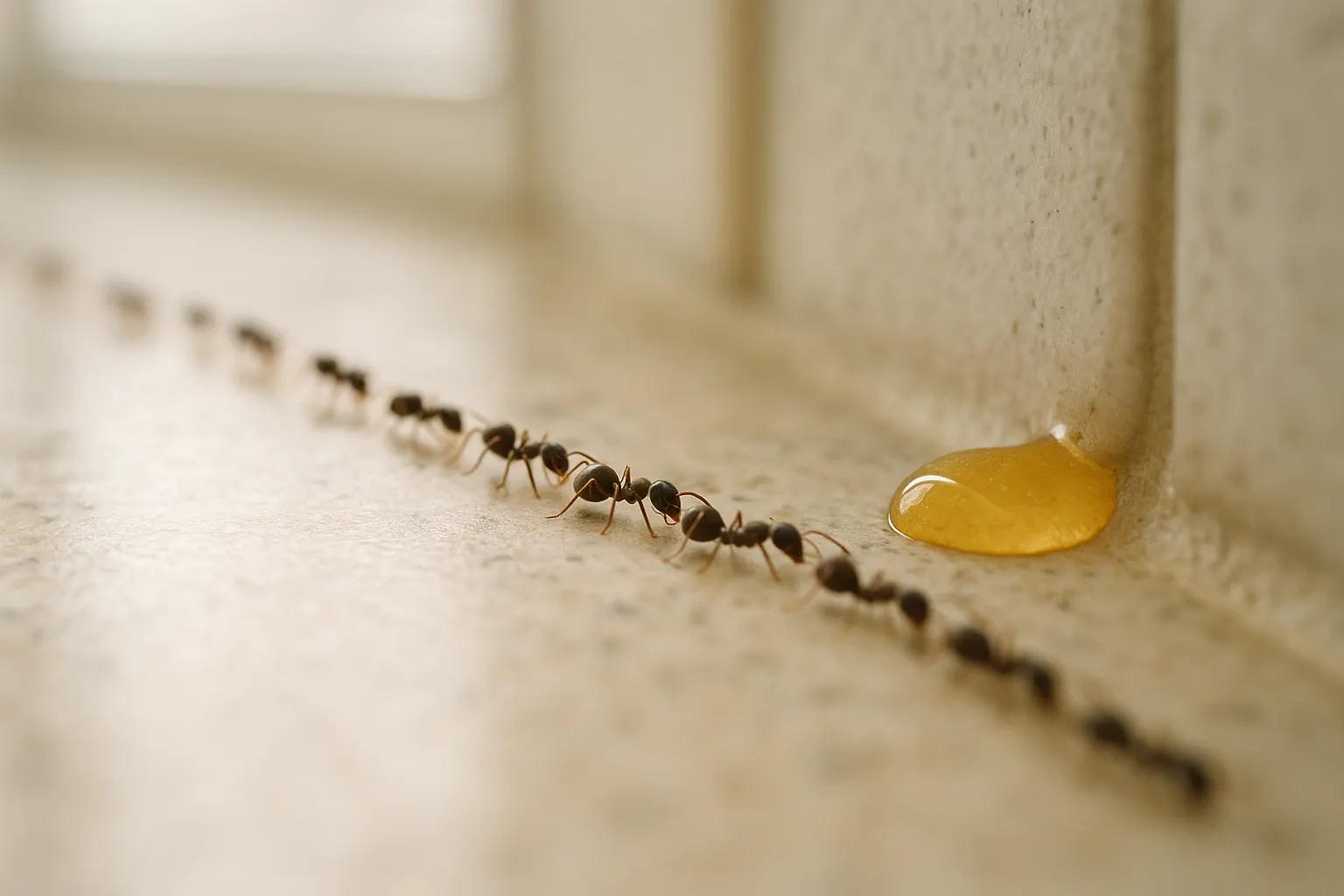
Why the species matters before anything is applied
One ant on the counter does not tell you the species or where it nests. Odorous house ants often nest outside under stones and boards and walk in along siding. Pavement ants live in the soil under slabs and sidewalks and come up through cracks. Carpenter ants hollow out damp wood in the structure. If all three get the same treatment, whichever species it does not fit keeps coming back.
So the first visit is about identification and tracing. We look at the size and color of the workers, follow the trail back toward where it enters, and check the places each species nests. Then we decide on bait type, placement and outside work.
Odorous house ants
The odorous house ant (Tapinoma sessile) is a native species and one of the ants people call "sugar ants." Workers are tiny, 1/16 to 1/8 inch, uniformly brown to black, and all about the same size. Crush one and you get a rotten smell, which is the easiest way to confirm the species.
Penn State Extension describes colonies of several thousand workers with many queens. Workers move fast in single-file lines and prefer sweets, though they also take dead insects and grease. Outside they feed on honeydew from aphids and on flower nectar, so shrubs with aphids next to the house can feed a colony right at your foundation.
Nests are usually outdoors under rocks, boards, mulch and garden timbers, but odorous house ants will also nest indoors in wall voids near warmth and moisture, and even in termite-damaged wood. Winged reproductives appear from May through July. Because there are many queens, killing the workers you see does little to the colony.
Pavement ants
The pavement ant (Tetramorium caespitum) is one of the most common house-infesting ants in Pennsylvania. Penn State says it was likely carried here in ship ballast soil from Europe in the 1700s and 1800s. Workers are about 2.5 to 4 mm long, dark brown to black, with fine parallel grooves on the head and thorax and two small spines on the back.
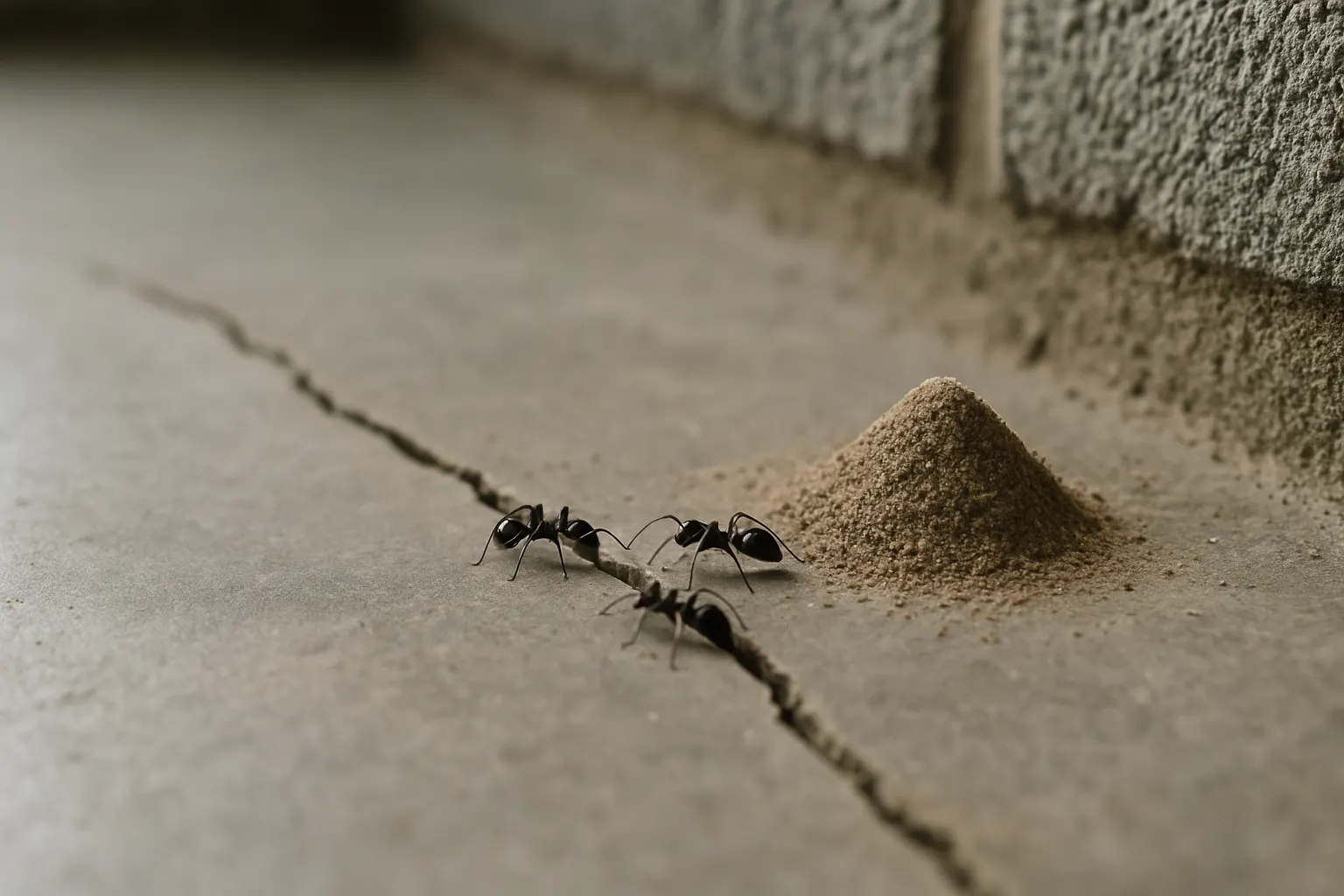
Colonies sit under sidewalks, driveways, building slabs and large rocks. The ants enter through cracks in foundation walls and basement or garage slabs, and the giveaway is small piles of sand or soil next to a slab crack or along the top of a foundation wall. They eat almost anything that hits the floor: sweets, grease, dead insects and seeds.
Swarms normally happen in spring. In heated buildings, Penn State notes pavement ant swarmers can show up in late fall and into February, which is why people sometimes see winged ants in a basement in winter and assume the worst.
Side by side: three common house ants
| Odorous house ant | Pavement ant | Carpenter ant | |
|---|---|---|---|
| Worker size | 1/16 to 1/8 inch | About 2.5 to 4 mm | 1/4 to 1/2 inch |
| Color | Brown to black | Dark brown to black | Dark, shiny brown to black |
| Usual nest | Under stones, boards and mulch outside; wall voids near moisture | Soil under slabs, sidewalks and rocks | Moist or decaying wood, voids in walls and ceilings |
| Food | Mostly sweets, also grease and insects | Almost anything: sweets, grease, seeds, insects | Honeydew, insects, sugary and fatty foods |
| Telltale sign | Rotten odor when crushed; fast single-file trails | Sand piles at slab and foundation cracks | Coarse wood shavings below trim or in the basement |
| Damages wood | No | No | Excavates damp wood for nests |
Why we bait instead of spraying the trail
Spraying a trail kills the workers you can see. The queens and brood are somewhere else, and the colony keeps sending foragers. Penn State Extension's guidance for both odorous house ants and pavement ants is baiting with slower-acting baits, because workers carry the bait back and share it with the queens and developing ants before it takes effect.
We place bait where ant activity is actually happening, in spots children and pets cannot reach, and match the bait to what the species is feeding on. Baits are topped up while the colony is still taking them. Penn State notes that control with bait can take two weeks or longer, so do not judge it by the first few days.
Outside, work focuses on nest sites and the entry points ants are using, following the product label. Before we start, we tell you what to leave alone (the bait placements, mainly) and how long to keep people and pets off any treated surfaces.
Our process on an ant call
Ant jobs follow The Davis Inspection Standard, laid out step by step on our inspection process page.
- Identify the species before anything is applied.
- Find and name the conditions: a leak under the sink, mulch piled on the siding, a slab crack, aphids on the foundation shrubs.
- Place bait and treatment where the colony lives and travels, per the label.
- Set the follow-up and tell you re-entry and prep up front.
What brings ants inside here
Southeast Pennsylvania housing gives ants plenty of routes. In Norristown borough, 47.1% of homes are single-unit attached houses, according to Census ACS 2020 to 2024 estimates, and shared walls let a colony forage through more than one kitchen. Our page for Norristown homeowners has more on that housing. Newer townhomes and colonials usually sit on slabs or poured basements with garage slabs, the exact surfaces pavement ants nest beneath.
These homeowner fixes cut down on ant traffic:
- Fix plumbing leaks and damp spots under sinks and dishwashers.
- Keep mulch and stone a few inches back from siding and the foundation.
- Caulk cracks in slabs and foundation walls where you see sand piles.
- Wipe up sweet spills and keep pet food in sealed containers.
- Deal with aphids on shrubs planted against the house.
Carpenter ants need a different approach
Large black ants, a quarter to half an inch long, walking around the house at night are probably carpenter ants. They nest in moist or rotting wood, push out piles of coarse shavings, and send winged swarmers out in spring. The treatment depends on finding both the outdoor parent colony and any satellite nest in the house. Our carpenter ant control page covers the signs, the moisture problems behind them and how we treat them.
Flying ants vs termite swarmers
Winged ants and termite swarmers both show up in spring. Ants have a pinched waist, elbowed antennae and front wings longer than the back ones. Termites have a thick waist, straight antennae and four wings of equal length. If you find a pile of shed wings on a windowsill, save a few in a bag and call, and see our page on eastern subterranean termites.
If ants are a yearly problem along with stink bugs and spiders, a seasonal home pest control plan may make more sense than single calls. C.R. Davis III & Sons is family owned, licensed with the Pennsylvania Department of Agriculture and insured. Call (610) 935-9130.
Where we provide ants service
We work from our family business in Phoenixville and serve homes and businesses across Chester County, Montgomery County and Delaware County. See our Phoenixville pest control page or pest control in West Chester for the towns each area covers.
Sources
- Penn State Extension: Odorous House Ant
- Penn State Extension: Pavement Ant
- Penn State Extension: Carpenter Ants
- Penn State Extension: Eastern Subterranean Termites (ant vs termite identification)
- U.S. Census Bureau ACS 2020 to 2024 5-year estimates via Census Reporter
- National Pesticide Information Center
Ants: common questions
Why do I suddenly have ants in my kitchen?
Usually a colony found food and water close to its nest. Odorous house ants often nest under mulch or stones outside and follow siding into the house, while pavement ants come up through slab and foundation cracks. Spring colony growth, a new leak or a sweet spill can all start the traffic. Identifying the species tells you where the nest is.
Why do the ants smell when I squish them?
Small brown or black ants that give off a rotten smell when crushed are odorous house ants, Tapinoma sessile. The odor is one of the easiest ways to identify them. They are native to Pennsylvania, prefer sweets, and form colonies with many queens, which is why killing the ones on the counter does not stop them.
How long does it take for ant bait to work?
Penn State Extension notes that control with bait can take two weeks or longer. The baits are slow on purpose, so workers carry the bait back to the nest and share it with the queens and brood before it takes effect. You may see more ants at a bait placement for the first few days while they are feeding.
Should I spray the ants I see?
Spraying a trail kills the foragers but usually leaves the queens and brood untouched, and it can keep ants from taking bait that has been placed. If bait is already down, leave the trail alone and just wipe up food spills. We tell you which placements to leave undisturbed when we set up an ant treatment.
What time of year are ants worst in Pennsylvania?
Ant activity builds through spring and peaks in late spring and summer. Pavement ants usually swarm in spring, odorous house ant reproductives appear from May through July, and carpenter ant workers forage most actively from May through July. Pavement ants can also swarm in winter inside heated buildings, according to Penn State Extension.
Will vinegar get rid of ants?
Wiping trails with vinegar or soapy water removes food residue and the scent trail the ants follow, so you may see fewer for a day or two. It does not reach the nest under a slab or behind a wall, and the colony will lay a new trail. Clean up spills, then deal with the colony.
Do pavement ants sting?
Pavement ant workers do carry a stinger at the tip of the abdomen, according to Penn State Extension. In homes they are mostly a nuisance. Penn State notes that apart from carpenter ants, the ants found in houses do not damage wood. The bigger issue is that they get into food that falls on the floor.
Are flying ants in my house a sign of termites?
Not necessarily. Pavement ants, odorous house ants and carpenter ants all produce winged swarmers. Check the waist and wings: ants have a pinched waist and unequal wings, while termites have a broad waist and four wings of equal length. Termite swarmers indoors mean termites are active in the building, so get those identified.
Why do the ants come back every spring?
Many colonies nest outside the house under slabs, stones or mulch and survive the winter there. When the weather warms, foragers return to the same routes and food sources. Fixing the entry points and moisture, and baiting early in the season before colonies are large, cuts down on the ants that show up next spring.
Related pest control services
Family owned. Licensed and insured in Pennsylvania.
Schedule an inspection for ants
Tell us what you are seeing and where. We will call you back to set up a visit, identify the pest and walk you through the plan before any treatment.
- The species identified before anything is applied
- Entry points and moisture problems pointed out on your property
- Prep and re-entry instructions explained up front
Prefer to talk now? Call (610) 935-9130