
Bed Bug Treatment
Bed Bug Treatment in Chester County: Confirm the Bug, Then Treat Every Hiding Spot
C.R. Davis III & Sons Pest Control treats bed bugs in homes and apartments across Chester County, Montgomery County and Delaware County. We confirm the insect is Cimex lectularius before anything is applied, treat the seams, cracks and furniture where bed bugs hide according to the label, give you prep instructions up front, and schedule follow-up visits for the bugs that hatch after the first one.
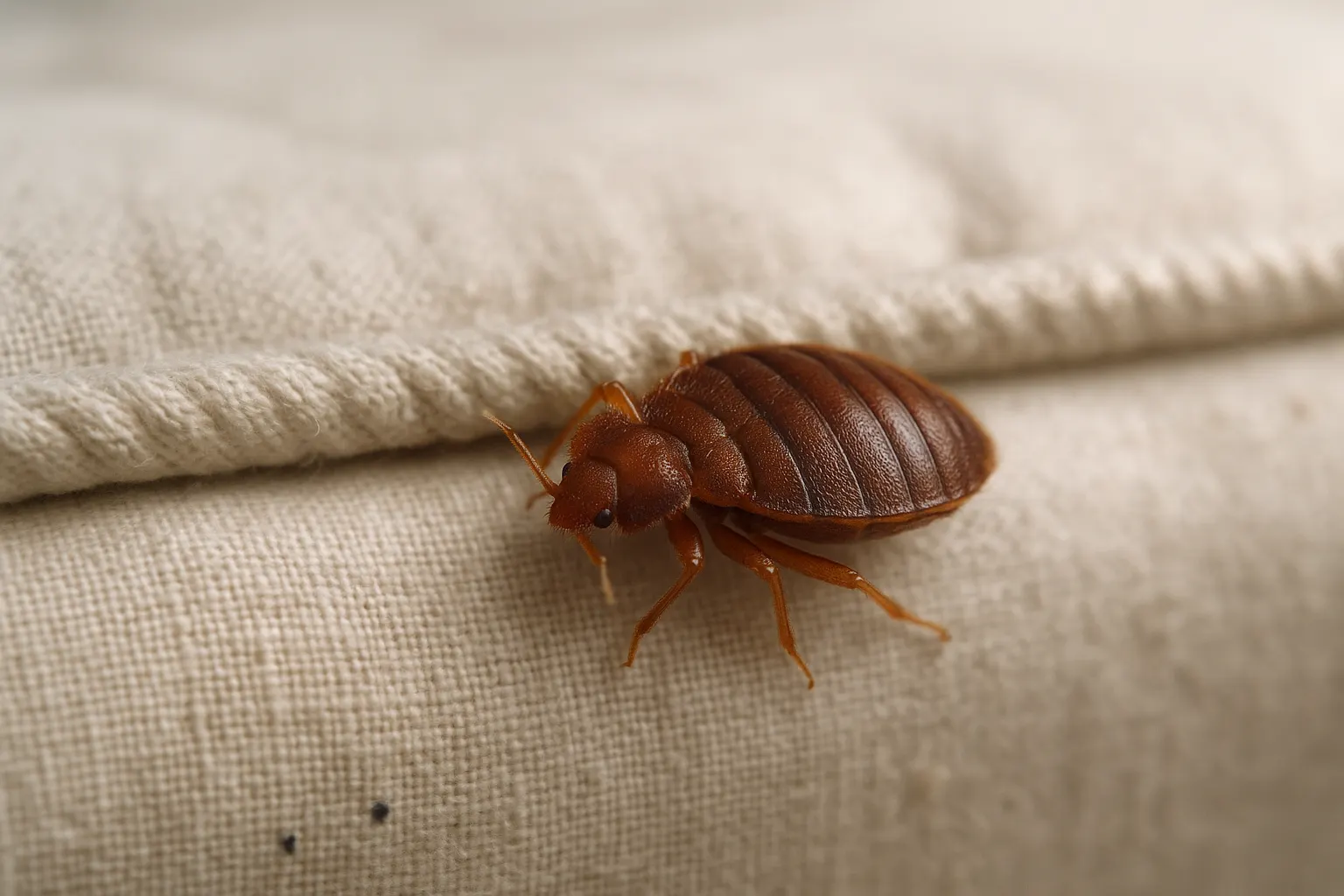
What a bed bug looks like and how it lives
The common bed bug, Cimex lectularius, is a flat, oval, wingless insect about 1/4 inch long and reddish brown, about the size and shape of an apple seed. After feeding it swells and turns darker red. Young bed bugs, called nymphs, go through five stages and start out yellowish white and about 1/16 inch long, which makes them hard to see on a light mattress.
Bed bugs feed on blood, usually at night, for about 10 to 15 minutes at a time, then go back into hiding. A female can lay up to 5 eggs a day and about 500 in her lifetime, according to Penn State Extension. Eggs hatch in about 10 to 15 days, and the full life cycle from egg to adult takes five weeks to four months depending on temperature and food (UC IPM). Adults can survive more than a year without a meal, which is why an empty guest room is not a solution.
Bed bugs do not fly or jump, and they do not live on people. UC IPM notes that bed bugs have never been shown to transmit human disease. They do cause itching, lost sleep and a lot of worry.
Signs of bed bugs to check before you call
Bites alone do not confirm bed bugs. Some people show no reaction at all, and other insects, mites and skin conditions leave similar marks. Look for the bugs and what they leave behind. Strip the bed and use a flashlight on these spots:
- Reddish black spots, like marker dots, on mattress seams, box spring fabric, sheets or the headboard
- Pale, shed skins from nymphs in seams, piping and along the bed frame
- Tiny white eggs, about the size of a pinhead, tucked into fabric folds and wood cracks
- Live bugs in the mattress tufts, box spring corners, headboard joints and bedside tables
- A sweet, musty smell in a bedroom with a heavier infestation
Where bed bugs hide beyond the mattress
Most bed bugs stay within a few feet of where people sleep, but they spread out as numbers grow. Penn State Extension lists mattress seams, the inside of box springs, bed frame cracks, nightstands, dressers, baseboards, wood paneling, door and window frames, the backs of pictures and loose wallpaper. Couches and recliners are common too, especially if someone falls asleep there.
In apartments, townhomes and twins, bed bugs can travel through wall voids and along pipes and wiring to the next unit. If you rent or live in a building with shared walls, let your landlord or property manager know. Treating one unit while the unit next door has bed bugs tends to go in circles. Landlords and property managers can read about our commercial and multifamily pest control.
Why foggers and bug bombs fail against bed bugs
Store-bought foggers are the most common thing people try first, and they rarely work. The spray settles on open, exposed surfaces. Bed bugs are inside seams, joints and cracks, where the fog does not reach. The EPA says foggers should not be the only method used for bed bugs because the pesticide has to contact the bugs to work. UC IPM goes further and states that total-release foggers have been shown to be ineffective for bed bug control and are not recommended.
Foggers also carry their own risks. The EPA warns that using more than the label calls for can cause an explosion and tells users to turn off pilot lights and unplug appliances. Some people respond to a failed fogger by dragging the mattress to the curb or sleeping in another room. That often moves bed bugs to a new room instead of solving anything.
Rubbing alcohol, essential oil sprays and diatomaceous earth dumped on carpets are other common DIY attempts. None of them reaches eggs hidden inside furniture joints, and some add a fire or breathing concern of their own.
How we treat bed bugs
Our bed bug work follows The Davis Inspection Standard, the same four steps we use on every job.
We start by confirming the insect. Bat bugs, carpet beetle larvae and even spider beetles get mistaken for bed bugs, and they need different treatment. Next we map the infestation room by room and name what is making it harder, such as clutter around the bed, a couch used for sleeping, or a shared wall with another unit. Then we treat where the bugs are: mattress and box spring seams, bed frames, headboards, furniture joints, baseboards, outlet covers and the cracks around them. Every product goes on according to its label, in the places the label allows. Finally, before we leave, we schedule the follow-up and tell you when you can go back into treated rooms and what to keep off treated surfaces until they are dry.
We treat every room where we find bed bugs and check the rooms next to them. Treating only the bedroom where you were bitten is a common reason bed bugs come back.
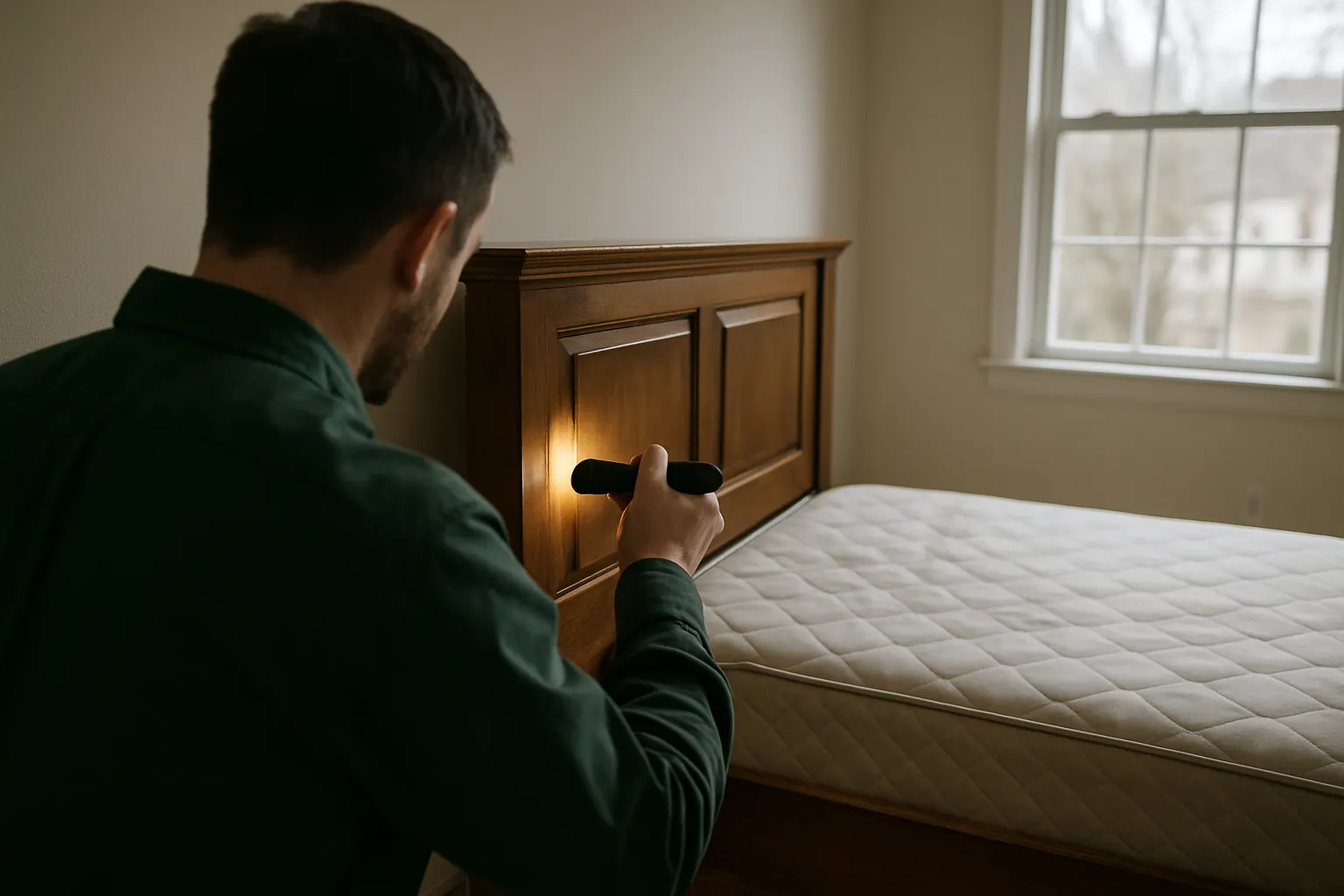
How to prepare your home for bed bug treatment
Preparation decides how well treatment works, so we go over the prep with you before the first visit. The general steps are:
- Strip all beds in affected rooms. Bag sheets, blankets, pillowcases and bed skirts in sealed plastic bags inside the room before carrying them out.
- Wash washable items and dry them on high heat. Penn State Extension says 15 to 30 minutes in a hot dryer kills all bed bug stages.
- Empty nightstands and dresser drawers near the bed. Launder or dry the fabric contents, and bag the rest.
- Pick up clutter from the floor, under the bed and in closets so we can reach baseboards and wall edges.
- Pull furniture a foot or so away from the walls.
- Vacuum mattress seams, carpet edges and furniture, then seal the vacuum bag or empty the canister into a sealed bag and put it in an outdoor trash can.
- Do not move furniture, clothing or bedding into other rooms or to a friend's house before treatment.
- Plan to keep people and pets out of treated rooms for the time the label requires. We tell you that time at the visit.
Follow-up visits catch what hatches later
Bed bug eggs are harder to reach than adults, and eggs laid shortly before treatment can hatch 10 to 15 days later. That is why a single visit is rarely enough. We schedule follow-up visits to inspect, treat newly hatched nymphs and check that the activity is dropping. UC IPM describes follow-up monitoring as part of managing any bed bug infestation.
Between visits, keep sleeping in your own bed. You are the reason bed bugs come out of hiding, and moving out of the room can push them to spread. Mattress and box spring encasements help too. They trap any bugs inside and make new activity easy to spot on the smooth fabric. After each visit we tell you what we found and whether another treatment is needed.
Summer travel, college moves and used furniture
Bed bugs are active year round indoors, but in the Philadelphia area, searches for bed bug help climb in July during summer travel. They ride home in luggage, backpacks and laptop cases after hotel stays, and they move in with used mattresses, couches and headboards picked up from the curb or bought secondhand. August move-ins and May move-outs at colleges and apartment complexes bring another wave.
When you get home from a trip, unpack on a hard floor or in the bathtub rather than on the bed, inspect the seams of your suitcase, and run travel clothes through a hot dryer. Inspect any used furniture closely before it comes inside. If you are also finding fleas or roaches, see our pages on flea treatment and cockroach control.
Your bed bug service stays between us
People worry about what the neighbors will think. We don't discuss your service with anyone. We talk to you, and to your landlord or property manager only if you ask us to. Bed bugs have nothing to do with how clean a home is, and we treat every call that way.
We are a family-owned Pennsylvania company based in Phoenixville, serving West Chester, PA, Malvern, Downingtown and the rest of Chester County. To set up a bed bug inspection, reach our office or call (610) 935-9130.
Where we provide bed bugs service
We work from our family business in Phoenixville and serve homes and businesses across Chester County, Montgomery County and Delaware County. See our Phoenixville pest control page or pest control in West Chester for the towns each area covers.
Bed Bugs: common questions
Is it worth getting an exterminator for bed bugs?
Yes, for most homes a licensed professional is worth it because bed bugs hide in seams and cracks that sprays from the store do not reach. UC IPM and the EPA both say foggers are not an effective bed bug treatment. A professional treatment targets the hiding places, follows the label, and includes follow-up visits for eggs that hatch after the first treatment.
How many bed bugs do I have if I see one?
One bed bug usually means more, since a female lays up to 5 eggs a day and bed bugs spend most of their time hidden. Check mattress seams, the box spring, the headboard and nightstands for dark spots, shed skins and eggs. How many signs you find, and in how many rooms, tells us more about the size of the problem than a single bug does.
What time of year is worst for bed bugs?
Bed bugs live indoors, so they are active in every season. Summer tends to be the busiest time because travel, hotel stays and college moves carry bed bugs home in luggage and furniture. In the Philadelphia area, searches for bed bug help peak around July. Warm indoor temperatures also speed up their life cycle.
How long does bed bug treatment take?
Bed bug treatment usually takes an initial visit plus follow-up visits spaced to catch eggs that hatch afterward. Eggs hatch in about 10 to 15 days, so a single visit rarely finishes the job. The total time depends on how many rooms are involved, how much clutter there is, and whether nearby units also have bed bugs.
What should I do before an exterminator comes for bed bugs?
Before an exterminator comes, strip and bag bedding, wash and dry fabrics on high heat, empty nightstands, clear clutter, pull furniture from the walls and vacuum seams and carpet edges. Do not move items to other rooms or other homes. We go over the full prep list with you before the first visit so nothing gets missed.
Should I throw out my mattress if I have bed bugs?
You usually do not need to throw out a mattress with bed bugs. Treatment plus a sealed encasement on the mattress and box spring is normally enough. Throwing it out can spread bugs through the house on the way to the curb, and a new mattress in an untreated room gets infested again. If a mattress is torn or falling apart, wrap it in plastic before moving it.
Can I sleep in my bed during bed bug treatment?
Once the label's re-entry time has passed and treated surfaces are dry, you should keep sleeping in your own bed. We tell you that time at the visit. Sleeping somewhere else can push bed bugs to follow you into another room or onto a couch, which spreads the problem and makes follow-up visits less effective.
Do bed bugs mean my house is dirty?
No, bed bugs have nothing to do with how clean a house is. They feed on blood, not crumbs, and they arrive in luggage, bags and furniture. Clutter does give them more places to hide and makes treatment harder, so reducing clutter helps, but a spotless home can still get bed bugs after one hotel stay.
Will anyone know I had bed bug treatment?
We don't discuss your service with anyone. We speak with you, and with your landlord or property manager only when you ask us to. That applies from the first phone call through the last follow-up visit.
Related pest control services
Family owned. Licensed and insured in Pennsylvania.
Schedule an inspection for bed bugs
Tell us what you are seeing and where. We will call you back to set up a visit, identify the pest and walk you through the plan before any treatment.
- The species identified before anything is applied
- Entry points and moisture problems pointed out on your property
- Prep and re-entry instructions explained up front
Prefer to talk now? Call (610) 935-9130