
Stink Bugs and Fall Invaders
Stink Bug Control in Chester County: Seal the Gaps Before September
Brown marmorated stink bugs push into homes across Chester County, Montgomery County and Delaware County every September and October, then show up at windows all winter. C.R. Davis III & Sons Pest Control finds where they get in, times exterior work to the fall flight, and covers the other overwintering invaders: boxelder bugs, multicolored Asian lady beetles and cluster flies.
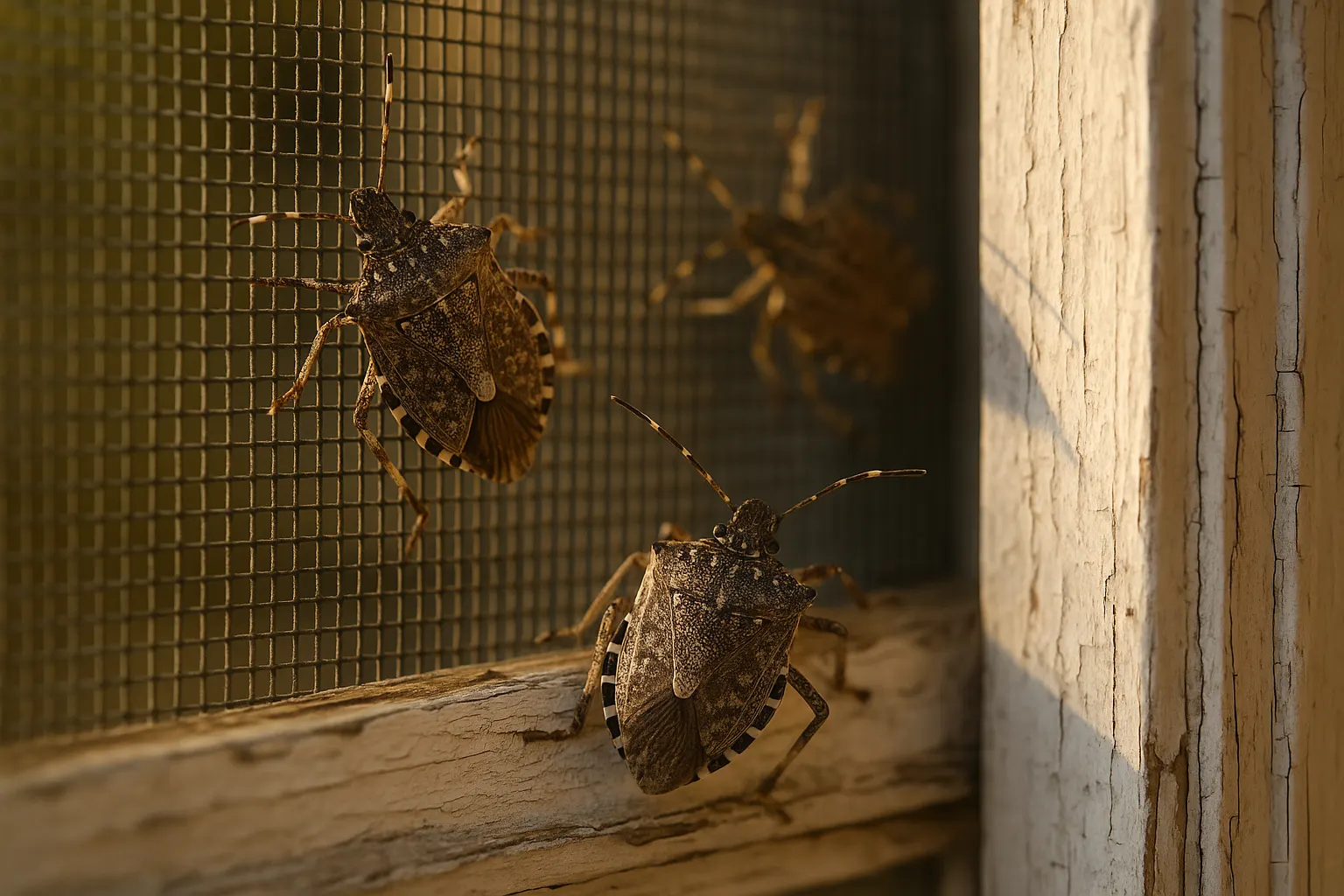
Why southeastern Pennsylvania has so many stink bugs
The brown marmorated stink bug (Halyomorpha halys) comes from China, Japan and Korea. Its first known North American populations were reported in Allentown, Pennsylvania, in 1996, and were misidentified as a native stink bug until 2001, according to a 2014 paper in the Journal of Integrated Pest Management. Penn State Extension notes the first specimen collected in Allentown dates to 1998 and that the insect likely arrived years earlier. Both accounts put the first known North American populations in eastern Pennsylvania.
It feeds on a long list of trees, crops and ornamentals, including fruit trees and many hardwoods, so it does well in the mix of woodlots, farm fields and suburban yards that makes up most of Chester County and Montgomery County. Homes that back onto woods tend to see more of them in fall, because the bugs spend the summer in those trees and look for the nearest warm wall when the nights cool down.
The fall entry window: September and October
Penn State Extension says adults start looking for overwintering sites in September and keep at it through October. They are drawn to the outside of houses on warm, sunny fall afternoons, especially south- and west-facing walls. You will see them gather on siding, window frames and screens before they work their way in.
They get in through any gap they can squeeze into: cracks around window and door trim, gaps where siding meets the foundation or chimney, torn screens, attic and soffit vents, and openings around utility pipes, cable lines and dryer vents. Older fieldstone and brick homes with settled mortar joints, and newer townhomes with long runs of vinyl trim, both give them plenty of options.
Once inside the wall void or attic, they go quiet for the winter. They do not bite, they do not breed indoors and they do not damage wood or wiring. People call about how many there are, and about the smell when they are crushed or vacuumed.
| Month | What stink bugs and fall invaders are doing |
|---|---|
| August | Bugs feeding outdoors; best time to finish sealing work |
| September | Stink bugs begin gathering on sunny walls and entering |
| October | Peak entry for stink bugs, lady beetles, boxelder bugs and cluster flies |
| November to February | Dormant in wall voids and attics; stragglers appear on warm days |
| March to May | Bugs leave overwintering sites; Penn State gives late April to mid-May |
Why stink bugs show up in January
Most people are surprised to find stink bugs crawling on a lamp in January. Those bugs came in last fall and have been dormant in the walls or attic since. A run of warm days, sun on a south wall, or heat rising from the living space wakes some of them up, and they move toward light and warmth, which means into the house instead of back outside.
Penn State lists the usual exit points indoors: cracks under or behind baseboards, gaps around window and door trim, and openings around ceiling lights and exhaust fans. Sealing those interior gaps keeps the bugs in the wall void, where they will eventually leave in spring the way they came in.
What works: sealing first, exterior treatment timed to the flight
Penn State Extension names sealing as the primary control: closing cracks around windows, doors, siding, utility pipes and chimneys with good silicone or silicone-latex caulk, and repairing screens and vents. That work is best finished by late August.
Exterior insecticide applications by a licensed applicator can help if they are timed well. Penn State says applications should go on in the fall just before bugs congregate on the house, and warns that sunlight breaks these materials down, so their effect drops within days. An application in July does little. One made as bugs start landing on the sunny walls can cut down the numbers that get in.
Inside, treatment does little for stink bugs already in the walls. Vacuuming live and dead bugs is Penn State's recommendation. Use a shop vac or a vacuum with a bag you can seal and throw out, because the smell lingers.
How C.R. Davis handles stink bugs and fall invaders
We follow The Davis Inspection Standard. First we confirm which insect you have, because stink bugs, boxelder bugs, lady beetles and cluster flies come from different sources and the fix is not identical.
Next we walk the exterior and name the entry points: the soffit returns, the window trim on the sunny side, the gap behind the chimney chase, the attic vent screen. On most homes the bugs favor one or two walls, and that tells us where to focus.
Where an exterior application makes sense, we place it on the walls, eaves and entry points the insects are using, per the label, timed to the start of fall congregation. We tell you up front to keep people and pets off treated surfaces until dry, per the label, and when a follow-up is worth scheduling. Homes with fall invaders every year often fold this into a seasonal pest control plan.
Boxelder bugs: red and black, near boxelder and maple trees
Boxelder bugs (Boisea trivittata) are about half an inch long, black with red lines on the back. They feed mainly on the seeds of female boxelder trees and also use maples and ash, per Penn State Extension. If you have a seed-bearing boxelder near the house, you will likely have these bugs.
In fall they bunch up in large numbers on the south side of buildings, trees and rocks, then try to get into cracks in the walls for the winter. Indoors they are a nuisance and can leave small stains on curtains and walls. Penn State recommends sealing, vacuuming, an exterior application just before fall congregation, and, where it is practical, removing female boxelder trees growing close to the house.
Multicolored Asian lady beetles: the ladybugs in the attic
Multicolored Asian lady beetles (Harmonia axyridis) range from pale orange to red, with anywhere from no spots to many, and have a black M or W mark behind the head. Outdoors they are useful: Penn State calls them voracious predators of aphids.
Penn State notes they gather on buildings on a sunny, warm afternoon after a cold night, drawn to light reflecting off south and southwest walls, often in late September and October. They squeeze behind siding and into attics and wall voids.
When disturbed they release a yellow fluid from their leg joints that smells and can spot walls and fabric, and they occasionally pinch skin. Do not crush them. Vacuum them up, seal the gaps they use, and time any exterior work for late September to early October, per Penn State.
Cluster flies: slow flies at upstairs windows in winter
Cluster flies (Pollenia rudis) are a little bigger than house flies, dull gray, and slow. Their larvae develop inside earthworms in lawns and fields, per Penn State Extension, so they are not a sign of a sanitation problem in the house. Homes surrounded by lawn and pasture, which describes a lot of northern Chester County, tend to get them.
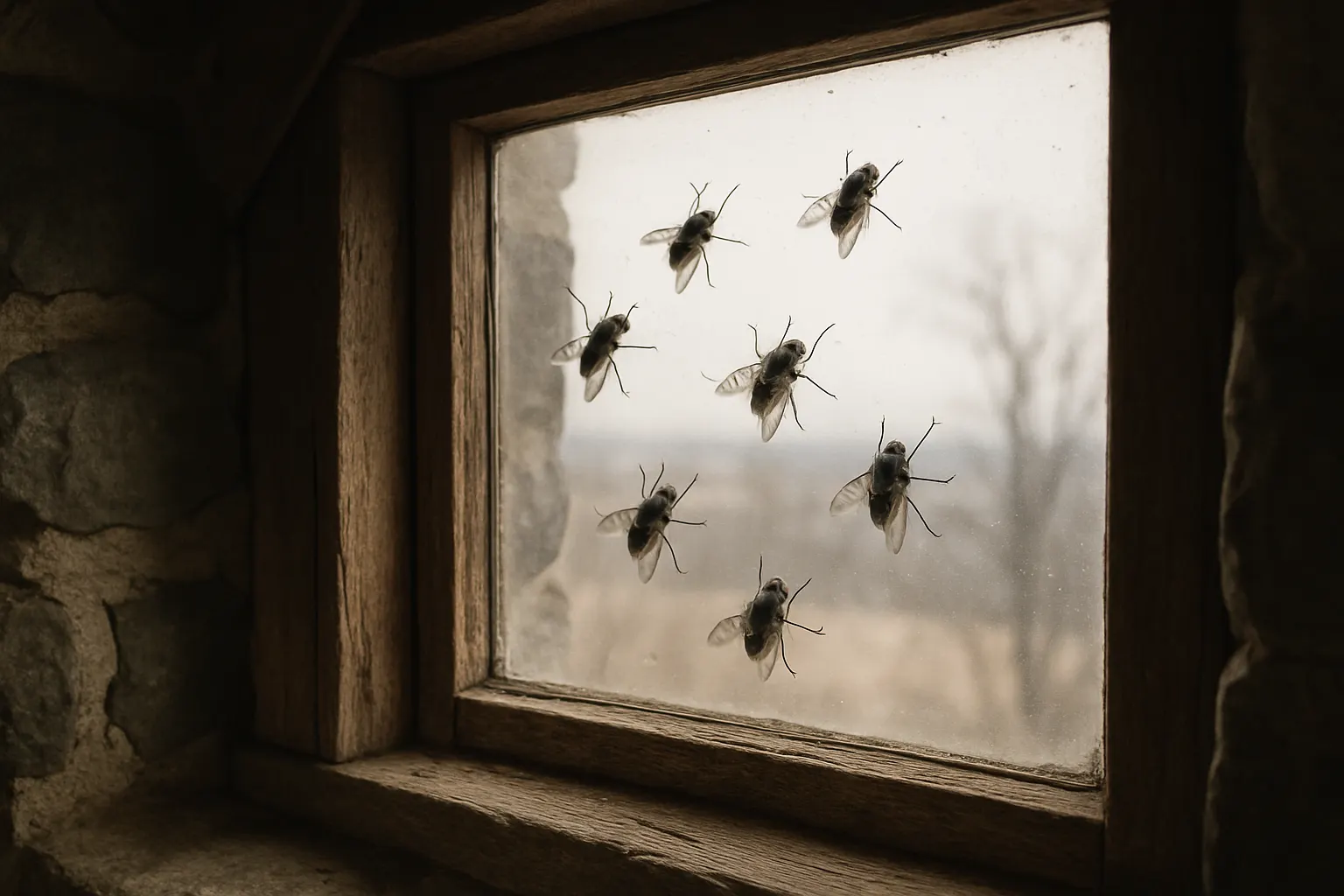
In autumn they collect on the sunny sides of homes and move into attics, wall voids and upper floors. On warm winter days they gather in large numbers at windows, often in unused upstairs rooms. They do not breed indoors. Penn State recommends sealing cracks around windows, siding and utility lines, an exterior application in autumn just before the flies congregate, and vacuuming sluggish flies inside. If flies are coming from inside a wall, find and seal the emergence points.
Service area for stink bug and fall invader work
Our headquarters is in East Pikeland Township, near Phoenixville, and we serve homes across Chester County, Montgomery County and Delaware County. Stink bugs and lanternflies both came through this part of Pennsylvania early, and our page on spotted lanternfly guidance for homeowners covers the other invasive insect people ask about. For spiders, crickets and centipedes that come in during fall, see occasional invader control. Call (610) 935-9130.
Where we provide stink bugs service
We work from our family business in Phoenixville and serve homes and businesses across Chester County, Montgomery County and Delaware County. See our Phoenixville pest control page or pest control in West Chester for the towns each area covers.
Sources
- Penn State Extension: Brown Marmorated Stink Bug
- Penn State Extension: Tree Fruit Insect Pest, Brown Marmorated Stink Bug
- Rice et al., Biology, Ecology, and Management of Brown Marmorated Stink Bug, Journal of Integrated Pest Management 5(3), 2014
- Penn State Extension: Boxelder Bug
- Penn State Extension: Multicolored Asian Lady Beetle
- Penn State Extension: Cluster Flies
Stink Bugs: common questions
What month are stink bugs the worst in Pennsylvania?
September and October. Penn State Extension says brown marmorated stink bugs search for overwintering sites from September through October, gathering on sunny walls on warm afternoons. That is when you see them in large numbers on siding and screens. A second wave of complaints comes in winter, when bugs already in the walls wake up on warm days and wander into living space.
Why are there so many stink bugs in Pennsylvania?
Pennsylvania is where the brown marmorated stink bug got its start in North America. The first known populations were reported in Allentown in 1996. It feeds on many trees and crops and it built up across eastern Pennsylvania before spreading to other states.
Should I be worried if I find a stink bug in my house?
Not about the house itself. Penn State says stink bugs do not reproduce indoors or damage the structure, and they do not bite. Some people react to them, and crushing them against skin can irritate it. One or two bugs in winter means more are dormant in the walls or attic, so it is worth sealing entry points before next fall.
Why do stink bugs come out in winter?
They were already inside. Stink bugs that entered wall voids and attics in fall stay dormant, but a warm spell or sun heating a wall can wake some of them. They follow warmth and light, which leads them out around baseboards, window trim, light fixtures and exhaust fans. Sealing those interior gaps keeps them in the walls until spring.
Does spraying for stink bugs work?
Exterior applications can reduce entry if they are timed right. Penn State says to apply just before bugs congregate on the house in fall, and notes sunlight breaks the material down within days. Sprays inside do little for bugs already in wall voids. Sealing cracks and gaps is the primary control, with a well-timed exterior application as support.
How do I get rid of stink bugs inside without the smell?
Vacuum them rather than crushing them. Use a shop vac or a bagged vacuum and seal and discard the bag afterward, since the odor lingers. Some people knock bugs into a jar of soapy water. Then find where they are coming from, usually trim, baseboards or a light fixture, and seal the gap.
Are the ladybugs in my house the same as garden ladybugs?
Usually not. The beetles that pile into attics and around windows in fall are multicolored Asian lady beetles. They vary from orange to red, often have an M or W marking behind the head, and release a smelly yellow fluid that can stain. Outdoors they eat aphids. Indoors, vacuum them rather than crushing them, and seal the gaps they used.
What are the slow flies at my upstairs windows in winter?
Most likely cluster flies. They spend the winter in attics and wall voids and gather at windows on warm days. Their larvae live in earthworms outdoors, so they do not mean anything is rotting in the house, and they do not breed indoors. Vacuum them, and seal gaps around windows, siding and utility lines before next autumn.
When should I seal my house to keep stink bugs out?
Finish by late August. The bugs begin looking for entry in September, so caulking window and door trim, repairing screens, screening attic and soffit vents and sealing around pipes and cables beforehand has the most effect. Focus on the south and west walls, where fall invaders gather in the afternoon sun.
Family owned. Licensed and insured in Pennsylvania.
Schedule an inspection for stink bugs
Tell us what you are seeing and where. We will call you back to set up a visit, identify the pest and walk you through the plan before any treatment.
- The species identified before anything is applied
- Entry points and moisture problems pointed out on your property
- Prep and re-entry instructions explained up front
Prefer to talk now? Call (610) 935-9130