
Spider Control
Spider Control in Southeastern PA: Fewer Insects, Fewer Webs
Most spiders in Chester County, Montgomery County and Delaware County homes are common house spiders, cellar spiders, wolf spiders and, near creeks, fishing spiders. C.R. Davis III & Sons Pest Control identifies the species, finds the insects feeding them, and treats the exterior entry points and web sites where spiders live, following the product label.
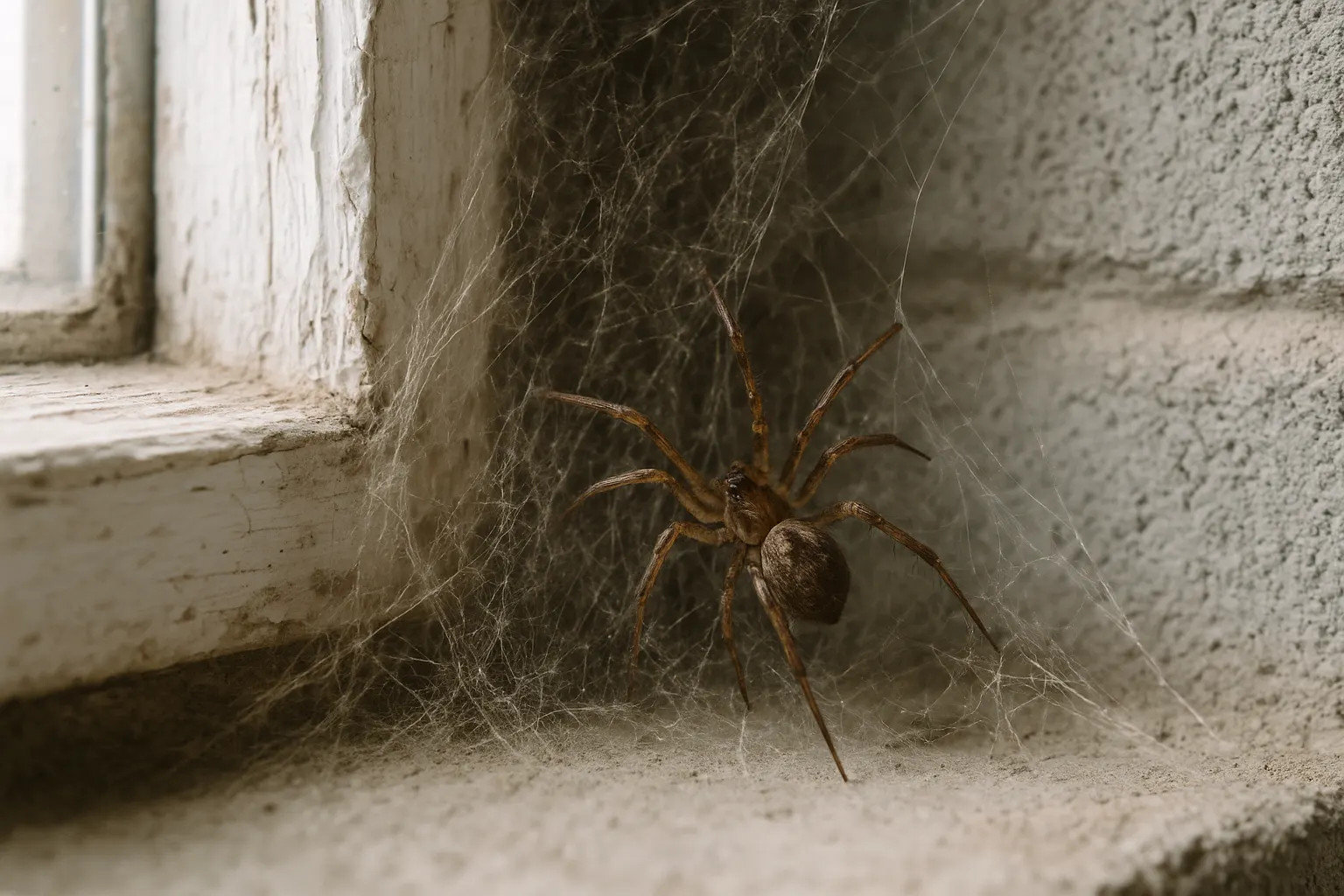
The spiders people find in southeastern Pennsylvania homes
Penn State Extension notes that many spiders native to Pennsylvania come into homes, mostly in autumn. Nearly all of them pose little risk to people and spend their time eating insects. Knowing which one you have tells you where it lives and what it is feeding on.
- Common house spider (Parasteatoda tepidariorum). Small, brownish, with a round abdomen. Builds tangled cobwebs in corners of ceilings, window frames, garages and under furniture. The most common spider inside houses here.
- Long-bodied cellar spider (Pholcus phalangioides). Tiny body, very long thin legs. Hangs upside down in loose, messy webs in basements, crawlspaces and damp corners, and vibrates the web when disturbed. Often called a daddy longlegs.
- Wolf spiders (family Lycosidae). Hairy, brown and gray, fast, and sometimes more than an inch across with legs. They hunt on the ground rather than in webs, so you see them running across basement floors, garages and first-floor rooms, especially in fall.
- Fishing spiders (Dolomedes species, such as the dark fishing spider). Large, brown and patterned, and easily the biggest spider most people see. They live near water and wooded creeks, and wander into basements, garages and boathouses. Homes near French Creek, the Perkiomen, the Brandywine and Ridley Creek see them more often.
Black widows: present in Pennsylvania, mostly outdoors
Penn State Extension says black widows are native to Pennsylvania. The southern black widow (Latrodectus mactans) is found here, and the northern black widow (Latrodectus variolus) probably is as well. Adult females are shiny black with a red hourglass or red marks on the underside of the abdomen.
They are usually outdoors, in undisturbed spots: under stones and garden timbers, in woodpiles and stone walls, inside water meter boxes, and under outdoor furniture. In garages and sheds they hide behind stored boxes and equipment. Penn State notes that bites come almost entirely from adult females, especially females guarding an egg sac, and advises care when reaching under stones, logs, firewood and behind undisturbed items.
Wear gloves when moving firewood, stone or stored items, and shake out gloves and boots kept in a garage. If you think you have been bitten by a black widow, contact a doctor or Poison Control.
Brown recluse: not established in Pennsylvania
Brown recluse spiders (Loxosceles reclusa) are the spider people ask about most, and the one least likely to be here. Penn State Extension lists 16 states where the brown recluse is established, mostly in the south-central and midwestern US, and Pennsylvania is not one of them.
Penn State says brown recluse spiders must be introduced to Pennsylvania, usually in boxes and household goods moved from states where they occur, and cannot survive the climate here unless they stay inside heated buildings. Isolated finds are rare and localized.
Most brown spiders reported as recluses turn out to be wolf spiders, cellar spiders, fishing spiders or grass spiders. A true brown recluse has a violin-shaped mark on the front body and six eyes arranged in three pairs, where most spiders have eight. If you have a spider you are worried about, catch it in a jar and we will identify it.
Webs point to insects: why spiders pick your house
Lots of spiders usually means lots of insects for them to eat. Cobweb spiders set up where flying insects collect, which is around porch lights, windows, soffits and garage doors. Cellar spiders and wolf spiders follow the crickets, silverfish, centipedes and small flies that live in damp basements.
That is why knocking down webs every week without changing anything else rarely helps for long. The spiders rebuild where the food is. Cutting back the insects, and the moisture and lighting that draw them, is what reduces spider numbers over a season.
If you see a lot of wolf spiders or cellar spiders in a basement, look at what else lives down there. Our page on camel crickets, centipedes and silverfish covers the moisture-loving insects that often feed them.
Stopping spiders at the exterior walls
Most spiders that end up indoors were outside first. The exterior of the house, the foundation line, eaves, window and door frames, and the gap where siding meets the foundation, is where we focus.
The perimeter work starts with removing webs and egg sacs along eaves, soffits and window frames. The gaps spiders and their prey use get sealed or screened: door sweeps, torn window screens, gaps around pipes and cables, weep holes and foundation cracks. Where an application is called for, it goes along the foundation, around entry points and at the eaves, per the label, rather than broadcasting it across the yard or through the living space.
Inside, we treat cracks and voids where spiders harbor in basements and garages when it makes sense, and sticky monitors placed along walls show which species are active and where. We tell you up front to keep people and pets off treated surfaces until dry, per the label.
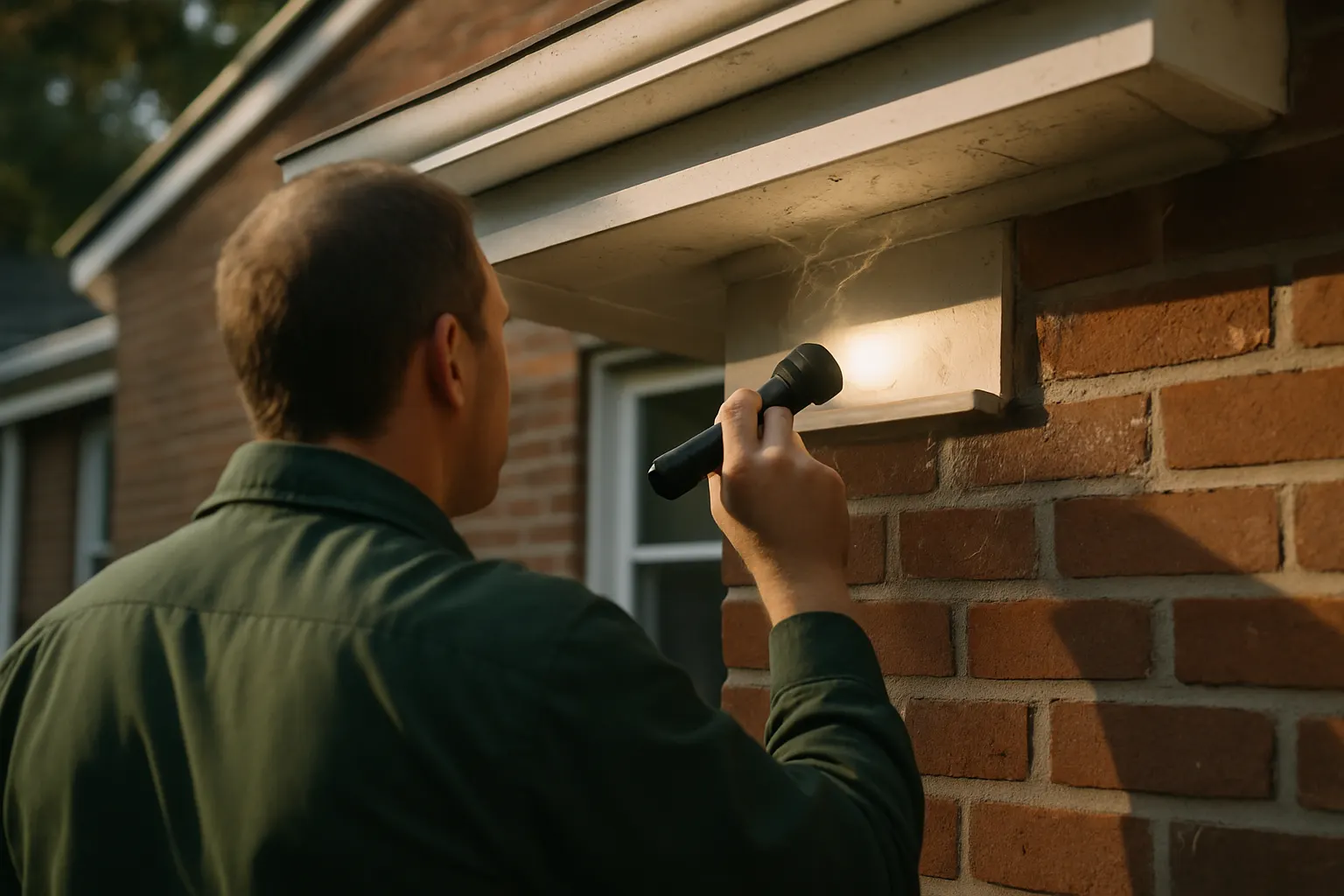
How C.R. Davis handles spider problems
We follow The Davis Inspection Standard. We identify the spiders first, which answers the black widow and brown recluse question right away. Then we name the conducive conditions: a damp basement, mulch piled against the foundation, a woodpile beside the back door, bright lights over the entry, or gaps under garage doors.
Treatment goes where the spiders and their prey actually live, following the label. For homes where spiders and fall insects come back every year, a year-round pest control plan keeps up the exterior work across the seasons.
What you can do to cut down on spiders
A few changes around the house reduce the insects spiders hunt and the places they hide.
- Run a dehumidifier in damp basements and fix leaks, gutters and downspouts that soak the foundation
- Switch outdoor fixtures near doors to yellow bug-light bulbs, or move lights so they shine toward the door from a post rather than hanging over it
- Pull mulch, leaf litter and ground cover back from the foundation, and keep shrubs trimmed off the siding
- Stack firewood away from the house and off the ground
- Store basement and garage items in sealed plastic bins rather than cardboard boxes
- Vacuum webs, spiders and egg sacs regularly, then empty the vacuum outdoors
- Install door sweeps and repair torn screens before fall
Areas we serve for spider control
C.R. Davis III & Sons is based in East Pikeland Township near Phoenixville and serves West Chester, PA, Media, PA, King of Prussia and the rest of Chester County, Montgomery County and Delaware County. Call (610) 935-9130 to set up a visit.
Where we provide spiders service
We work from our family business in Phoenixville and serve homes and businesses across Chester County, Montgomery County and Delaware County. See our Phoenixville pest control page or pest control in West Chester for the towns each area covers.
Spiders: common questions
Are there brown recluse spiders in Pennsylvania?
They are not established here. Penn State Extension says brown recluse spiders must be brought into Pennsylvania, usually in boxes or goods from states where they live, and cannot survive the climate unless they stay in heated buildings. Finds are rare. Most brown spiders people suspect are wolf spiders, cellar spiders or fishing spiders.
Are there black widow spiders in southeastern PA?
Yes. Penn State Extension says black widows are native to Pennsylvania. The southern black widow is found here and the northern black widow probably is too. They mostly live outdoors in woodpiles, stone walls, under garden timbers and in sheds. Wear gloves when moving firewood or stored items, and look before reaching into undisturbed spaces.
Why am I seeing so many spiders in my house in the fall?
Many native Pennsylvania spiders move indoors in autumn, according to Penn State Extension. Cooler nights also push insects toward the house, and spiders follow the food. Sealing gaps at doors, windows and the foundation, switching porch lights to yellow bulbs, and clearing webs and egg sacs along the eaves all help cut the numbers.
What is the big spider in my basement near the creek?
If your home is near a creek or pond and the spider is large, brown and patterned with long legs, it is likely a fishing spider. They live near water and wander into basements and garages. They are not aggressive and prefer to run. A dehumidifier, sealed gaps at the foundation and a door sweep on the basement or garage door help keep them out.
Do spider sprays work?
Spraying a spider you can see does little for the next one. What reduces numbers is removing webs and egg sacs, sealing entry points, cutting down the insects spiders eat, and placing a label-directed application along the foundation, eaves and entry points where spiders travel. Interior treatment is limited to cracks, voids and harborage in areas like basements and garages.
How do I keep spiders out of my house naturally?
Focus on what attracts them. Use a dehumidifier in the basement, switch porch lights to yellow bulbs, keep mulch and firewood away from the foundation, store items in sealed bins, install door sweeps and repair screens, and vacuum webs and egg sacs often. Fewer insects around the house means fewer spiders.
Are cellar spiders the same as daddy longlegs?
People use the name for both. Long-bodied cellar spiders are true spiders with tiny bodies and very long legs that hang in loose webs in basements. Harvestmen, also called daddy longlegs, are not spiders: they have a single round body section and do not spin webs. Neither is a danger to people.
When should I call a pest control company for spiders?
Call when you find spiders or webs in the same areas week after week, see many wolf spiders or fishing spiders in the basement, find a spider you think may be a black widow near where people reach, or cannot tell what species you have. An inspection shows what the spiders are feeding on and where they are getting in.
Related pest control services
Family owned. Licensed and insured in Pennsylvania.
Schedule an inspection for spiders
Tell us what you are seeing and where. We will call you back to set up a visit, identify the pest and walk you through the plan before any treatment.
- The species identified before anything is applied
- Entry points and moisture problems pointed out on your property
- Prep and re-entry instructions explained up front
Prefer to talk now? Call (610) 935-9130