
Flea Control
Flea Control in Phoenixville: Treat the House While Your Vet Treats the Pet
C.R. Davis III & Sons Pest Control treats cat flea infestations in homes around Phoenixville and across Chester County, Montgomery County and Delaware County. Most fleas in a house are eggs, larvae and pupae in carpets and pet bedding, not adults on the pet. We treat those areas according to the label, give you a vacuuming plan, and follow up because pupae keep hatching after treatment.
The cat flea is the flea in almost every local home
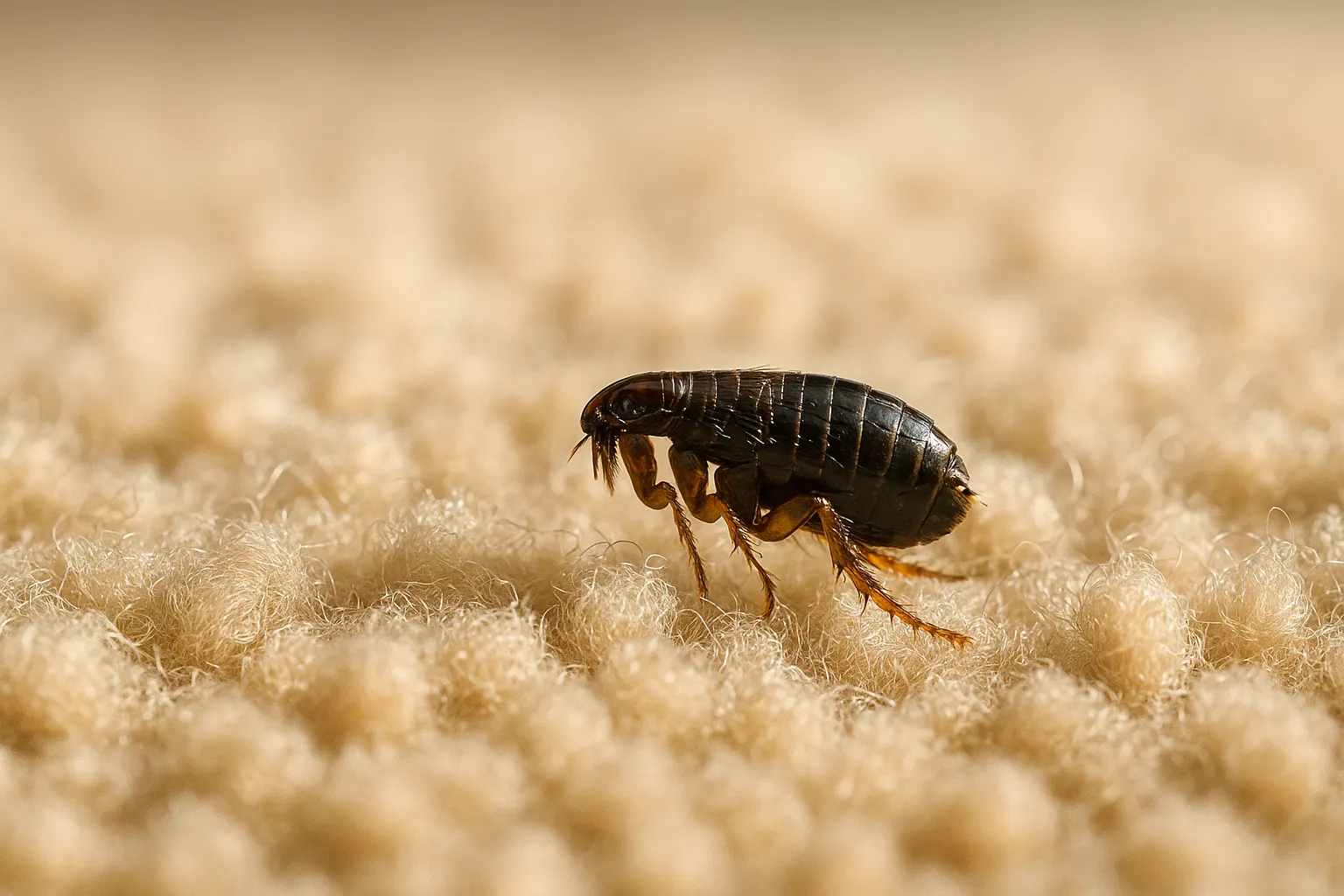
Whether you have a cat, a dog or both, the flea in your house is almost certainly the cat flea, Ctenocephalides felis. Penn State Extension says it is the most common flea submitted for identification in Pennsylvania and the main flea on both cats and dogs. It will also bite people, which is often how homeowners first notice, with itchy bites around the ankles and lower legs.
Adult fleas are dark brown, wingless and under 1/8 inch long, with bodies flattened side to side so they slip through fur. Their back legs are built for jumping. Once an adult finds a host, it tends to stay there, feeding several times a day. UC IPM says an adult cat flea generally lives about 30 to 40 days on the host.
Most of a flea problem lives in the carpet, not on the pet
A female flea lays about 20 to 50 eggs a day on the animal, according to UC IPM. The eggs are smooth and fall off wherever the pet walks, sleeps and scratches. That puts most of the population in pet beds, rugs, carpet near the couch, upholstered furniture and the cracks between floorboards.
Eggs hatch in about 2 to 5 days. The larvae are tiny, legless and pale, and they avoid light by burrowing down into carpet fibers. They do not bite. Penn State Extension notes they feed on debris, including the dried blood in adult flea droppings, which is the "flea dirt" you may see on your pet. After 8 to 15 days, larvae spin silk cocoons. Carpet fibers, pet hair and dust stick to the silk and hide it.
At normal room temperature, the whole cycle from egg to biting adult can take about 18 days. That speed is why a few fleas brought in on a pet in August can turn into a house problem by September.
| Stage | Where it is | About how long (UC IPM) |
|---|---|---|
| Egg | Falls off the pet into bedding, carpet and furniture | 2 to 5 days |
| Larva | Deep in carpet, pet beds, floor cracks | 8 to 15 days |
| Pupa in cocoon | Carpet base, under furniture edges | Days to months, depending on conditions |
| Adult | On the pet, jumping onto people nearby | About 30 to 40 days on the host |
Why pupae survive treatments
The cocoon is the reason flea control takes patience. UC IPM states that sprays do not kill pupae, and fleas will continue to emerge for about 2 weeks after treatment. The silk shell and the debris stuck to it keep treatment from reaching the developing flea.
Pupae can also wait. Fully formed fleas sit in the cocoon until something tells them a host is near, such as warmth and the pressure or vibration from footsteps or a vacuum. UC IPM notes that at cool temperatures, fully formed fleas can stay in their cocoons for up to 12 months. That explains two common surprises. People who come home from a two-week vacation get bitten as soon as they walk in, and people who move into a house where the last owner had pets find fleas even though they don't own an animal.
Seeing fleas in the first two weeks after treatment is normal. Those are adults hatching from cocoons and landing on treated carpet. It does not mean the treatment failed, and it is why we plan the follow-up before we leave.
Your veterinarian treats the pet, and we treat the house
Flea control works when the pet and the home are handled at the same time. If only the house is treated, adults keep laying eggs on the pet. If only the pet is treated, new fleas keep hatching from the carpet and jumping on.
Talk to your veterinarian about flea control for every dog and cat in the house, including indoor cats that never go outside. UC IPM also advises contacting your veterinarian for help selecting a flea control product. We do not recommend, apply or give advice on flea products for animals. That decision belongs to your vet, who knows your pet's age, weight and health. Tell us when your pets were treated so we can schedule the home visit to line up with it.
How to prepare your home before flea treatment
Prep makes a big difference with fleas, because vacuuming pulls up eggs and larvae and stirs pupae into hatching. Before your appointment:
- Vacuum every carpet, rug, upholstered couch and chair, along baseboards and under furniture edges. Spend extra time where pets sleep.
- Empty the vacuum into a sealed plastic bag, or seal and remove the bag, and put it in an outdoor trash can right away.
- Wash pet bedding, throw blankets and washable rugs in hot water and dry them on high.
- Pick up toys, clothes and items from floors and from under beds so carpet edges can be reached.
- Make a plan for pets and people to be out of the house during treatment and until treated surfaces are dry, per the label. We tell you the time before the visit.
- Cover or remove fish tanks and bird cages as we direct, and turn off aquarium air pumps if asked.
How we treat a home for fleas
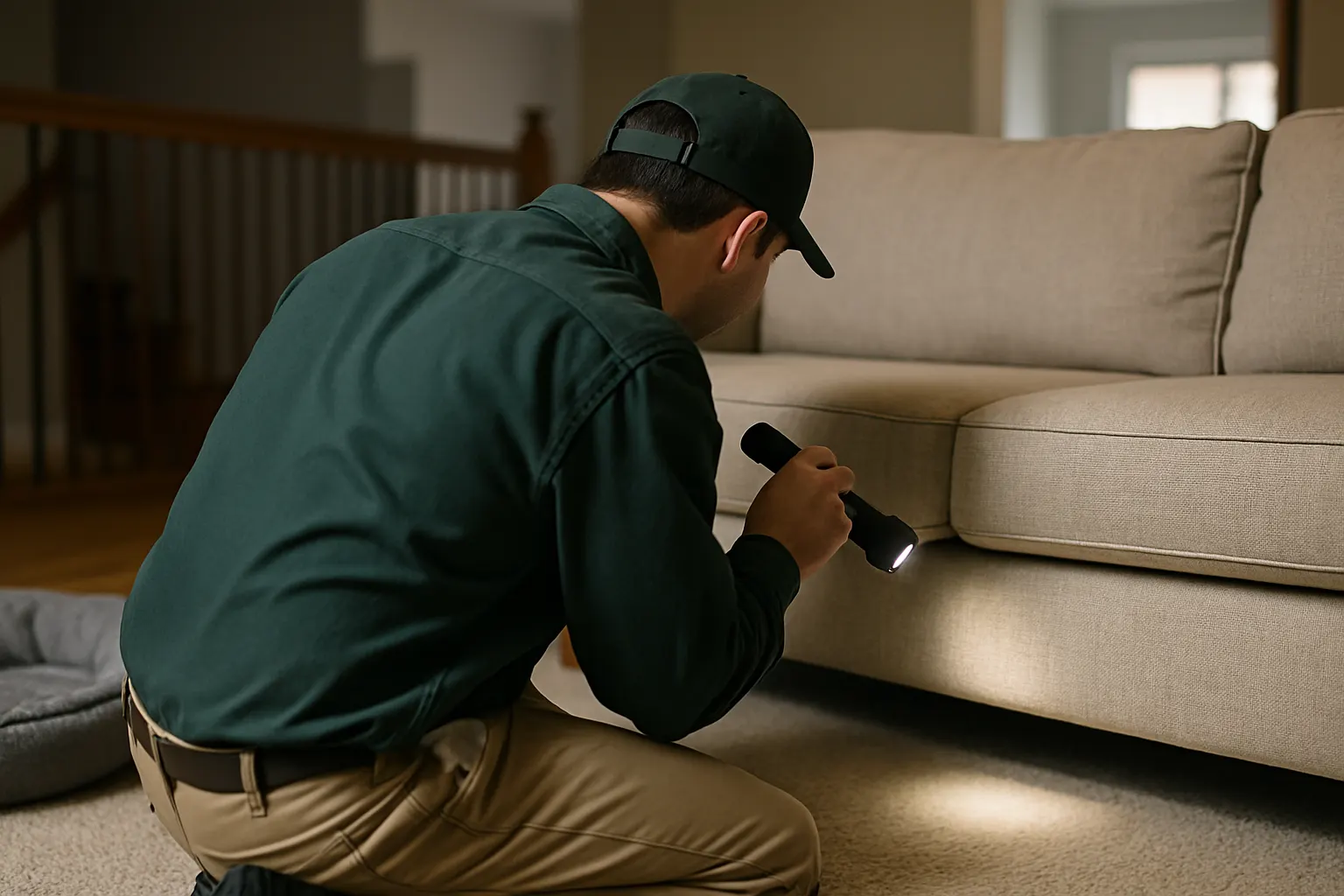
We follow The Davis Inspection Standard on flea jobs like any other. First we confirm the insect is actually a flea. Bites on people also come from bed bugs, mites and other insects, and each needs a different plan. We find the hot spots, usually where pets sleep, eat and lie in the sun, and we look for sources like a stray cat, raccoon or opossum using a crawl space or the space under a deck.
Treatment goes on carpets, rugs, pet resting areas, the edges of rooms and under furniture where larvae develop, following each product's label. Home flea treatments often pair an adulticide with an insect growth regulator, which interrupts eggs and larvae from developing into biting adults. Keep people and pets off treated carpets and furniture until they are dry, per the label, and we will tell you exactly when you can come back in.
After treatment: keep vacuuming and plan the follow-up
Vacuuming after treatment is part of the treatment. UC IPM recommends vacuuming floors, rugs, carpets and upholstered furniture daily or every other day for 10 days to 2 weeks to remove adults as they emerge. The vibration also gets pupae to hatch sooner, which brings them into contact with the treated carpet. Keep sealing and removing the vacuum contents each time.
We set a follow-up visit before we leave. If fleas are still active after the pupae have had time to emerge, we re-inspect and treat again where activity continues. Heavy infestations, homes with several pets and houses with wildlife under the porch usually take longer than a light problem caught early.
Fleas peak in late summer and fall around Phoenixville
Flea numbers build through the warm months, and in the Philadelphia area, searches for flea exterminators peak in September. By then, fleas have had a whole summer of dogs coming in from the yard and cats slipping out the door. When cooler nights bring pets and people inside more, the indoor population becomes easier to notice.
Fall is also when mice and other animals start looking for shelter under porches and in crawl spaces, and some of them bring fleas along. If you are hearing scratching in the walls as well, read about fall mouse and rat control. If you have bites but can't find any fleas, our bed bug treatment page explains what else to look for.
Homeowners who want ongoing coverage for common household pests can ask about a home pest control plan. We serve Phoenixville and the surrounding towns in Chester County, Montgomery County and Delaware County. Schedule a flea inspection or call (610) 935-9130.
Where we provide fleas service
We work from our family business in Phoenixville and serve homes and businesses across Chester County, Montgomery County and Delaware County. See our Phoenixville pest control page or pest control in West Chester for the towns each area covers.
Fleas: common questions
Why do I still see fleas after treatment?
Seeing fleas after treatment is normal for about two weeks because flea pupae inside cocoons are not killed by sprays. New adults keep emerging and land on the treated carpet. Vacuum daily or every other day to bring them out and remove them, and keep pets on the flea control your veterinarian recommended. If activity continues past that window, we re-inspect at the follow-up.
How long does it take to get rid of fleas in a house?
Getting fleas under control in a house usually takes several weeks, because the full life cycle runs about 18 days and pupae keep emerging for about 2 weeks after treatment. Treating the home and the pets at the same time, vacuuming often and keeping the follow-up visit are what shorten it. Heavy infestations and multi-pet homes take longer.
Can fleas live in a house without pets?
Fleas can survive in a house without pets for a while, mostly as pupae waiting in cocoons. UC IPM notes fully formed fleas can wait in the cocoon for up to 12 months at cool temperatures. When new people move in, footsteps and warmth trigger them to hatch, and they bite people. Wildlife under a porch or in a crawl space can also bring fleas in.
Do I need to treat my pet if I treat my house for fleas?
Yes, the pets need treatment at the same time as the house, or adult fleas on the animal will keep laying eggs into the carpet. Talk with your veterinarian about the right product for each dog and cat, including indoor cats. We treat the home only and do not give advice on flea products for pets. That decision belongs to your vet.
What should I do before the exterminator comes for fleas?
Before a flea treatment, vacuum all carpets, rugs, upholstered furniture and pet resting areas, then seal and remove the vacuum contents. Wash pet bedding in hot water and dry it on high. Clear floors and under beds. Plan for people and pets to be out of the house during treatment and until treated surfaces are dry, per the label.
Why are fleas worse in the fall?
Fleas often seem worse in fall because the population has been building all summer, and cooler weather brings pets and people indoors where bites are noticed. In the Philadelphia area, searches for flea exterminators peak in September. Wildlife moving under porches and into crawl spaces for shelter in the fall can also bring more fleas close to the house.
How often should I vacuum when I have fleas?
Vacuum floors, rugs, carpets and upholstered furniture daily or every other day for 10 days to 2 weeks after treatment, which is the UC IPM recommendation. Focus on where pets sleep and rest, and under furniture edges. Seal the vacuum bag or canister contents in plastic and take it to an outdoor trash can each time.
Are flea bites on people a sign of bed bugs instead?
Flea bites and bed bug bites can look alike, so bites alone do not tell you which insect it is. Flea bites are usually around the ankles and lower legs, while bed bugs tend to bite exposed skin during sleep. Look for fleas jumping on pets or socks, and check mattress seams for bed bug spots. We confirm the insect before treating.
Related pest control services
Family owned. Licensed and insured in Pennsylvania.
Schedule an inspection for fleas
Tell us what you are seeing and where. We will call you back to set up a visit, identify the pest and walk you through the plan before any treatment.
- The species identified before anything is applied
- Entry points and moisture problems pointed out on your property
- Prep and re-entry instructions explained up front
Prefer to talk now? Call (610) 935-9130