
Commercial Pest Control
Commercial Pest Control in Montgomery County: Scheduled Service With a Paper Trail
C.R. Davis III & Sons Pest Control provides scheduled commercial pest control for restaurants and food service, offices and retail stores, apartment buildings and warehouses in Montgomery County, Chester County and Delaware County. We work from an integrated pest management plan, monitor on a set schedule, and document every visit so managers and inspectors can see what was found and what was done.
Commercial pest control as a standing program
Homeowners usually call when something shows up, and most businesses cannot wait that long. A mouse in a dining room, roaches under a bar or droppings in a stockroom can mean a failed inspection, a lost tenant or a complaint posted online. Commercial pest control works best as a standing program with scheduled visits, monitoring devices that get checked every time, and records that show the work was done.
C.R. Davis III & Sons is a family-owned Pennsylvania corporation based in Phoenixville. We are licensed by the Pennsylvania Department of Agriculture in the Household and Health Related and Wood Destroying Pests categories, and we are insured. Details are on our licensing and insurance page.
Integrated pest management is how we set up every account
The EPA describes integrated pest management as a four-part approach: set action thresholds, monitor and identify pests, prevent them, and control them when the threshold is reached. That fits a commercial building well, because most recurring pest problems in businesses come from conditions like a door that doesn't close, a dumpster pad next to the kitchen door or a loading dock left open.
Our version of this is The Davis Inspection Standard. We identify the species before anything is applied. We find and name the conducive conditions, such as moisture, gaps and sanitation issues, and put them in writing so the right person can fix them. We place treatment where the pest lives, following the label. And we set the follow-up schedule and give your staff prep and re-entry instructions ahead of time, so nobody is surprised on service day.
Restaurants and food service
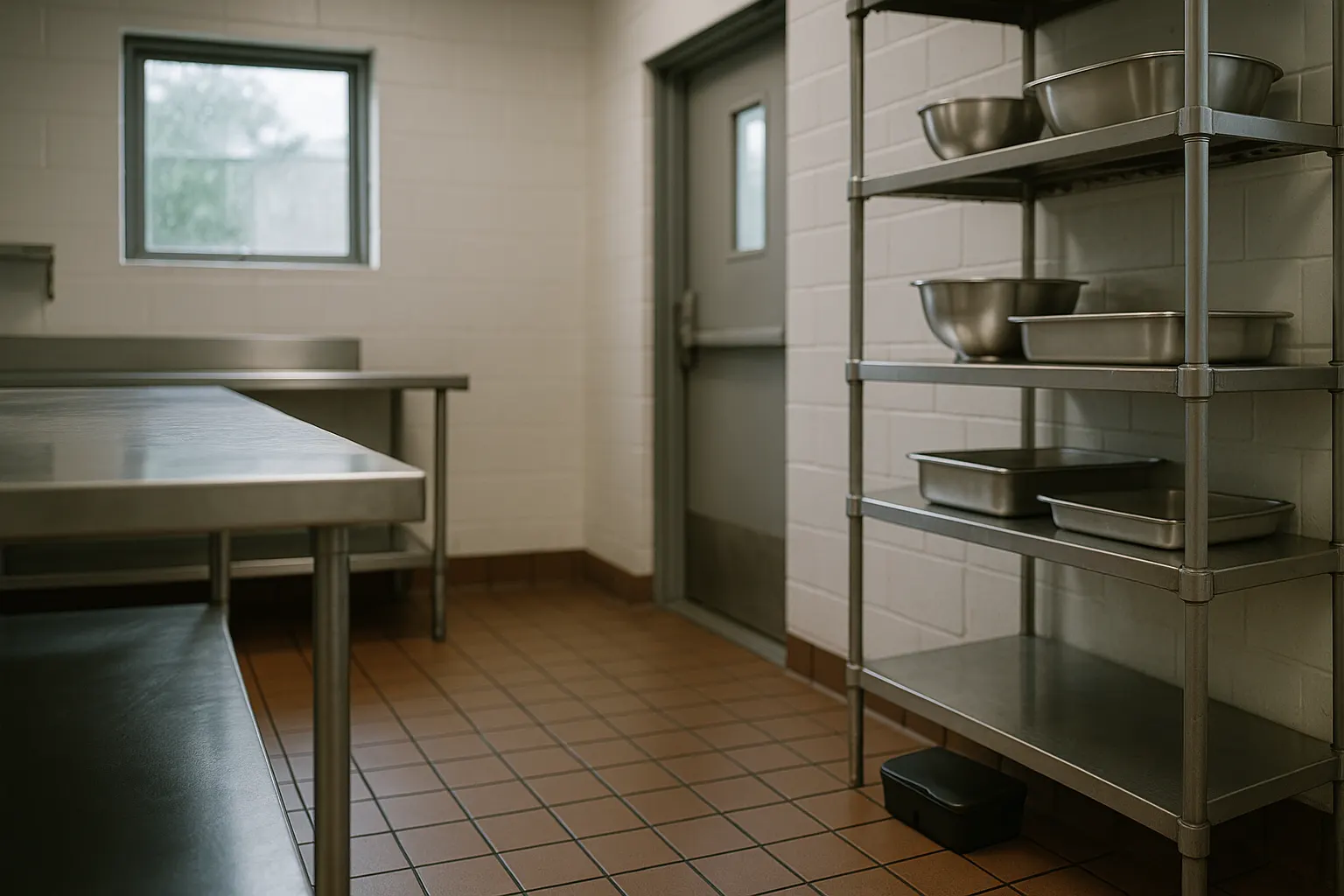
Kitchens give pests everything they need: warmth, water, food and deliveries arriving in cardboard every day. The pests we focus on in food service are German cockroaches in equipment, walls and plumbing chases, house mice and Norway rats coming in through doors, drains and utility gaps, stored-product insects in dry storage, and flies around dish areas and waste.
Pennsylvania's food code, 7 Pa. Code Chapter 46, follows the FDA Food Code. The Food Code's pest section, 6-501.111, calls for routinely inspecting incoming shipments and the premises for evidence of pests, using trapping devices or other controls when pests are found, and eliminating harborage. A scheduled service program with written records helps you show that work is happening.
Service in food areas is done around your hours and your food. We place cockroach bait in cracks and crevices away from food contact surfaces, keep rodent bait in locked, tamper-resistant stations outside or in non-food areas as the label allows, and use traps and monitors inside. We tell your manager before each visit what needs to be covered, moved or cleaned. For more on the insects we find most often in kitchens, see German cockroach control and pantry and stored-product pests.
Pennsylvania Category 11 covers food handling establishments
Pennsylvania licenses commercial pesticide applicators by category under 7 Pa. Code § 128.42. Category 11, Household and Health Related, covers pesticide use "in, on or around a food handling establishment, a human or nonagricultural animal dwelling, an institution such as a school or hospital." That is the category that applies to restaurant, kitchen, apartment and office pest control. Category 12, Wood Destroying Pests, covers termites and other wood-destroying insects.
C.R. Davis III & Sons holds both the Household and Health Related and Wood Destroying Pests categories with the Pennsylvania Department of Agriculture. When you hire any pest control company for a food business, ask which categories it holds. Pennsylvania's Department of Agriculture offers a public lookup of licensed pesticide application businesses.
Offices and retail stores
Offices and shops tend to have quieter pest pressure, but the problems they do get are visible to customers and staff. Mice in break rooms and drop ceilings, ants along storefront windows in spring, stinging insects nesting over entrances in late summer, and stink bugs and lady beetles gathering on sunny walls in fall are the usual calls.
For these buildings, service centers on exterior inspection, monitoring devices in break rooms, storage rooms and utility areas, and fixes to entry points like door sweeps and gaps around conduit. Tell us your hours so visits disrupt customers and staff as little as possible. See our pages on mouse and rat control and wasp and hornet nest removal for how we handle those pests.
Property managers and multifamily buildings
Apartment buildings, townhome communities and mixed-use buildings share walls, plumbing and trash areas, so pests move between units. German cockroaches travel through wall voids and pipe chases, mice move along shared basements, and bed bugs arrive with a new tenant's furniture. Treating one unit while the units around it are ignored rarely holds.
For property managers, we coordinate unit access and notices with you, inspect and treat adjoining units when activity is found, check common areas and trash rooms on each visit, and give you a record by unit so you can track problem areas and tenant prep. Older boroughs in our area have a lot of attached and converted housing, and those buildings take extra attention at shared walls. Tenants who report bed bugs get the same privacy as a homeowner: we don't discuss their service with anyone except the people you authorize. Read about bed bug treatment and tenant prep.
Warehouses and distribution space
Warehouses along the US-422 and Route 202 corridors have large dock doors, pallets and long perimeters, which makes rodent monitoring the center of most programs. Exterior bait stations along the building line, traps inside at dock doors and along walls, and a numbered map of every device let us see where activity is coming from and whether it is growing.
Warehouses that store food, grain, seed or pet food also need monitoring for stored-product insects such as Indian meal moths and flour beetles, and quick attention to spilled product and damaged pallets.
Pest logs and service documentation
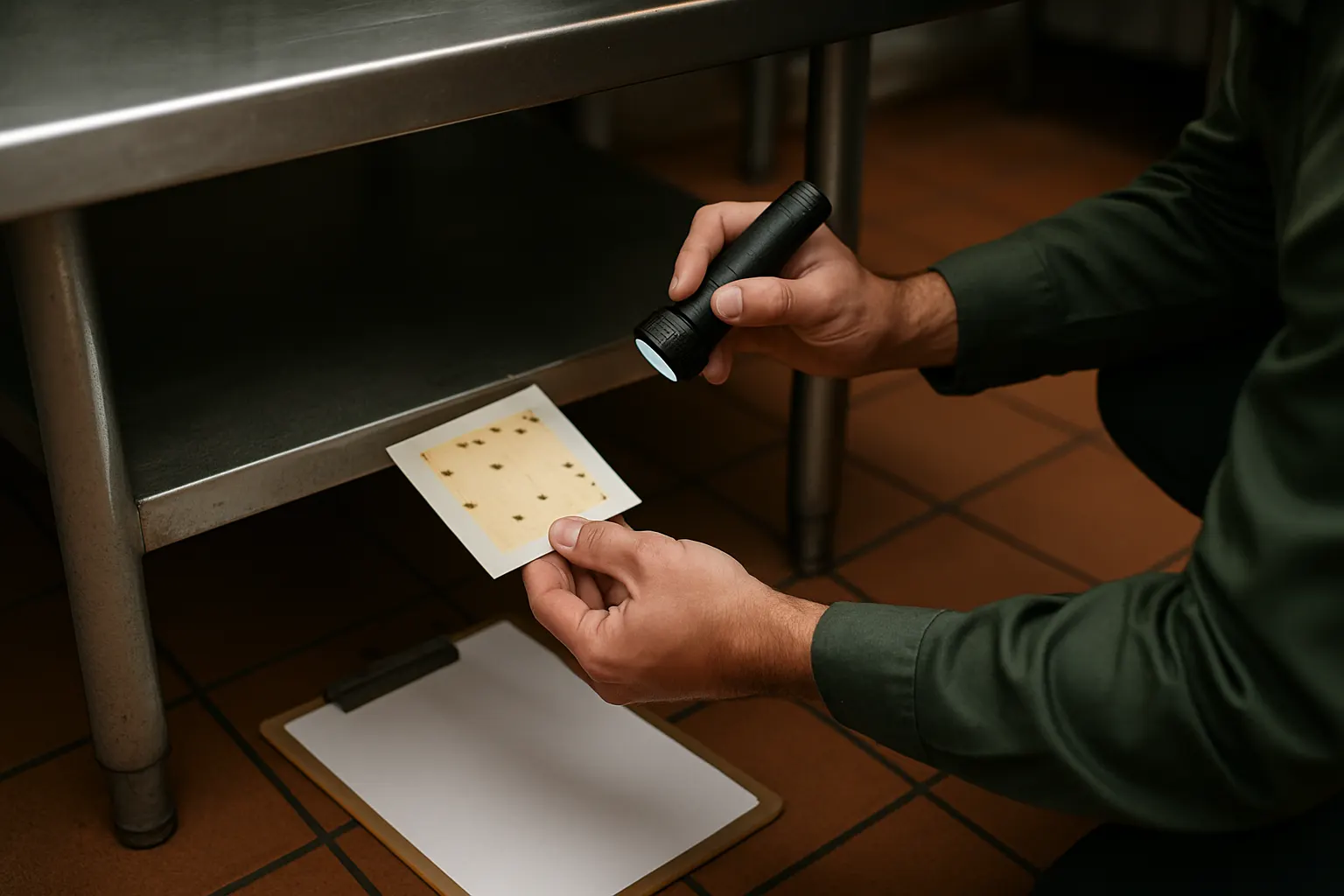
A health inspector, auditor, corporate office or property owner will want records showing that pests are being monitored and handled. We document our service visits, and the log belongs on site where a manager or inspector can pull it up.
A useful commercial pest log includes:
- Date and time of service and the applicator who performed it
- Pests found, where they were found and how much activity there was
- A device map with the number and location of every trap, monitor and bait station
- Activity counts from each monitoring device, visit to visit
- Any pesticide applied, where it was placed and label re-entry instructions
- Conducive conditions found, such as door gaps, leaks or sanitation issues, with a recommended fix
- Notes from your staff about sightings between visits
Scheduled service and how often we visit
Visit frequency depends on the building and the pest pressure. A busy restaurant kitchen needs more frequent attention than a small office. A warehouse with active rodent pressure at the docks needs a tighter schedule than one without. We set the schedule after the first inspection, explain why, and adjust it when the monitoring data shows a change. If pests show up between scheduled visits, your staff should call and log the sighting.
We serve businesses throughout Montgomery County, including King of Prussia, Norristown, Collegeville and Pottstown, plus Chester County and Delaware County. To set up a commercial inspection, contact our Phoenixville office or call (610) 935-9130.
Where we provide commercial pest control service
We work from our family business in Phoenixville and serve homes and businesses across Chester County, Montgomery County and Delaware County. See our Phoenixville pest control page or pest control in West Chester for the towns each area covers.
Sources
Commercial Pest Control: common questions
What is commercial pest control?
Commercial pest control is scheduled pest management for businesses such as restaurants, offices, retail stores, apartment buildings and warehouses. It usually includes an initial inspection, monitoring devices placed throughout the building, regular service visits, treatment where pests are found, and written records of each visit. The goal is to catch activity early and fix the conditions that let pests in.
How often should a restaurant have pest control?
Restaurants generally need more frequent pest control visits than most other businesses because kitchens have constant food, water, warmth and deliveries. The right schedule depends on the building, the pest history and what monitoring shows. We set the frequency after the first inspection and adjust it when activity counts change, rather than using one schedule for every kitchen.
What license does a pest control company need for a restaurant in Pennsylvania?
In Pennsylvania, a pest control business needs a pesticide application business license from the Department of Agriculture, and the applicators need the right category. Category 11, Household and Health Related, covers pesticide use in, on or around food handling establishments under 7 Pa. Code § 128.42. C.R. Davis III & Sons is licensed in that category.
What should be in a pest control log?
A pest control log should show the date of each visit, who performed it, what pests were found and where, activity counts from each monitoring device, any pesticide applied and where, and the conditions found that need fixing. A device map showing every trap and bait station is part of it. Staff sightings between visits belong in the log too.
What is integrated pest management for a business?
Integrated pest management, or IPM, is an approach the EPA describes as setting action thresholds, monitoring and identifying pests, preventing them, and controlling them when needed. For a business, that means inspections, monitoring devices, fixing entry points and sanitation problems, and placing treatment only where pests are active instead of spraying on a calendar.
Will pest control service interrupt our business?
Scheduled commercial service is planned around your operation so inspection and treatment interfere as little as possible with customers, tenants or food prep. Tell us your hours and your slow periods at the first inspection. We give your manager prep and re-entry instructions ahead of each visit, so staff know what to cover, move or clean before we arrive.
Do you handle pest control for apartment complexes?
Yes. We work with property managers on apartment buildings and townhome communities, including cockroaches, mice and bed bugs. Because pests move through shared walls and plumbing, we coordinate access, inspect neighboring units when activity is found, and keep records by unit so you can see which areas need attention and which tenants need prep instructions.
Is commercial pest control worth it for a small business?
For food businesses and multi-unit buildings, a scheduled program is usually worth it, because a single pest sighting can lead to an inspection problem, a lost customer or a tenant complaint. Monitoring catches activity while it is small, which is cheaper and less disruptive than handling a full infestation. A small office with little pest pressure may need far less.
Related pest control services
Family owned. Licensed and insured in Pennsylvania.
Schedule an inspection for commercial pest control
Tell us what you are seeing and where. We will call you back to set up a visit, identify the pest and walk you through the plan before any treatment.
- The species identified before anything is applied
- Entry points and moisture problems pointed out on your property
- Prep and re-entry instructions explained up front
Prefer to talk now? Call (610) 935-9130