
Carpenter Ants
Carpenter Ant Control: Find the Wet Wood and You Find the Nest
C.R. Davis III & Sons Pest Control treats carpenter ants in homes around Phoenixville and across Chester County, Montgomery County and Delaware County. The black carpenter ant nests in moist, decaying wood, often with a parent colony outside and satellite nests in the house. We find both, place treatment where the ants live, and show you the moisture problem that drew them in.
Carpenter ants in Pennsylvania homes
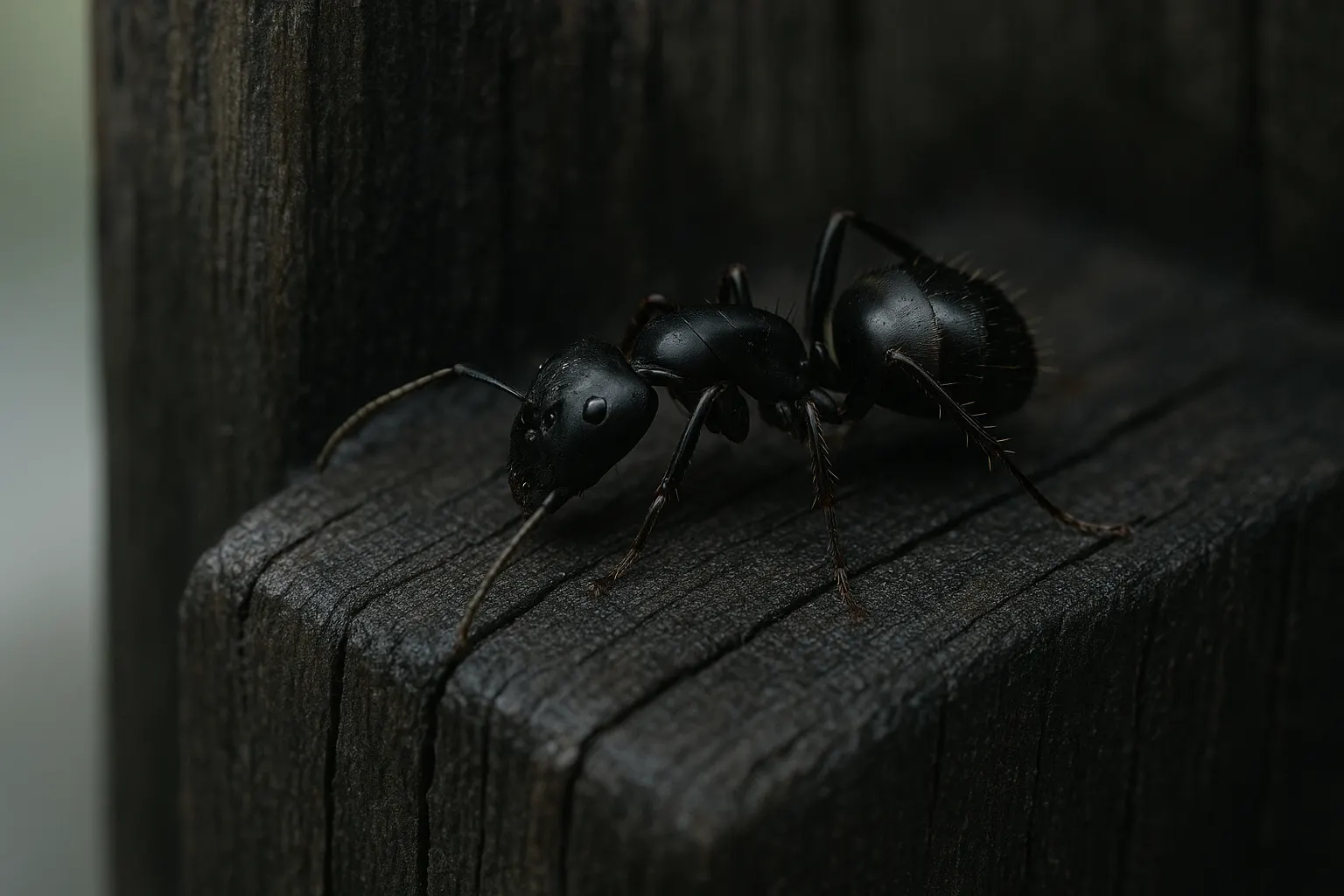
Penn State Extension calls the black carpenter ant a common invader of homes in the northeastern United States. In the woods, carpenter ants help break down dead trees, nesting in logs, stumps and hollow trunks. The trouble starts when large workers come indoors for food, or when a colony sets up a satellite nest in wood that has stayed wet.
Carpenter ants do not eat wood. They excavate it for nesting space and dump the chewed particles outside the nest. They seldom tunnel into dry, sound wood, but they will hollow out moist, rotting wood and soft materials such as foam insulation board. Penn State notes that structural damage from nest expansion is rare, but the ants are a clear sign that some part of the house is staying wet.
Homes built in wooded areas are especially prone, according to Penn State. Around here that covers a lot of houses: lots backing onto the woods near French Creek State Park, Evansburg State Park, Marsh Creek State Park and Valley Forge, plus older properties with big shade trees and stumps in the yard.
How to recognize them
Workers are wingless, dark shiny brown to black, and 1/4 to 1/2 inch long, much bigger than the small brown ants that trail to the sugar bowl. Winged reproductives look similar but reach 3/4 inch. A colony has one wingless queen and does not produce winged ants until it is several years old with roughly 2,000 to 3,000 workers.
About 200 to 400 winged ants develop in summer, stay in the nest over winter, and leave the following spring or early summer. Because of that timing, if you find many winged carpenter ants at windows inside the house, Penn State says they probably came from an indoor nest. Ants are usually inactive in winter, so large black ants walking around indoors in January point to a nest in a heated part of the building.
Parent colonies and satellite nests
An indoor nest often starts from a parent colony outside, commonly in a tree, log or scrap wood pile within 100 yards of the house. Workers travel back and forth between the two. Penn State says that to stop the ants, both the parent colony and the satellite nests have to be found and dealt with. Treating only the ants you see indoors leaves the source intact.
Common indoor nest spots include:
- Porch pillars and the timbers that support porches and decks.
- Sill plates, girders and floor joists, especially under bathrooms and kitchens.
- Wall studs and window and door casings where water gets in.
- Hollow spaces in ceilings and walls, and under insulation between ceiling joists.
Moisture-damaged wood is the real cause
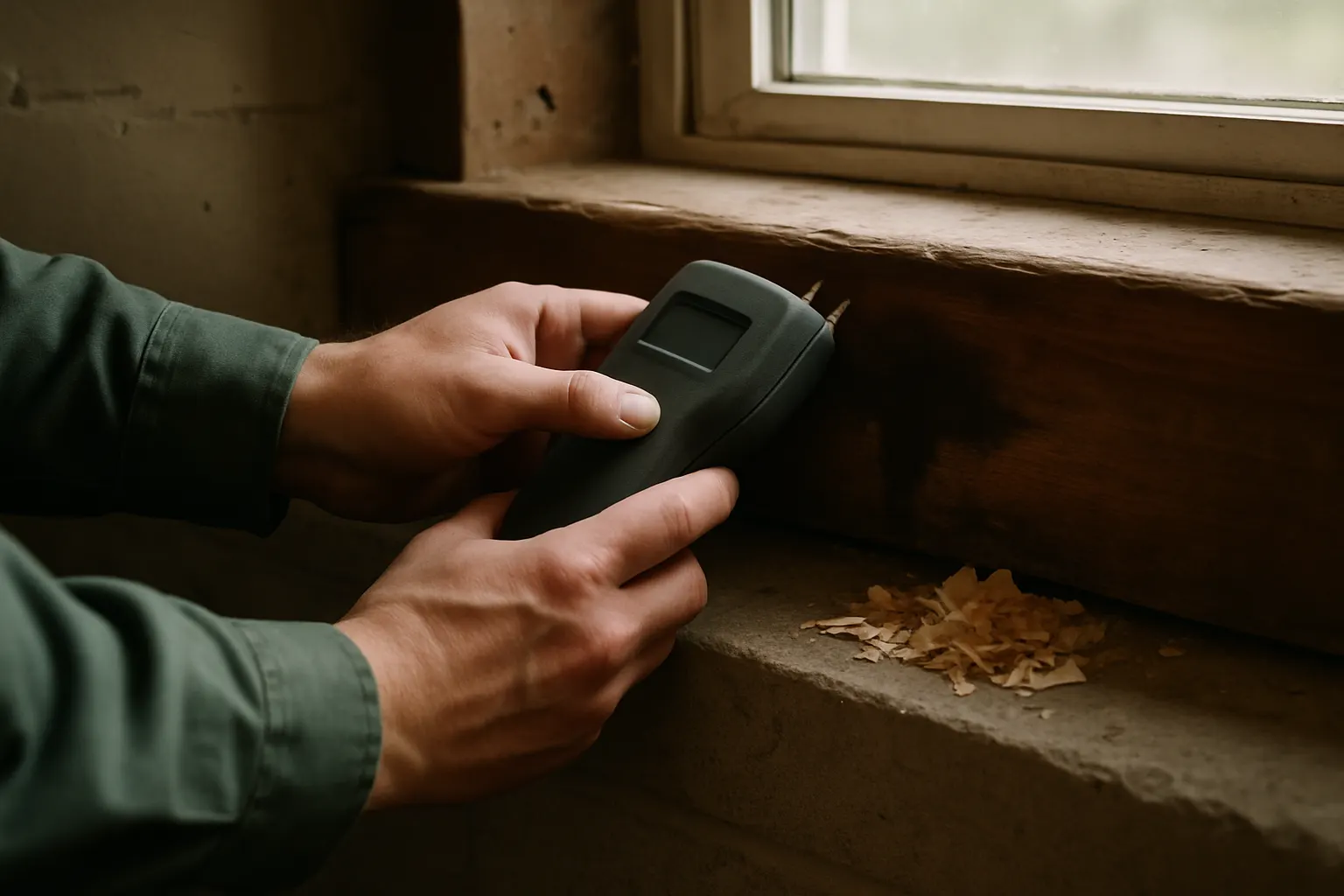
Penn State notes that carpenter ants usually will not infest sound wood with a moisture content under 15 percent. That is why a carpenter ant inspection is really a search for wet wood. Finding the wet wood usually finds the nest, and fixing the water keeps the ants from moving back in.
The moisture sources Penn State lists are the same ones we check on older Chester County houses and newer builds alike:
- Leaking roofs and failed flashing around chimneys, dormers and skylights.
- Overflowing or leaking gutters and downspouts that soak fascia, soffits and sills.
- Condensation dripping from cold water pipes in basements and crawlspaces.
- Leaks around bathtubs, showers, dishwashers and washing machines.
- Poor ventilation in crawlspaces, attics and enclosed porches.
Frass, rustling and other signs
Because carpenter ants push excavated wood out of the nest, the best clue is frass: piles of coarse, stringy wood particles mixed with dead insect parts, sifting from cracks in siding, behind moldings, in the basement and attic, or under porches. Their galleries are smooth-sided and clean, with no soil or fecal pellets, which separates them from termite work.
You can sometimes hear a satellite colony. Penn State suggests listening for a faint rustling in walls or ceilings, using a stethoscope or an inverted glass against the surface. The ants are most active at night. From May through July, check the basement, attic, garage and outside walls with a flashlight between 10 p.m. and 2 a.m., and you may be able to follow workers back to their nest or entry point.
Carpenter ants vs termites
Both live in colonies and both damage wood, so people mix them up. They need different treatment, so identification comes first. See our page on termite inspection and treatment if the evidence points that way.
| Carpenter ants | Eastern subterranean termites | |
|---|---|---|
| Workers | Dark brown to black, 1/4 to 1/2 inch, often seen walking around | Creamy white, 1/8 to 1/4 inch, hidden inside wood and tubes |
| Swarmers | Up to 3/4 inch; pinched waist; elbowed antennae; front wings longer than hind wings | 3/8 to 1/2 inch; broad waist; straight antennae; four equal wings |
| Swarm timing | Spring and early summer | February to June |
| Wood use | Excavate for nests; do not eat wood | Eat wood and other cellulose |
| Galleries | Smooth and clean, no soil | Lined with soil-like material |
| Debris | Coarse shavings and insect parts pushed out of the nest | Mud tubes on walls and foundations; no shavings |
| Wood they prefer | Moist or decaying wood | Wood touching or near soil, often sills and joists |
How we treat carpenter ants
We follow The Davis Inspection Standard, which you can read on our process page. First we confirm the species and trace where workers are coming from, inside and out. Then we name the conditions: the wet sill, the leaky gutter corner, the firewood stack against the garage. Treatment goes where the ants live and travel, per the label, and we set a follow-up and tell you re-entry and prep instructions before we start.
Depending on what we find and what the product label allows, treatment can include baits placed along active trails and topped up as they are taken, a non-repellent treatment around the outside so foraging ants carry it back without avoiding it, and labeled dust placed into the void where a satellite nest sits. Penn State notes that ants sometimes ignore baits, so we watch how they respond and adjust. Outdoor nests in stumps or waste wood are best removed.
Replacing water-damaged wood and correcting the leak is what stops the next colony from finding the same spot.
Prevention around the house
- Remove stumps, logs and scrap wood near the house where you can.
- Store firewood off the ground and away from the house, and bring it in only when needed.
- Trim shrubs and tree branches so they do not touch siding or the roof.
- Repair roofs, flashing, gutters and downspouts, and replace decaying wood.
- Keep exterior wood painted and sealed, and seal openings where pipes and wires enter.
- Put a plastic moisture barrier over crawlspace soil and keep crawlspaces ventilated.
Where we provide carpenter ants service
We work from our family business in Phoenixville and serve homes and businesses across Chester County, Montgomery County and Delaware County. See our Phoenixville pest control page or pest control in West Chester for the towns each area covers.
Carpenter Ants: common questions
Why do I suddenly have carpenter ants?
Usually because a colony nearby has found wet wood or food in the house. A new roof leak, a clogged gutter or a plumbing drip can soften wood enough for a satellite nest. Spring also brings workers out of winter inactivity and sends swarmers out of mature colonies, so ants that were there all along suddenly become visible.
What time of year are carpenter ants most active?
In Pennsylvania, winged carpenter ants leave the nest in spring and early summer, and workers forage most actively from May through July, mainly at night. Penn State Extension suggests checking with a flashlight between 10 p.m. and 2 a.m. in those months. Ants active indoors in winter suggest a nest in a heated part of the house.
Should I worry about carpenter ants?
They are worth dealing with, though the damage is usually slow. Penn State Extension notes structural damage from carpenter ant nests is rare, and damage builds slowly. The more useful clue is moisture: carpenter ants rarely infest wood under 15 percent moisture, so a nest usually means wet wood somewhere. Finding and fixing that protects the house from rot as well.
Do carpenter ants eat wood?
No. Carpenter ants excavate wood to make nesting space and push the particles out as coarse shavings. They feed on honeydew from aphids, dead insects and sugary or fatty foods. Termites are the insects that actually digest wood, which is one reason their damage looks different, with soil-lined galleries instead of smooth, clean tunnels.
Which is worse, termites or carpenter ants?
Termites generally cause more structural damage because they eat the wood itself and often work unseen in sills and joists. Carpenter ants excavate nesting space and usually signal a moisture problem. Both are wood-destroying insects that should be identified and treated, and both appear on the NPMA-33 real estate inspection form.
Will vinegar get rid of carpenter ants?
No. Vinegar can wipe away the scent trail foragers follow, but it does not reach a satellite nest inside a wall or the parent colony outside. Penn State Extension says both nests must be found and dealt with, or the ants will reappear within days or weeks. Moisture repairs are part of the answer too.
What is the fastest way to get rid of carpenter ants?
The approach that works is finding the nests rather than spraying ants on sight. That means tracing trails, often at night, locating the satellite nest in damp wood and the parent colony outside, then placing treatment in those spots per the label. How long it takes depends on how quickly the nests are found and the moisture is fixed.
I see big black ants in the house in winter. What does that mean?
Carpenter ants are normally inactive in winter. Penn State Extension notes they stay active when the nest is in a heated part of the building, so workers indoors in January or February usually mean a nest inside the house, not ants wandering in from outside. That is worth an inspection before the spring swarm.
Why are there carpenter ants in my new house?
Newer homes can have the same conditions older ones do: wet framing from a roof or window leak, foam insulation board the ants can excavate, firewood stored against the siding, or woods at the edge of the lot. Penn State notes the parent colony is often in a tree, log or wood pile within 100 yards of the house.
Family owned. Licensed and insured in Pennsylvania.
Schedule an inspection for carpenter ants
Tell us what you are seeing and where. We will call you back to set up a visit, identify the pest and walk you through the plan before any treatment.
- The species identified before anything is applied
- Entry points and moisture problems pointed out on your property
- Prep and re-entry instructions explained up front
Prefer to talk now? Call (610) 935-9130